A used hot tub can be a genuine bargain, but only if the shell, plumbing, pump and heater are all sound — because those are the expensive parts to replace. Before buying, inspect for cracks and water staining, ask why it’s being sold, get it running on-site if possible, and budget for professional electrical inspection and moving costs.
Why are people selling used hot tubs?
Sellers move on from hot tubs for reasons ranging from a house sale to a tub that’s simply too much upkeep. Some reasons are harmless. Others are a warning sign worth taking seriously.
- Moving house and the tub doesn’t fit the new space or budget
- Lost interest in the maintenance routine
- A specific fault they don’t want to pay to fix
- Upgrading to a newer model
Ask directly why it’s for sale. A vague or evasive answer is worth more caution than a straightforward one about moving house or lifestyle change.
How do you check the shell and cabinet for damage?
Look closely at the acrylic shell for cracks, spider-webbing, or dull, chalky patches, and check the wooden or synthetic cabinet for rot, warping or insect damage at the base.
Run a hand along the shell’s edges and seat areas — hairline cracks often show up as slightly rough lines rather than obvious gaps. Check underneath the cabinet skirting where moisture tends to collect and cause the most damage. A cabinet that feels soft or spongy at the base has likely been sitting in standing water for a while, which raises questions about what else has been affected underneath.
Staining around the waterline or discoloration inside the shell isn’t purely cosmetic — it can hint at how the water was maintained over the tub’s life. For background on what causes that kind of buildup, see the notes on biofilm in a hot tub and why it matters for both looks and hygiene.
What should you ask about the pump, heater and electrics?
Ask for the age of the pump and heater, whether either has been replaced, and whether the tub has run reliably on its current electrical connection. Any answer involving flickering breakers, tripped GFCI/RCD protection, or “it just needs a new part” deserves a licensed electrician’s opinion before money changes hands.
A hot tub’s heater and pump are wired to run near water on a dedicated circuit, and that wiring, bonding and grounding are governed by local electrical code — not something to assess by eye or take the seller’s word for. If the listing or the seller can’t confirm the tub was installed to code, budget for a licensed electrician to check it after purchase and before it’s plugged in and used.
Pumps and heaters are also simply consumable parts with a working life that depends on hours run and water quality, not a fixed number of years. It’s worth reading up on how long pool pumps and filters typically last and on the warning signs a pump is failing so you know what to listen and look for when the tub is running.
How do you check the plumbing and jets?
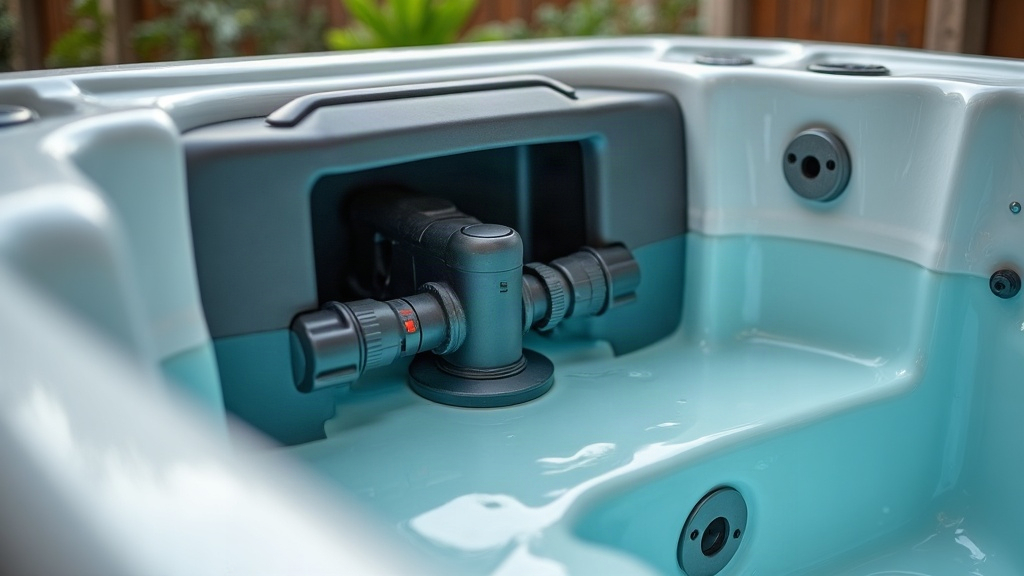
Ask the seller to fill and run the tub before you buy, if at all possible, and watch for weak or dead jets, unusual noises, or water pooling anywhere it shouldn’t.
Weak jets can mean a clogged filter, an air lock, or a failing pump — not always a expensive problem, but worth knowing about before you agree on price. Pooling water under or beside the cabinet during a test run is a bigger concern, since it points to a plumbing leak that may need the cabinet opened up to find and fix.
If the tub can’t be run at the seller’s property, that’s not necessarily a dealbreaker, but it does shift more risk onto the buyer. In that case, negotiate the price with the assumption that some repair will be needed, and get any promise about “it worked when we last used it” in writing as part of the sale.
What does the water chemistry history tell you?
Ask how often the water was tested and changed, and what sanitizer was used — bromine and chlorine systems are maintained a little differently, and neither is inherently better or worse for a used tub.
A tub that was rarely drained or tested is more likely to have scale buildup in the plumbing, a heater element coated in mineral deposits, or a filter cartridge that’s been overworked for years. None of these are always visible from outside. For background on the differences in sanitizer approach, see bromine vs. chlorine in a hot tub, and for why hot tub water needs closer attention than pool water generally does, see how hot tub water chemistry differs from a pool.
Foamy or cloudy water during a test run is also worth asking about — it can point to leftover lotions, oils or detergents in the plumbing rather than anything wrong with the equipment itself. The explanation at why hot tub water goes foamy covers the usual causes.
Regardless of what the previous owner tells you, plan on draining and refilling the tub as one of the first things done after purchase, then testing the fresh water yourself before regular use. Never mix sanitizing or pH-adjusting products together, and store any chemicals you buy separately, away from each other, following the label on the product in front of you.
Does the cover matter?
A cover that’s heavy with trapped water, torn along the seams, or missing its locking clips isn’t just a minor inconvenience — it directly affects both heat retention and safety.
A worn-out cover lets heat escape constantly, which shows up as a bigger power bill. It’s worth reading what a hot tub actually costs to run to understand how much the cover’s condition factors into ongoing costs, separate from the price of the tub itself.
A cover is also one layer of protection around standing water, and if children could ever be near the tub, that layer only works locked in place — it does not replace a supervising adult watching the water at any time the tub is open or in use. Check local code for any barrier, fencing, alarm or cover requirements that apply to hot tubs in your area, since rules vary by location and are a legal obligation in many places, not just a suggestion.
How much will it cost to move and install a used hot tub?
Moving a hot tub involves specialized equipment and often more than one person, and the final cost depends heavily on access — stairs, narrow gates, and distance from the delivery vehicle all add to it.
Once it’s on-site, don’t assume it can simply be plugged in. Confirm what electrical supply the tub actually needs and have a licensed electrician assess whether the existing circuit, if there is one, meets it. If the pad or base the tub will sit on needs any structural work — a new slab, reinforced decking, or anything involving excavation — treat that as licensed contractor work too, not a weekend project.
All of this should factor into the real cost of a “cheap” used tub. A tub priced well below a new one can still end up costing more once moving, electrical work, and any repairs are added in. For more general context on price factors, browse the Buying & Costs section.
Is buying a used hot tub actually worth it?
A used hot tub can be a good deal when the shell is sound, the seller is transparent, and the buyer budgets honestly for delivery, electrical inspection, and a first proper water change.
It’s a poor deal when the discount is being used to paper over unknown electrical issues, plumbing leaks, or a shell that’s already failing. Inspect it in person, run it if at all possible, ask pointed questions about its history, and treat any answer that doesn’t add up as a reason to walk away or negotiate hard.
Once it’s home and running, the ongoing side of ownership is much the same as any hot tub: keeping the water tested, understanding the filtration cycle, and staying on top of routine care. The Hot Tubs & Spas section covers that ongoing maintenance in more detail.
Pools Shop publishes general information, not professional advice. Pool chemicals, electrical work and structural work are genuinely hazardous and are governed by local codes that vary — use a qualified professional for anything you are not certain about, and follow the instructions on the product in front of you rather than a general guide. Nothing here is a substitute for active adult supervision around water: no cover, alarm, fence or device makes a pool safe on its own.