Most hot tub covers hold up well for a handful of years before the foam inside starts absorbing water and the vinyl skin cracks or delaminates. Exact lifespan depends on climate, sun exposure and how it’s treated day to day. It matters because a failing cover stops insulating, gets heavy and dangerous to lift, and can quietly let debris and moisture into the water.
What actually wears a hot tub cover out?
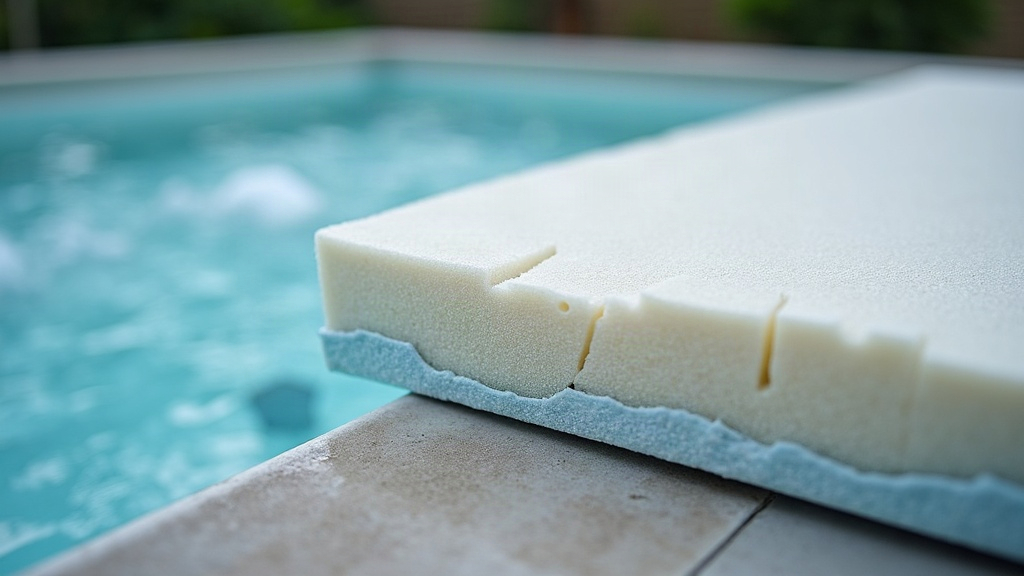
A cover fails from the inside out. The foam core inside most covers is not waterproof on its own — it relies on a vapor barrier and outer vinyl skin to keep moisture and steam away from it. Once that barrier is compromised, foam starts soaking up water, and a soaked cover gets heavier, insulates less, and never really dries out again.
- UV exposure breaking down the vinyl skin, especially on the side facing the sun
- Steam and heat from the water working at the underside every time the tub is used
- Standing water pooling on top after rain or snow, adding constant weight
- Repeated folding at the same hinge point, which wears through the seam faster than anywhere else
- General handling — leaning on it, sitting on it, or dragging it instead of lifting it fully off
None of these are unusual or the result of neglect. They’re just what happens to a foam-and-vinyl cover left outdoors and used regularly. The question isn’t whether a cover will eventually fail, but how soon, and whether the owner notices before it becomes a real problem.
How do you know a cover is on its way out?
The clearest signs are weight, sag and smell. A cover that used to lift easily and now feels waterlogged, or one that sags in the middle instead of sitting flat, has foam that’s taken on moisture and is no longer doing its job properly.
- It’s noticeably heavier than when new, even though nothing else has changed
- It sags in the center rather than sitting flat across the tub
- The seams are splitting or the vinyl is cracking, especially along the fold line
- It smells musty underneath, which usually points to trapped moisture
- The zippered skirt (if fitted) is torn, exposing the foam panels directly to weather
Any one of these on its own might not be urgent. Several together usually mean the cover is past being worth patching and is heading toward replacement.
Why does a worn-out cover matter beyond looks?
A cover that’s still technically in place but no longer functioning properly creates problems that go well past appearance. It stops insulating, it stops keeping debris and rain out, and it becomes harder and more awkward to handle.
A waterlogged cover no longer traps heat the way it did when new, so the heater works harder and runs more often just to hold the same temperature — a cost that’s easy to miss because it shows up gradually on a utility bill rather than all at once. For a broader look at what actually drives those running costs, see what a hot tub actually costs to run.
A failing cover also lets more debris, pollen and rain into the water, which pushes sanitizer demand up and can throw chemistry off faster than expected. Hot tub water already needs closer attention than pool water because of the smaller volume and higher temperature — a subject covered in more depth in how hot tub water chemistry differs from a pool and why hot tubs need more frequent water changes.
Does a heavy, waterlogged cover create a safety issue?
A cover that’s absorbed water gets significantly heavier than its original weight, and that weight is often uneven once foam panels have soaked through unevenly. Lifting or removing a cover like that is harder to do safely, and a cover that’s cracked or sagging may not support weight the way an intact one would if anyone were to step or lean on it.
It’s worth being clear about what a cover is and isn’t for. A hot tub cover is not a childproofing device and does not make standing water safe on its own. Locking covers, latches and alarms are one layer among several — and none of them replace an adult actively watching the water whenever children are anywhere near it. If a cover’s fasteners are broken or missing, that layer is effectively gone, which is one more reason a failing cover deserves attention rather than being left in place “for now.”
What actually extends a cover’s working life?
Most of what shortens a cover’s life is preventable with basic handling habits, even though nothing stops the underlying wear entirely.
- Lift the cover off fully rather than folding it back while still leaning on the tub — repeated stress at one point wears the seam faster than distributed wear
- Clean and treat the vinyl surface periodically to slow UV breakdown, following the product label for whatever protectant is used
- Use a cover lifter or support arm so the cover isn’t dragged, dropped or left resting at an odd angle
- Clear standing water and snow off the top rather than letting weight sit on it for days
- Check the fasteners or locking clips regularly and repair or replace them as soon as they loosen
None of this changes the fact that foam and vinyl have a working life. It just spreads that life out closer to what the materials are actually capable of, rather than cutting it short through avoidable damage.
How is a cover different from the tub’s actual water quality?
A cover protects the water from outside contamination and heat loss, but it does nothing about what’s already happening inside the water itself. Biofilm, scale and sanitizer demand build up regardless of how good the cover is, which is why cover condition and water chemistry are two separate maintenance jobs, not one.
Foam that stays consistently damp under a compromised cover can also make musty smells and surface foam more noticeable, though foaming water usually has more to do with what’s dissolved in the water itself — covered in why hot tub water goes foamy. Separately, understanding what the filtration system is doing while the cover sits in place helps make sense of why both jobs matter together — see what a hot tub’s filtration cycle is actually doing.
Is it worth repairing a cover instead of replacing it?
A small vinyl tear on an otherwise dry, flat-sitting cover is often worth patching. A cover that’s heavy, sagging in the middle, or smells musty underneath usually isn’t — the foam itself has already taken on water, and no surface patch fixes that.
Before buying a replacement, it’s worth measuring the tub carefully, since covers are not universally sized and a poor fit undermines insulation even on a brand-new cover. Anyone shopping for a used hot tub rather than a new cover should also check the cover’s condition as part of the inspection — it’s one of the easier tells for how well the previous owner maintained the unit overall, discussed in what to check before buying a used hot tub.
Where does cover maintenance fit into overall hot tub upkeep?
Cover condition is one part of a larger routine that includes filter care, water testing and periodic full water changes. None of these jobs substitutes for the others — a good cover doesn’t make up for neglected filters, and clean water doesn’t make up for a cover that’s let rain and debris in for months.
For the wider picture of what regular hot tub care actually involves, the Hot Tubs & Spas hub covers filtration, water changes and common problems in more detail. Readers weighing the running costs of a cover replacement against other upkeep can also find useful context in the Buying & Costs hub and the Cleaning & Maintenance hub.
Treating the cover as one maintenance item among several — rather than a “set and forget” purchase — is the simplest way to avoid the point where a worn-out cover becomes a bigger cost or a bigger hassle than it needed to be.
Pools Shop publishes general information, not professional advice. Pool chemicals, electrical work and structural work are genuinely hazardous and are governed by local codes that vary — use a qualified professional for anything you are not certain about, and follow the instructions on the product in front of you rather than a general guide. Nothing here is a substitute for active adult supervision around water: no cover, alarm, fence or device makes a pool safe on its own.