A metallic tint in pool water almost always means a dissolved metal — usually copper, iron, or manganese — has come out of a heater, a fitting, the fill water, or a metal-based algaecide. The color itself is a clue. It points to which metal is involved and often where it came from.
What does the tint color actually tell you?
Color is the fastest diagnostic tool available before any test kit comes out. It is not proof, but it narrows the search quickly.
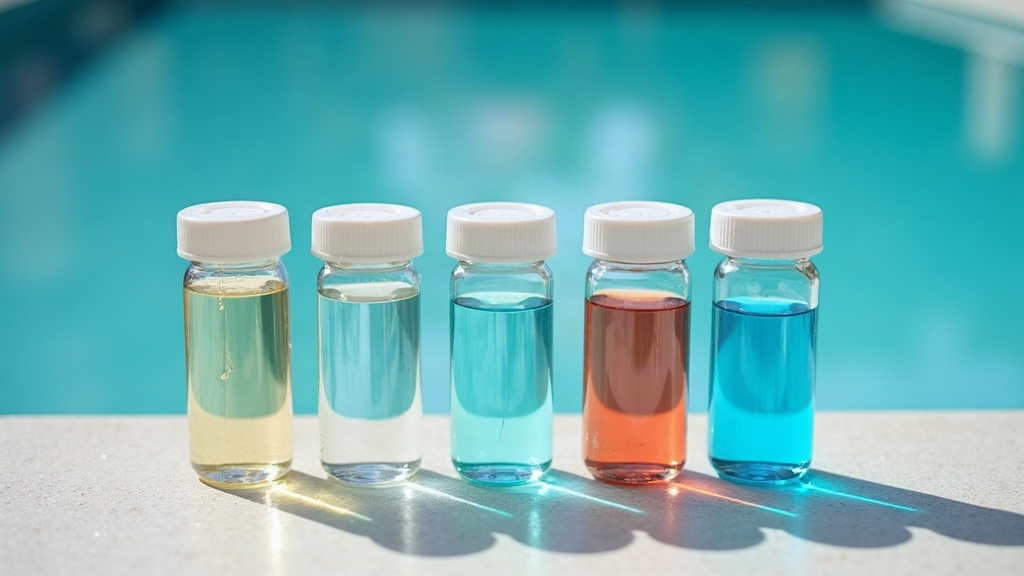
- Green or blue-green: usually copper. Common sources are an aging copper heat exchanger, copper-based algaecide, or well water drawn through copper piping.
- Rusty orange or brown: usually iron. Often traced to fill water, a corroding ladder, rail, or heater component, or metal debris sitting in the pool.
- Purple-black or dark gray: usually manganese. This one shows up almost exclusively with well-water fills, since manganese is rare in municipal supply.
These are tendencies, not guarantees. Testing confirms which metal is actually present.
Why does metal end up dissolved in the water at all?
Metal dissolves into pool water the same way it dissolves into any water: corrosion. Low pH, low total alkalinity, or aggressive water chemistry eats away at metal surfaces over time.
Heaters are a frequent source because they combine metal and heat, which speeds corrosion. Fittings, ladders, and heat exchangers all qualify. Fill water is the other major path — well water in particular often carries dissolved iron or manganese straight from the ground.
Metal-based algaecides are a third source, and a self-inflicted one. They work by releasing copper into the water, and that copper stays dissolved until something changes the water’s chemistry enough to drop it out of solution.
How do you confirm which metal is present?
A standard chlorine and pH test kit will not detect metals. A dedicated metals test — strips or a kit rated for copper, iron, and manganese — is needed to confirm what the color suggests.
Testing the fill water separately is worth doing too. If the hose water itself tests positive for metal, the source is upstream of the pool, not inside it.
What is the correct order of fixes, and why does it matter?
This is the step that gets skipped, and it is the one that causes the most damage. The sequence matters more than any single product used.
Sequester first. A metal sequestrant binds dissolved metal into a form the water can hold without it reacting. Adjust pH and overall water balance toward the pool’s target range at the same time, since corrosive or scaling water keeps the problem active.
Only after the metal is sequestered and the water is balanced should a shock treatment happen. Shocking first oxidizes dissolved metal straight into solid, insoluble particles. Once that happens, the metal is no longer dissolved — it is a stain, on plaster, vinyl, or fiberglass, and a sequestrant cannot pull a stain back out of a surface.
In short: sequester and balance before shock, never shock into unsequestered metal.
Can the tint be prevented rather than treated?
Prevention comes down to controlling the two things that let metal dissolve in the first place: water balance and metal sources.
- Keep pH and total alkalinity in range rather than letting the water run acidic.
- Choose a non-metal algaecide if algae control is a recurring concern.
- Test well water before using it to fill or top off a pool.
- Have aging metal fittings or a heat exchanger inspected if corrosion is suspected.
Heater and fitting corrosion is a mechanical issue, not a water-chemistry one, once it starts. Diagnosing and replacing a corroding heat exchanger is licensed equipment work — not a chemical fix, and not a weekend DIY job. A pro can confirm whether the metal source is the heater itself.
What else can look metallic but isn’t?
Not every odd tint is a dissolved metal. Algae blooms can shift water toward a dull greenish cast without any metal involved at all — that’s a different problem with a different fix, covered in more detail under water chemistry. Cloudiness from poor filtration can also distort how a tint reads, since murky water scatters light differently than clear water. A proper metals test is still the only way to tell the difference with confidence.
Where this fits into regular pool care
Metal staining is one more reason routine testing matters, alongside the usual checks for chlorine, pH, and alkalinity. It connects to broader questions about what causes stains on pool surfaces and why a pool gets a ring at the waterline, since both scale and metal staining often show up together in hard or imbalanced water. For the basics of keeping water chemistry on track week to week, see what pool maintenance actually takes each week.
Anyone handling sequestrant, shock, or algaecide products should also review why pool chemicals should never be mixed together and pool chemicals and storage basics — always follow the label on the specific product in hand, since concentration and dosing depend on the product and the pool’s volume.
Related reading
Calcium Hypochlorite vs Sodium Hypochlorite: The Difference, What Is ORP in Pools, and Why Do Some Measure It?, What Is a Natural or Biological Pool? Sizing Explained, Plunge Pool vs Lap Pool: How to Actually Choose.
Pools Shop publishes general information, not professional advice. Pool chemicals, electrical work and structural work are genuinely hazardous and are governed by local codes that vary — use a qualified professional for anything you are not certain about, and follow the instructions on the product in front of you rather than a general guide. Nothing here is a substitute for active adult supervision around water: no cover, alarm, fence or device makes a pool safe on its own.