A hot tub’s filtration cycle is the pump running on a timer to pull water through the filter and past the sanitiser, over and over, whether anyone is soaking or not. It clears debris, keeps chemical distributed evenly, and stops the water from sitting still long enough to grow something unpleasant.
What does the filtration cycle actually do?
It moves the entire volume of water in the tub through the filter media a set number of times a day, on a schedule set at the control panel rather than only when the jets are switched on for a soak. Each pass strains out debris and gives sanitiser a chance to reach water that would otherwise sit stagnant near the shell, the pipework and the jet bodies.
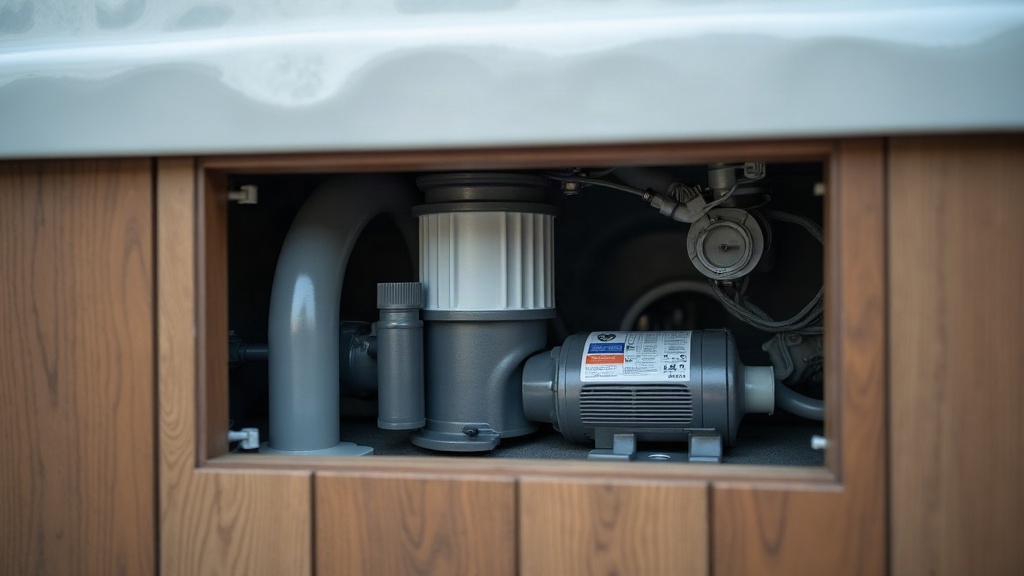
This is different from the pump running during a soak. The high-speed jet pump is for massage and turbulence. The filtration cycle usually runs on a low-speed circulation pump, or the same pump on a lower setting, quietly, in the background, for programmed blocks of time.
Why does a hot tub need this more than a pool does?
A hot tub holds a small volume of very warm water in constant use by bathers, which is a much more demanding environment for bacteria and organic material than a large pool at ambient temperature. Warmth speeds up biological growth, and a small volume dilutes body oils, sweat and cosmetics far less than a full-size pool does.
The result is that hot tub water chemistry behaves differently from pool water chemistry, and the filtration cycle has to work harder, relative to the water volume, to keep up. If the topic of chemistry differences is unfamiliar, how hot tub water chemistry differs from a pool covers this in more depth.
What is actually being filtered out?
The filter cartridge is a mechanical strainer, not a chemical treatment. It physically catches:
- Skin cells, oils and lotion residue left by bathers
- Hair and lint shed from swimwear
- Fine dust and debris that settles from the air, especially on an uncovered tub
- Cloudiness-causing particles too small to see individually but large enough to scatter light
What the filter cannot do is disinfect the water. That job belongs to the sanitiser, whether that’s chlorine or bromine, moving through the water on the same cycle. For a plain look at how those two sanitisers differ in a hot tub setting, see bromine vs chlorine in a hot tub.
How long does a filtration cycle usually run?
Most manufacturers program cycles in blocks spread across the day rather than one continuous run, and the total runtime is set to move the tub’s water volume through the filter a certain number of times daily. There is no single correct runtime that applies to every tub, because it depends on the pump’s flow rate, the filter size and the volume of the shell.
Owners can usually see and adjust cycle length and frequency from the control panel, and the owner’s manual for the specific model is the reliable source for what the factory default is and how to change it. Running cycles too short leaves water sitting idle for long stretches; running them constantly adds to running costs without much extra benefit once the water has already been turned over enough times.
Does the filtration cycle replace testing and adding sanitiser?
No. It moves water past the sanitiser and through the filter, but it does not create sanitiser or correct the water balance on its own. Testing tells the owner what the water actually needs; the filtration cycle is what carries the product through the water once it has been added, following the label on the product in front of them.
A tub can have a perfectly running filtration cycle and still drift out of balance if nobody is testing the water. Regular testing with test strips or a liquid test kit is what actually confirms sanitiser level, pH and related readings are where they need to be.
What happens if the cycle is too short or skipped?
Water sits without enough movement, sanitiser doesn’t reach every corner of the shell and plumbing evenly, and organic material builds up faster than it’s removed. Over time this shows up as cloudy water, a stronger chemical smell even when sanitiser levels test normal, or a slippery film on the shell.
That slippery film is often biofilm, a layer of bacteria and organic matter that clings to surfaces and pipework rather than floating freely where the filter can catch it. Once biofilm is established it is much harder to remove than it was to prevent, which is covered in what biofilm in a hot tub actually is.
Why does hot tub water sometimes go foamy even with the cycle running?
Foam is usually caused by residues in the water, things like lotions, detergent left in swimwear, or a buildup of dissolved organics that the filter isn’t catching because they’re dissolved rather than particulate. The filtration cycle can’t strip dissolved substances out the way it strains solid debris. A closer look at causes and fixes is in why hot tub water goes foamy.
Why does hot tub water need changing so often if the filter is always running?
Filtration removes particles and helps sanitiser reach the water, but it does not remove dissolved solids, and those build up steadily every time someone soaks. Body oils, cosmetic residue and the byproducts of sanitiser reacting with organic material accumulate in a small, repeatedly reheated volume in a way a large pool never experiences.
Eventually the water reaches a point where no amount of testing and dosing keeps it comfortable or clear, and a full drain and refill is the only real reset. The reasons this happens sooner in a tub than a pool are explained in why hot tubs need more frequent water changes.
Does the filter itself ever need attention beyond the cycle?
Yes. A filter cartridge collects everything the cycle strains out, and it needs periodic rinsing and eventual replacement, or it stops filtering effectively and restricts flow instead. A cartridge clogged with debris makes the pump work harder for less result, and it’s a separate maintenance task from the filtration cycle’s schedule.
General guidance on how long a cartridge lasts before it needs replacing, rather than just rinsing, is covered in how long filter cartridges last. The broader mechanics of pumps and filters, which apply in a modified form to hot tubs as well as pools, are covered across the Pumps, Filters & Heaters hub.
Can the pump or heater be serviced as a DIY job?
No. Hot tub pumps, heaters and any wiring near the water fall under the same category as pool equipment: electrical and structural work that is governed by local code and best left to a licensed electrician or qualified technician. This applies to bonding, grounding, wiring and heater installation alike.
Anyone troubleshooting suspected pump or heater faults should ask a licensed technician what the job involves rather than attempting wiring work themselves. Signs that a pump may be struggling, which are worth recognising even without doing the repair personally, are described in signs a pool pump is failing.
Where does this fit with overall hot tub care?
The filtration cycle is one layer of routine hot tub maintenance alongside testing, sanitiser dosing, cover care and periodic water changes. None of these steps stand in for the others, and skipping one puts more pressure on the rest. Broader maintenance guidance sits in the Hot Tubs & Spas hub, and general water chemistry basics that apply to any body of treated water are in the Water Chemistry hub.
Chemical products used in hot tub care should always be stored separately from each other, never mixed, and always dosed according to the instructions on the product label, which reflects the tub’s specific volume and the product’s own concentration.
Pools Shop publishes general information, not professional advice. Pool chemicals, electrical work and structural work are genuinely hazardous and are governed by local codes that vary — use a qualified professional for anything you are not certain about, and follow the instructions on the product in front of you rather than a general guide. Nothing here is a substitute for active adult supervision around water: no cover, alarm, fence or device makes a pool safe on its own.