A plunge pool is small, deep, and built for cooling off or soaking, not swimming laps. A lap pool is long, narrow, and built for continuous swimming. The real choice comes down to yard size, what the pool is actually for, and how much you want to spend running it.
What exactly is a plunge pool?
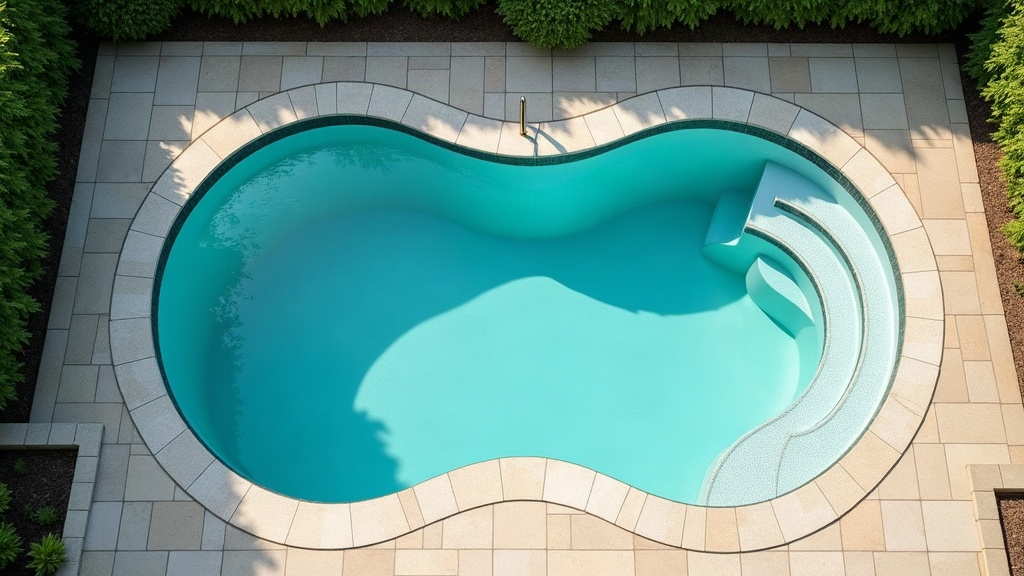
A plunge pool is a compact, deep pool meant for sitting, cooling off, or short bursts of exercise against resistance jets. Most run somewhere around 6 to 12 feet long. Depth is often chest-height or deeper, since the point is submersion, not swimming distance.
Many plunge pools double as a warm-weather retreat and a cold-plunge option, sometimes chilled rather than heated. Some include a built-in bench or a jet system for stationary swimming against current.
What exactly is a lap pool?
A lap pool is long and narrow, built to swim continuous lengths without turning every few strokes. Typical lengths run 30 to 75 feet, with widths often under 10 feet. Depth is usually consistent and moderate, deep enough to swim but not to dive.
The narrow shape matters more than the length. A wide short pool lets you swim, but a narrow long one lets you swim in a straight line without weaving around the walls.
How do you actually decide between them?
Start with three questions: how much yard space is available, what the pool is for, and what ongoing cost you’re comfortable with. Climate matters too. Answer those honestly and the choice usually narrows fast.
Yard footprint: what actually fits?
Footprint is often the deciding factor before goals or budget even come into it. A lap pool needs length above all else. A plunge pool needs almost none.
- Yard under roughly 20 x 13 feet (6m x 4m): A full lap pool rarely fits with any usable deck space left over. A plunge pool, often 8 to 10 feet across, leaves room to walk around it.
- Yard between 20 x 13 and 30 x 20 feet: A short lap pool becomes possible, though it may be narrower than ideal for a strong swimmer’s stroke.
- Yard over 30 x 20 feet: A standard lap pool fits comfortably, with room for a plunge pool alongside if budget allows both.
If the yard is genuinely tight, a plunge pool is usually the only real option. There is no version of a proper lap pool that works in a small courtyard.
Exercise or relaxation: what’s the actual goal?
This is the second filter, and it matters as much as space. A lap pool is built around one activity: continuous swimming for fitness. A plunge pool is built around soaking, cooling down, or brief resistance exercise against a jet stream.
Someone training for distance swimming, or wanting a daily fitness habit, gets little from a plunge pool. Someone who wants a warm-weather cool-down spot, a quiet soak, or a small water feature gets little extra value from paying for length they’ll never use.
A bad back or limited mobility is worth naming directly. Lap swimming is low-impact but still a full workout, with turns and continuous stroke work. A plunge pool with a jet system offers exercise in place, without the demands of full-length swimming, and some people find that gentler on joints. Anyone with a specific injury or condition should check with a doctor or physical therapist before treating either pool as a rehab tool.
Budget and running cost: which tier fits?
Smaller water volume in a plunge pool generally means less to heat, less to treat, and a smaller pump doing the work. A lap pool’s length adds surface area for evaporation and more water for a heater to warm, which affects ongoing cost more than most people expect.
Neither figure is fixed — actual running cost depends on regional energy prices, pump size, heater type, and how often the pool is used. What’s reliable is the direction: less water and less surface area usually costs less to run, month to month. For a fuller breakdown of what drives those bills, see what a pool actually costs to run each year and what actually drives installation cost.
A plunge pool is often the lower-cost build, since less excavation and less shell to construct usually means a smaller job. But site access, finish choice, and local labor rates swing that more than pool type alone. Anyone comparing quotes should read what questions are worth asking a pool builder before signing anything.
Does climate change the answer?
Yes, in a specific way. In a short or cool-summer climate, heating a long lap pool to a swimmable temperature for months at a time gets expensive fast, and a shorter season limits how much use it gets. A plunge pool heats faster simply because there’s less water to warm, which can make it a better fit where the outdoor swimming season is short. This is covered in more depth in is a pool a good idea in a short summer climate.
In a hot climate with a long season, a lap pool’s running cost is spread across more months of actual use, which changes the value equation.
A quick decision table
| Constraint | Points toward plunge pool | Points toward lap pool |
|---|---|---|
| Yard footprint | Under ~20 x 13 ft | Over ~30 x 20 ft |
| Main goal | Cooling off, soaking, short resistance exercise | Continuous lap swimming, fitness training |
| Budget tier | Lower build and running cost, generally | Higher water volume, higher heating cost |
| Climate | Short swim season, faster to heat | Long swim season justifies the running cost |
What about safety once either is built?
Both a plunge pool and a lap pool are open water, and both carry the same drowning risk regardless of size or shape. A designated adult watching the water is the layer that matters most, and no cover, fence, or alarm replaces that. Barrier and fence requirements vary by location, so check local code before finalizing any design. For the fuller picture on how these layers work together, see what layered pool safety actually means and the safety archive.
Where to go next
Once the shape and size are decided, the equipment questions follow: pump size, heater type, and filtration all scale with water volume. The pumps, filters and heaters archive and buying and costs archive cover those choices in more detail. And whichever shape is chosen, the ongoing upkeep is smaller in scope but not absent — see the ongoing jobs nobody mentions before you buy a pool for a realistic picture of weekly demands.
Pools Shop publishes general information, not professional advice. Pool chemicals, electrical work and structural work are genuinely hazardous and are governed by local codes that vary — use a qualified professional for anything you are not certain about, and follow the instructions on the product in front of you rather than a general guide. Nothing here is a substitute for active adult supervision around water: no cover, alarm, fence or device makes a pool safe on its own.