Layered pool safety means using several separate protections at once — barriers, alarms, covers, and lessons — because none of them is reliable on its own. The layer that actually prevents drowning is a designated adult watching the water. Everything else only reduces the chance a child reaches the water unnoticed; it does not replace that adult.
Why isn’t one safety product enough?
Every pool safety product has a way it can fail. A fence can be left unlatched. An alarm can be turned off, muted, or simply not heard from another room. A cover can be left partly open. A child who has had lessons can still get into trouble in water. No single layer covers every gap, which is exactly why “layered” is the word used instead of “safe.”
Manufacturers describe what their products do — detect motion, block access, support weight — not what happens when a child is unsupervised near water. That distinction matters. A product doing its job correctly and a child still drowning are not contradictory; they happen together more often than most owners expect.
What counts as a barrier layer?
A barrier is anything a child has to physically get past to reach the water — a fence, a self-closing and self-latching gate, or a pool cover rated and rigged to bear weight. Barriers slow access down. They do not watch anyone.
- Four-sided isolation fencing that separates the pool from the house and yard, rather than fencing that only runs along part of the perimeter.
- Gates that close and latch on their own, positioned so a small child cannot reach the release.
- A cover specifically designed and rated to be walked on or to bear a child’s weight — not a solar cover or a leaf net, which are not barriers at all.
Fence height, gate hardware, and pool cover specifications for child safety are set by local building and safety code, and requirements differ by state, province, and country. Always check local code and permit requirements before assuming a fence or cover meets any legal standard — a fence that looks solid is not automatically compliant.
What do alarms actually do?
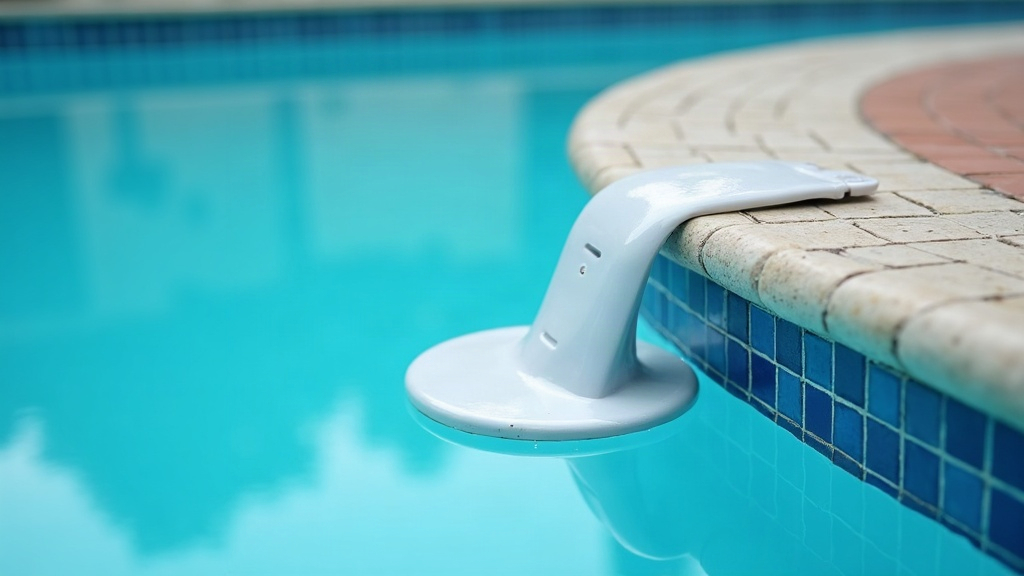
Pool alarms detect something — motion in the water, a gate opening, or a body breaking a beam — and make a noise. They tell someone that access may have happened. They cannot stop it, and they only help if someone hears them and responds immediately.
There are a few common types: surface-wave detectors that sense disturbance in the water, sub-surface detectors, and gate or door alarms that trigger when a barrier is opened. Each has known blind spots — surface detectors can be fooled by wind or rain, and any alarm that gets silenced because of nuisance triggering stops being a layer at all. An alarm is a backup notification, not a barrier and not a substitute for someone watching.
Does a pool cover make a pool safe when nobody’s around?
A cover only functions as a safety layer if it is specifically rated to bear weight and is fully closed and latched or anchored every single time. A cover left half-open, a winter cover not rated for weight-bearing, or a solar cover floating on the surface offers no protection and can create its own hazard by hiding the water from view.
It’s worth understanding the difference between cover types before assuming any cover doubles as a safety device. A winter cover and a solar cover do very different jobs, and neither is automatically a rated safety cover unless the product is explicitly built and certified for that purpose. If in doubt, check the manufacturer’s documentation rather than assuming.
Where do swim lessons fit into this?
Swim lessons and water familiarity reduce panic and improve a child’s chances if they end up in water unexpectedly. They do not make a child “drown-proof,” and a child who swims well can still get into trouble from exhaustion, cold, or being caught underwater by a cover or drain.
Lessons are a genuine layer — they belong on the list alongside barriers, alarms, and covers. They are just as unable, on their own, to replace a watching adult as any physical product is.
Who should actually be “the watcher”?
The most effective supervision comes from one named adult whose only job at that moment is watching the water — not half-watching while cooking, texting, or supervising several children across different activities. Groups of adults around a pool often assume someone else is watching, and that assumption is where gaps open up.
- Assign one adult explicitly, and rotate the role clearly rather than leaving it implied.
- Keep the watching adult free of distractions — phone away, not mid-conversation, not drinking.
- Treat any water on the property the same way, including hot tubs, kiddie pools, and even buckets, not just the main pool.
Formal supervision programs and public health bodies such as the CDC’s drowning prevention guidance consistently describe close, active, and constant supervision as the layer with no substitute — every barrier and alarm exists to back that layer up, not to stand in for it.
How does chemical storage fit into pool safety?
Chemical safety is a separate but related layer, particularly where children have access to a pool shed or equipment pad. Pool chemicals should be stored separately from each other, kept in their original labelled containers, and never combined — mixing chlorine-based products with acid produces toxic gas and has caused serious injury and death.
Understanding what each chemical does and how to test the water helps avoid storage mistakes made in a hurry. The Water Chemistry section covers what individual products do; always follow the instructions on the label of the specific product in hand rather than assuming doses or combinations from memory.
What about the pool equipment itself?
Pumps, heaters, lighting, and bonding near a pool are code-governed electrical work, and faulty bonding or wiring near water is a serious shock hazard. This isn’t a weekend DIY layer — it’s one to ask a licensed electrician or pool builder about directly, including what bonding and grounding is present and when it was last inspected.
Owners can still understand what their equipment does day to day. The Pumps, Filters & Heaters section explains pump, filter, and heater basics in plain terms, and knowing what a pool equipment pad actually contains makes it easier to ask an electrician informed questions rather than attempting the work.
What should a new pool owner check first?
Anyone buying a home with an existing pool, or having one installed, should treat safety layers as part of the purchase decision, not an afterthought. Check what barriers and covers are already in place, whether they meet current local code, and whether alarms are functional and not disabled from a previous owner’s habits.
The Buying & Costs section covers what to weigh up before taking on a pool, and the Pool Basics section is a reasonable starting point for understanding how a pool’s systems fit together before adding safety equipment on top. Routine care matters here too — a pool that’s obviously maintained, tested, and clear tends to get checked and watched more consistently than one that’s neglected; the Cleaning & Maintenance section and a comparison of test strips and liquid kits are useful starting points for that routine.
What’s the one thing to take away?
No fence, alarm, cover, or lesson makes a pool “safe” on its own — layered safety means stacking several imperfect protections because each one can fail differently. The layer that actually prevents drowning is a specific adult, watching the water, with nothing else to do at that moment. Every other layer exists to back that up, never to replace it.
Pools Shop publishes general information, not professional advice. Pool chemicals, electrical work and structural work are genuinely hazardous and are governed by local codes that vary — use a qualified professional for anything you are not certain about, and follow the instructions on the product in front of you rather than a general guide. Nothing here is a substitute for active adult supervision around water: no cover, alarm, fence or device makes a pool safe on its own.