Pool chemicals need to be stored in a cool, dry, well-ventilated place, kept in their original containers, and kept apart by type — chlorine products away from acids and other chemicals never mixed together. Always test the water first and follow the label on the exact product in hand.
This sounds simple, but chemical storage is where a lot of avoidable harm happens: not from the pool itself, but from a garage shelf, a hot shed, or two containers pushed together. The Pools Shop Editorial Team researches this topic closely, but is not a chemical safety authority — for anything ambiguous, the product label and manufacturer safety sheet are the final word, not this article.
Why does pool chemical storage matter so much?
Pool chemicals are reactive by design — that’s how they sanitize water and adjust its balance. Stored carelessly, some can degrade, become unstable, off-gas, or react with nearby products. The danger isn’t hypothetical: chlorine-based products mixed with acid produce toxic gas, and this combination has caused serious injury and death. Storage discipline is the main defense.
What’s the single rule that matters most?
Never let chlorine products and acid (or other chemicals) touch, mix, or even sit close enough to leak into one another. Store them in separate areas, ideally on separate shelves or in separate bins, and never combine any two pool chemicals to “help” a process along — not even briefly, not even outdoors.
This applies to liquid, granular, and tablet forms alike. It also applies to old and new containers of the same general chemical type from different manufacturers, since concentrations and formulations vary.
Where should pool chemicals be stored?
They belong somewhere cool, dry, out of direct sun, and ventilated — not in a sealed cupboard, not near a heat source, and not in a spot where rain or pool splash-back can reach them. Damp or hot storage is a common cause of chemicals breaking down faster than expected.
- A dedicated, ventilated shed or storage box away from living spaces
- Off the ground, on a shelf, away from moisture
- Away from fuel, solvents, fertilizer, or anything flammable
- Out of reach of children and pets, ideally in a locked or latched space
Basements and indoor closets near HVAC returns are generally a poor choice, since fumes from opened or leaking containers can spread through a house. A well-ventilated exterior structure near the pool equipment pad is usually more appropriate than a household cupboard.
Should chemicals stay in their original containers?
Yes. Original containers carry the label, lot information, and safety guidance specific to that product. Decanting into unlabeled jugs or mixed containers removes that information and increases the risk of confusing one chemical for another.
If a container is damaged, most manufacturers’ safety documentation explains how to handle that specific product — check the label or the manufacturer’s own safety data sheet rather than guessing.
How long do pool chemicals last in storage?
It varies by product, packaging, and storage conditions, and no article can put a reliable shelf life on a chemical without knowing the exact formulation. As a general rule, chemicals kept sealed, cool, dry, and out of sunlight last longer than those exposed to heat and humidity. If a product looks clumped, discolored, or has an unusual smell compared to when it was purchased, treat that as a signal to check the label guidance or contact the manufacturer rather than using it as normal.
What do pool chemicals actually do?
Rather than memorizing doses, it helps to understand roles, since that shapes safe handling and storage decisions.
- Sanitizers (chlorine-based products) disinfect the water — see what chlorine actually does in a pool.
- pH adjusters raise or lower how acidic or basic the water is — background on what pH is and why it matters.
- Alkalinity adjusters help pH stay stable — see total alkalinity vs. pH.
- Stabilizer protects chlorine from breaking down in sunlight — more on cyanuric acid as a pool stabilizer.
- Shock treatments are a stronger, occasional dose used to catch up chlorine demand — explained in what shocking a pool involves.
None of these should ever be combined with each other directly. Each is added to the pool water separately, following its own label instructions, based on a current test reading.
Do you need to test before adding anything?
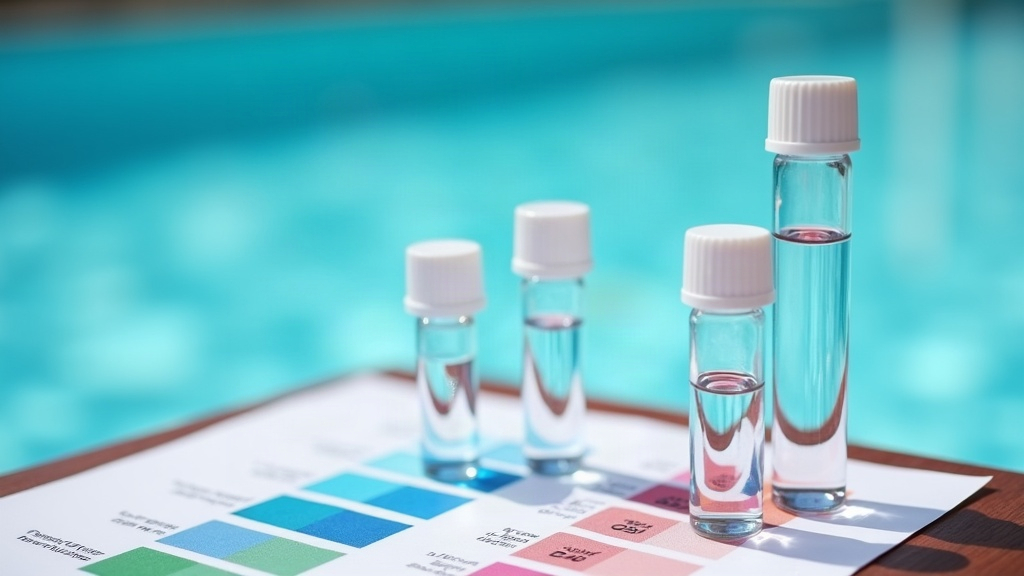
Yes — adding chemicals without a current reading is guesswork, and guesswork with reactive chemicals is exactly what storage and handling guidance tries to prevent. A test tells what the water actually needs before any product goes in.
Test strips and liquid kits both work, though they differ in precision — see test strips vs. liquid test kits for the difference. Understanding free, combined, and total chlorine also helps make sense of what a reading is actually showing.
What form of chlorine is best to store?
Liquid, tablets, and granules each have different handling and storage considerations — liquid chlorine is generally lower concentration but bulkier and can degrade faster in heat; tablets and granules are more concentrated and need to stay bone dry. The comparison in liquid chlorine vs. tablets vs. granules covers the tradeoffs in more depth. Whichever form is chosen, it should never be stored above or below acid products, since a leak or spill could bring them into contact.
Does a saltwater pool avoid these storage concerns?
Not entirely. A saltwater system still relies on chlorine — the cell simply generates it from dissolved salt rather than a bagged or bottled product being added directly. Owners still need pH adjusters, stabilizer, and occasional shock, and the same separation rules apply to whatever is stored on site. See whether saltwater pools use chlorine and what a saltwater pool is actually doing for the full picture.
What about hot tub chemicals?
Hot tubs use smaller volumes of water and often different sanitizers, but the storage rules don’t relax — smaller containers still hold reactive chemicals. Chlorine and bromine are handled differently in a spa, as covered in bromine vs. chlorine in a hot tub, and hot tub water chemistry has its own quirks explained in how hot tub chemistry differs from a pool’s.
What mistakes cause most chemical incidents?
Most problems trace back to a handful of repeated mistakes rather than exotic scenarios.
- Storing chlorine and acid products on the same shelf or in the same bin
- Reusing a scoop or measuring cup between different chemicals without cleaning it
- Leaving containers open, letting moisture or other chemicals get in
- Storing chemicals in a hot car trunk or direct sun on the way home
- Decanting into unlabeled bottles
- Adding a new chemical to water that still has another chemical dissolving nearby
The label on the exact product in hand is the reference point for handling that product — this article can explain what each chemical type does and why separation matters, but it cannot state a safe amount, since that depends on volume, current readings, and concentration.
Where does chemical storage fit into overall pool safety?
It’s one layer among several. Chemical storage protects people and pets from a specific hazard — reactive substances kept on site — but it is separate from water safety around children, which depends on supervision, barriers, and alarms working together rather than any single measure. Nothing about safe chemical storage substitutes for a designated adult watching the water whenever anyone is in or near the pool.
For a broader look at how these layers fit together, see what layered pool safety actually means and why supervision is still what matters most. Local rules on fencing and barriers vary by area — check what pool barrier and fence codes typically require and confirm requirements with the local building authority.
What’s a sensible storage routine to keep?
A short, repeatable routine reduces most of the risk described above.
- Buy only what’s needed for the season where practical, rather than stockpiling
- Keep each chemical type in its own labeled, sealed container
- Store chlorine and acid products in physically separate areas
- Choose a cool, dry, ventilated spot away from sun and moisture
- Use a dedicated scoop per product and rinse it before switching chemicals
- Test the water before adding anything, and follow the label on the product itself
Good chemical habits pair naturally with the rest of routine maintenance — see the water chemistry and cleaning and maintenance hubs for the wider picture, and the safety hub for how storage fits alongside barriers, alarms, and supervision.
Related reading
Why Is Supervision Still What Matters Most in Pools?, What Is Pool Entrapment, and Why Did Drain Covers Change?.
Pools Shop publishes general information, not professional advice. Pool chemicals, electrical work and structural work are genuinely hazardous and are governed by local codes that vary — use a qualified professional for anything you are not certain about, and follow the instructions on the product in front of you rather than a general guide. Nothing here is a substitute for active adult supervision around water: no cover, alarm, fence or device makes a pool safe on its own.