Both bromine and chlorine kill bacteria and other organisms in hot tub water, but they behave differently at high heat and in enclosed spas. Chlorine acts faster and costs less; bromine is more stable in heat, has a milder smell, and is gentler on skin for many bathers. Neither is inherently “safer” — the right choice depends on the tub and the bather.
What do bromine and chlorine actually do in a hot tub?
Both are sanitizers. They oxidize and destroy bacteria, algae and other contaminants introduced by bathers, oils, lotions and the environment. The chemistry of how they do this differs slightly, which is why the two behave differently once water gets warm.
Chlorine works quickly and aggressively, which is part of why it’s the standard choice in most swimming pools. For background on how it functions in water generally, see what chlorine actually does in a swimming pool. Bromine works more slowly but stays more consistent as temperature and pH shift, which matters a great deal in a hot tub running at spa temperatures.
Why does heat change how these sanitizers perform?
Hot tub water usually sits well above typical pool temperature, and chlorine breaks down faster as heat rises. Bromine tolerates heat better and keeps working at a steadier rate, which is a major reason many spa owners lean toward it.
Pool water chemistry and hot tub water chemistry aren’t the same problem despite using similar tests. Higher temperature, smaller water volume, and heavier bather load per gallon all push a spa’s chemistry around faster than a backyard pool’s. For a deeper look at those differences, see how hot tub water chemistry differs from a pool.
Does bromine really smell less than chlorine?
Many bathers report bromine has a milder, less noticeable odor than chlorine, especially in an enclosed or indoor spa. This isn’t universal, and either sanitizer can develop a stronger smell when water chemistry is off rather than when it’s working correctly.
A strong chemical smell from a spa or pool is often a sign that chlorine is being used up fighting contaminants and forming byproducts, not that there’s too much of it. The same logic explains a related pool question: why a pool smells of chlorine when chlorine is actually low. Bromine can develop a similar sharper odor under the same conditions — heavy bather load, low sanitizer, or water that hasn’t been tested in a while.
Which one is gentler on skin and eyes?
Many bathers with sensitive skin or eyes report fewer issues with bromine, though individual reactions vary and neither chemical is irritation-free at incorrect levels. Both chlorine and bromine can cause discomfort if pH, sanitizer level or water balance drifts out of range, regardless of which one is used.
Skin and eye comfort in a hot tub usually has more to do with pH and overall water balance than with the specific sanitizer chosen. If a spa consistently causes irritation, checking pH and total alkalinity is a reasonable first step before assuming the sanitizer itself is the cause. Related background: what pH is and why it matters and the difference between total alkalinity and pH.
Which sanitizer costs more to run?
Bromine products typically cost more per unit than chlorine products, and a bromine system’s ongoing running costs tend to be higher over time. Chlorine is generally the cheaper option for most spa owners, which is one reason it remains popular despite the smell trade-off.
Sanitizer is only one line item in what a hot tub costs to run. Heating, pump operation and water changes all factor in as well — for the fuller picture, see what a hot tub actually costs to run.
Does one need a stabilizer and the other doesn’t?
Chlorine used outdoors in direct sun benefits from a stabilizer that slows its breakdown from UV exposure. Most hot tubs are used differently — often covered, sometimes indoors, and not typically exposed to the same sustained sunlight a backyard pool sees, so stabilizer needs vary by setup.
For readers unfamiliar with the concept, what cyanuric acid is and why it’s called a stabilizer explains the underlying idea. Whether a stabilizer is relevant to a particular spa depends on the tub’s location, cover use and manufacturer guidance — the product label and spa manual are the reliable sources here.
Can bromine and chlorine be swapped or used together?
Switching a hot tub from one sanitizer system to another is possible but generally means a full water change and equipment check first, not simply adding a different chemical to existing water. Manufacturer guidance for the specific spa and sanitizer product should be followed closely when making this switch.
Chemicals should always be stored separately and never combined, and this applies to hot tub products just as much as pool products — mixing certain chlorine-based products with acids or other chemicals can produce dangerous gas. Always read the label on the product actually in hand rather than relying on general assumptions about dosing or compatibility.
Does bromine or chlorine affect how often water needs changing?
Neither sanitizer choice changes the basic reason hot tub water needs replacing more often than pool water: a spa holds far less water relative to the number of bathers using it, so contaminants build up faster regardless of sanitizer type.
For the reasoning behind hot tub water change frequency, see why hot tubs need more frequent water changes. Biofilm buildup inside plumbing and jets is another factor that neither sanitizer fully prevents on its own — regular cleaning and periodic flushing matter alongside whichever sanitizer is chosen. More detail here: what biofilm is in a hot tub and why it matters.
How is sanitizer level actually checked in a hot tub?
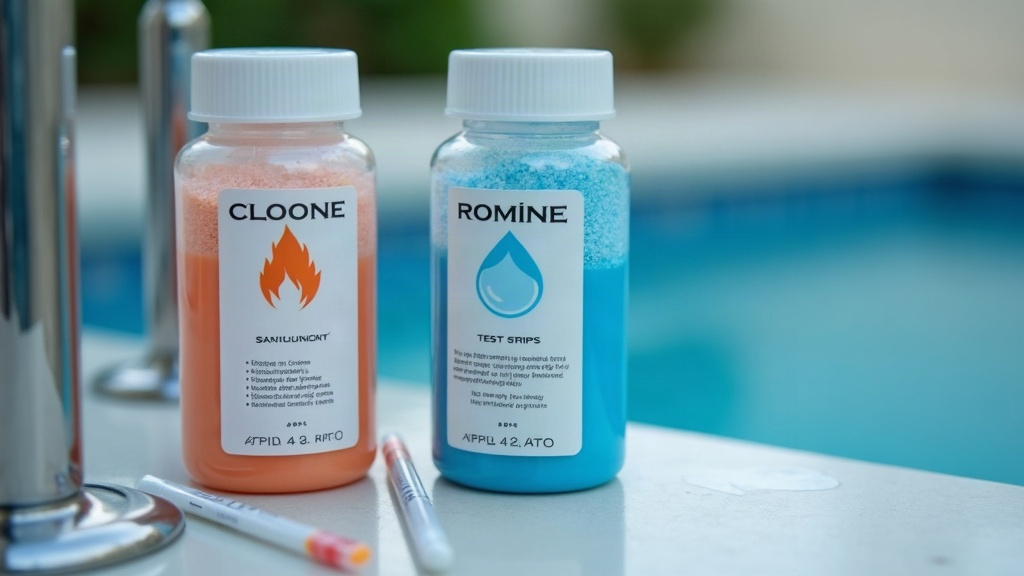
Regular testing is the only reliable way to know whether a hot tub’s sanitizer level, pH and alkalinity are where they should be — appearance and smell are not dependable indicators. Test strips or liquid kits both work, though they have different strengths.
A comparison of the two approaches is covered in test strips versus liquid test kits. Whichever method is used, testing more frequently in a hot tub than in a pool is generally worthwhile given how quickly warm, low-volume water can shift out of balance.
Which sanitizer is the better choice for a given hot tub?
There’s no single correct answer — the better choice depends on budget, sensitivity to smell and skin irritation, and how the tub is used and stored. Chlorine tends to suit cost-conscious owners; bromine tends to suit those prioritizing a milder scent and steadier performance at heat.
- Chlorine: generally cheaper, faster-acting, more affected by heat and sun exposure
- Bromine: generally costs more, more stable at spa temperatures, often milder smell
Either sanitizer works well when paired with regular testing, a properly running pump and filter, and a water change schedule suited to actual bather load. For broader hot tub maintenance topics, the Hot Tubs & Spas hub and Water Chemistry hub cover related questions in more depth. Owners weighing which spa system to buy in the first place may also find the Buying & Costs hub useful for comparing upfront and ongoing expenses.
Pools Shop publishes general information, not professional advice. Pool chemicals, electrical work and structural work are genuinely hazardous and are governed by local codes that vary — use a qualified professional for anything you are not certain about, and follow the instructions on the product in front of you rather than a general guide. Nothing here is a substitute for active adult supervision around water: no cover, alarm, fence or device makes a pool safe on its own.