Total alkalinity measures how much dissolved mineral buffer is in the water — mainly bicarbonates — while pH measures how acidic or basic the water actually is right now. Alkalinity is the water’s resistance to pH change; pH is the reading that resistance is protecting. They move together, but they answer different questions.
What does total alkalinity actually measure?
Total alkalinity measures the concentration of buffering compounds dissolved in the water, mostly bicarbonates and carbonates. These compounds act like a shock absorber, soaking up small additions of acid or base so the pH doesn’t swing wildly every time something changes the water chemistry.
A pool with low total alkalinity has almost no buffer. Adding a small amount of any chemical, or even a rainstorm or heavy bather load, can send the pH sharply up or down. A pool with total alkalinity that’s too high has the opposite problem: pH becomes stubborn and hard to move, and the water can turn cloudy or scale-prone.
Total alkalinity is reported in its own test range, separate from pH, and most test kits and strips check it with a distinct reagent or pad. It’s a foundational reading covered in more depth on the Water Chemistry hub, alongside the other numbers that make up a balanced pool.
What does pH actually measure?
pH measures how acidic or basic the water is at the moment of testing, on a scale most pool owners recognize from school science. It’s a snapshot reading, not a buffer — it tells you where the water sits right now, not how easily it will move.
pH matters because it affects how well chlorine can sanitize, how comfortable the water feels on skin and eyes, and how the water interacts with pool surfaces and equipment. Because pH is a snapshot, it can shift from one test to the next depending on bather load, rainfall, sun exposure, and what’s been added to the water recently.
The full picture of why pH matters and what drives it up or down is covered in What Is pH and Why Does It Matter in a Pool? — a useful companion read to this one.
How are total alkalinity and pH different, in practice?
Total alkalinity is the buffer capacity; pH is the current reading that buffer is stabilizing. Think of pH as a boat and total alkalinity as the anchor line — pH can drift, but alkalinity determines how far and how fast it drifts before something pulls it back.
A few practical distinctions help this stick:
- pH changes quickly and often; total alkalinity changes more slowly and gradually.
- pH is what sanitizers and comfort respond to directly; total alkalinity is what keeps pH from swinging.
- Correcting one reading without checking the other can create a false picture — a pool can look “balanced” on pH testing alone while alkalinity quietly drifts out of range.
This is why most test kits check both, and why a single number is never the full story of water balance.
Why does low total alkalinity cause pH to bounce around?
Low total alkalinity means there isn’t enough dissolved buffer left to absorb small chemical or environmental changes. Every addition of chlorine, every rain shower, every batch of sunbathers pushes the pH further than it would move in a properly buffered pool.
This bouncing pH is more than an inconvenience. Unstable pH makes chlorine’s effectiveness unpredictable — the same dose of sanitizer can behave differently depending on where pH happens to sit that day. It can also make water feel harsh on skin and eyes, and it can accelerate wear on metal fittings and grout lines over time.
Because pH drift is often the visible symptom of a total alkalinity problem underneath, testing alkalinity alongside pH — rather than chasing pH readings alone — usually gets to the real cause faster.
What happens when total alkalinity is too high?
High total alkalinity makes pH resistant to change in the other direction — it becomes hard to bring pH down even when chemicals are added correctly. The water can also trend toward cloudiness and mineral scale on surfaces and equipment as dissolved minerals come out of solution.
Cloudy water has several possible causes, and alkalinity imbalance is only one of them. The article Why Does Pool Water Go Cloudy? Common Causes Explained walks through the other common culprits, and What Actually Makes Pool Water Clear? The Real Answer covers what clear water actually depends on beyond chemistry alone.
Scale buildup on heater elements, pump housings, and tile lines is a slower-moving but real cost of persistently high alkalinity, which is one more reason to catch it with regular testing rather than after it shows up on equipment.
How often should total alkalinity and pH be tested?
Most home pool owners test both readings on a regular schedule — commonly weekly, and more often during heavy use, after storms, or after adding fresh water. Testing frequency should increase whenever the pool sees more bathers, more rain, or more sun than usual.
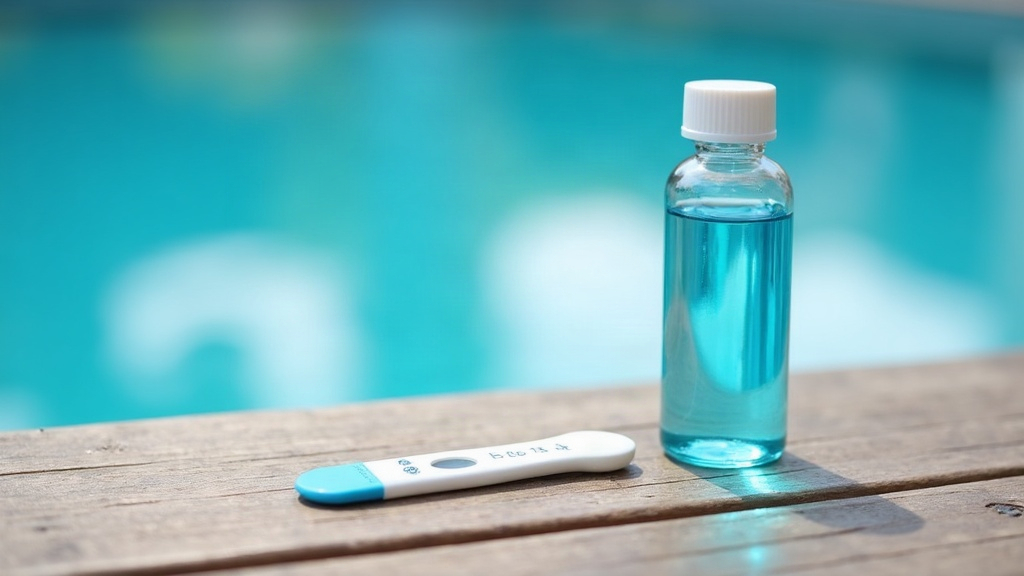
Test strips and liquid reagent kits both measure total alkalinity and pH, usually as separate pads or separate reagent drops within the same kit. Reading them together, rather than one at a time on different days, gives a much clearer picture of what’s actually happening in the water.
A pool that’s freshly filled, recently drained, or topping up often after evaporation is a good candidate for closer testing — new or diluted water rarely holds the same balance as water that’s been circulating and chemically stable for weeks. The difference between ordinary evaporation and a real water loss problem is explained in Evaporation vs Real Pool Leak: How to Tell the Difference.
What should be done about an out-of-range reading?
The correct response to a low or high reading is to follow the instructions on the specific product being used, because the right adjustment depends on the pool’s water volume, the current test numbers, and that product’s own concentration — none of which a general article can know in advance.
A few handling points apply regardless of which product is used:
- Store pool chemicals separately from each other, in a dry, ventilated space out of direct sun.
- Never mix chlorine products with acid-based products directly — combining them can produce toxic gas, and this has caused serious injury and death.
- Add one product at a time, allow it to circulate, and retest before adding anything else.
- Keep chemical containers sealed, labeled, and out of reach of children and pets.
Beyond that, the safest approach is reading the label on the product actually in hand and, where there’s doubt, asking a local pool supply store that knows the product line.
Does total alkalinity affect chlorine’s performance?
Total alkalinity affects chlorine indirectly, by stabilizing the pH that chlorine’s effectiveness depends on. Chlorine itself works differently depending on whether it’s free, combined, or spent, which is a separate topic covered in Free vs Combined vs Total Chlorine: What’s the Difference?.
What chlorine actually does once it’s in balanced water — and why sanitizing and oxidizing are two different jobs — is explained further in What Does Chlorine Actually Do in a Swimming Pool?. Balanced alkalinity and pH are the conditions that let chlorine do that job consistently, rather than working well one day and poorly the next.
Does equipment care about total alkalinity and pH too?
Yes — pumps, heaters, filters, and metal fittings all sit in contact with pool water constantly, and water that’s chronically too acidic or too high in alkaline minerals can corrode or scale that equipment over years of exposure. Balanced water is cheaper to run equipment in over the long term than water left to drift.
Circulation also plays a role in keeping chemistry even throughout the pool rather than pooling unevenly near returns or dead spots. How that circulation happens, and why it needs to run daily, is covered in Why Does a Pool Need to Be Circulated Every Day? and How Does a Swimming Pool Actually Circulate Water?.
For readers wanting to understand what sits on the pad producing that circulation — pump, filter, heater, and the valves between them — the Pumps, Filters & Heaters hub and What Is a Pool Equipment Pad and What’s on It? are good starting points. Any electrical or gas work on that equipment is licensed-trade territory, not a chemistry question, and should go through a qualified professional.
Where does this fit into overall pool care?
Total alkalinity and pH are two of several numbers that make up water balance, alongside sanitizer level and other readings covered across the Water Chemistry hub. None of them tell the full story alone, which is why regular testing checks several readings together rather than fixating on one.
For anyone still getting familiar with the basics of pool ownership and maintenance, the Pool Basics hub is a good general starting point, and the Buying & Costs hub covers what ongoing maintenance and equipment decisions actually cost to weigh up over time.
Consistent testing, adjusting one thing at a time, and following the label on whatever product is in hand will keep total alkalinity and pH working the way they’re meant to — together, not as competing numbers to chase separately.
Pools Shop publishes general information, not professional advice. Pool chemicals, electrical work and structural work are genuinely hazardous and are governed by local codes that vary — use a qualified professional for anything you are not certain about, and follow the instructions on the product in front of you rather than a general guide. Nothing here is a substitute for active adult supervision around water: no cover, alarm, fence or device makes a pool safe on its own.