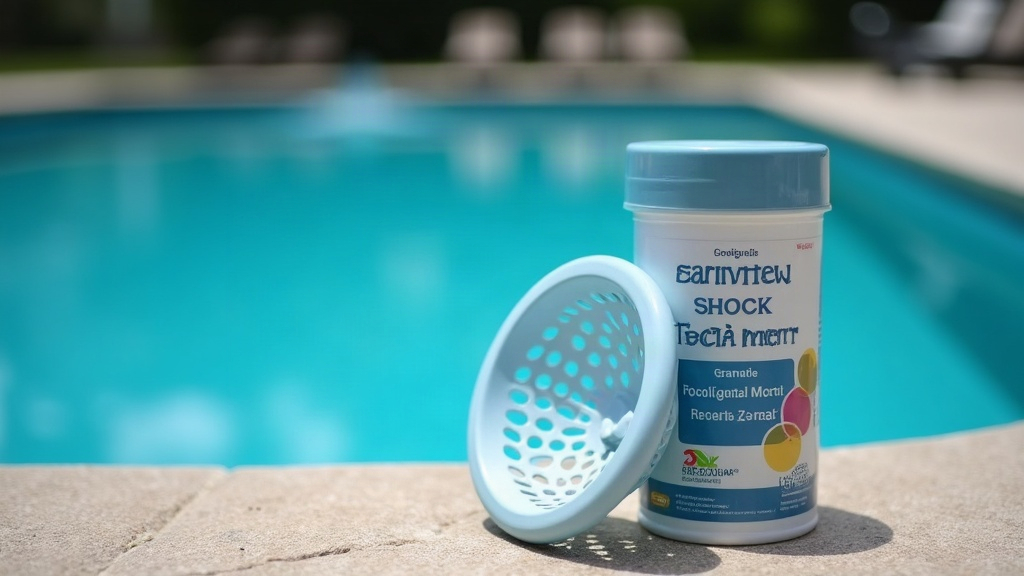
Shocking a pool means adding a large, one-time dose of a chlorine-based (or non-chlorine) oxidizer to raise chlorine sharply above its normal level. The jolt breaks down built-up waste — sweat, oils, urine, algae — that regular daily chlorine dosing hasn’t been able to keep up with. It’s done periodically, not every day.
What does “shocking” actually mean?
Shocking is a deliberate, temporary spike in oxidizer level, far above the level a pool is normally kept at for swimming. The goal isn’t to make the water “extra clean” in a vague sense — it’s to overwhelm the contamination that’s accumulated in the water faster than routine chlorine additions have been able to handle it.
The word covers a few different products. Some are chlorine-based, some are non-chlorine oxidizers. What they do — oxidize organic waste and restore sanitizer’s ability to work — matters more than the brand name on the bag. The correct amount for any given pool depends on the water’s volume and its current test readings, along with the specific product’s strength, so the label on the product in front of the reader is the only reliable source for how much to use. This article won’t state a dose, and it won’t describe combining products — that’s exactly the kind of decision that has to be made against current numbers, not a generic guide.
Why does a pool need shocking if it’s chlorinated daily?
Daily chlorine additions handle routine sanitizing, but they can get consumed faster than expected by heavy bather load, heat, sunlight, or a stretch of rain and debris. Shocking clears the backlog those daily doses couldn’t keep up with.
Chlorine in pool water splits into two functional forms. Free chlorine is the active sanitizer still available to do work; combined chlorine is what’s left after it’s already reacted with contaminants. That combined portion is largely what produces the sharp “chlorine” smell and eye irritation people associate with over-chlorinated water — ironically, it usually signals chlorine that’s used up, not excess. The difference between free, combined and total chlorine is explained in more detail on the site, and it’s worth understanding before deciding a pool needs shocking at all.
A heavy, harsh chemical smell coming off a pool is one of the more common triggers for a shock treatment, and it’s covered on its own, since the smell is often misread as “too much chlorine” when it’s the opposite.
When should a pool actually be shocked?
Common triggers include a strong chemical odor, cloudy or dull water, visible algae, heavy rain or storm runoff, a big swim event with many bathers, opening a pool for the season, or a chlorine test that comes back persistently low despite regular dosing.
- Water looks cloudy or hazy without an obvious filtration problem
- A sharp, unpleasant chlorine smell hangs around the pool or deck area
- Algae is visible on walls, steps or the floor
- The pool has just reopened after being closed or covered for a season
- A large group has used the pool heavily over a short period
- Heavy rain, wind-blown debris or a storm has hit the water
- A test shows chlorine has dropped and stayed low despite normal additions
None of these should be judged by eye alone. A test kit or test strips are the only way to know whether chlorine is actually low, and testing before and after a shock is what confirms it worked. A pool that “looks fine” can still have depleted sanitizer, and one that smells strong of chlorine may in fact need more of it, not less.
Does cloudy water always mean the pool needs shocking?
Not always. Cloudiness has several possible causes, and shocking is only the right fix when testing points to a sanitizer or organic-waste problem rather than a filtration or water-balance issue.
Cloudy water can come from poor circulation, a dirty filter, fine debris the filter isn’t catching, or water chemistry that’s out of balance in ways that have nothing to do with chlorine level. A closer look at the common causes of cloudy pool water is worth reading before assuming a shock is the answer — sometimes the fix is running the pump longer or cleaning the filter, not adding oxidizer.
Because a shock only works properly on water that’s circulating, it’s usually done with the pump running, and pool owners are generally advised to keep it running for a stretch afterward so the treated water actually reaches every part of the pool. How a pool moves and circulates water day to day is covered separately, and it explains why turnover matters for more than just shocking.
Is it safe to swim right after shocking?
Swimming is generally paused after a shock until chlorine has come back down to a normal, safe range confirmed by testing — not by a fixed number of hours or by smell. The label on the specific product used is the authority on wait time, since products and strengths differ.
This is one of the few chemistry questions where testing genuinely replaces guessing. A test kit will show when chlorine has settled back into the pool’s normal operating range. Until then, the water is holding more active sanitizer than it’s meant to have for swimming.
Does cyanuric acid or pH affect how well shocking works?
Yes. High cyanuric acid (stabilizer) can blunt chlorine’s effectiveness, and pH outside its normal range changes how well chlorine works in the water — both can mean a shock underperforms even at a correct dose.
Cyanuric acid protects chlorine from being burned off quickly by sunlight, but too much of it can suppress how actively chlorine reacts with contaminants — a phenomenon sometimes called chlorine lock. What cyanuric acid does and why it’s called stabilizer is explained on its own page, and it’s directly relevant to anyone whose pool seems to resist shocking.
pH is just as important. Chlorine’s ability to sanitize shifts noticeably depending on where pH sits, so a pool with pH far out of range may not respond to a shock the way expected, even with the right amount of product. The real difference between pH and total alkalinity — two numbers often confused with each other — is worth understanding before troubleshooting a stubborn chlorine reading. What pH is and why it matters in a pool is covered separately too.
How should shock products be stored and handled?
Pool shock products should be stored in a cool, dry place, kept in their original containers, and always kept well separated from acid-based products and other pool chemicals. Chlorine products mixed with acid can produce toxic gas, and this has caused real harm — never combine pool chemicals of any kind.
Granular and liquid products should never share a shelf, bin or spill tray with muriatic acid, pH-down products, or other oxidizers unless the label explicitly says otherwise. If a container is damaged, discolored, or its contents are unknown, the safest move is not to guess — dispose of it according to local hazardous waste guidance rather than attempting to use or mix it.
Does shocking replace normal water chemistry maintenance?
No. Shocking corrects a backlog; it doesn’t substitute for daily circulation, routine testing, or keeping pH, alkalinity and calcium hardness in reasonable ranges. Skipping ongoing maintenance just means the pool needs shocking again sooner.
Water that’s genuinely clear and easy to keep sanitized depends on more than chlorine level alone — filtration, turnover rate and balanced water chemistry all play a part. What actually makes pool water clear covers that bigger picture, and why calcium hardness matters is worth a look too, since hardness affects both water comfort and equipment over time.
The equipment side matters as well. A shock only circulates properly if the pump, filter and plumbing are doing their job — what’s on a typical equipment pad and how a pump moves water through the system are good starting points for pool owners who want to understand the mechanical side of the process, not just the chemical one.
When is it worth asking someone with more experience?
If chlorine won’t hold steady despite regular shocking, if algae keeps returning, or if test results seem inconsistent with what the water looks like, it’s worth asking a local pool professional or a knowledgeable retailer to look at the fuller picture — including equipment function, not just chemistry.
Persistent problems sometimes point to a filtration or circulation issue rather than a chemistry one. The pumps, filters and heaters category and the water chemistry category on this site cover the underlying systems in more depth, and are a reasonable starting point before assuming more shock is the answer. For anyone still deciding between pool types or comparing running costs, the buying and costs category and pool basics category are useful background too.
Pools Shop’s editorial team researches this topic carefully as enthusiasts, not as licensed pool technicians or chemists — for a pool with a chronic or unusual problem, a professional assessment is the more reliable path.
Related reading
Why Does a Pool Smell of Chlorine When Chlorine Is Low?, What Is Chlorine Lock and What Actually Causes It?, What Is Cyanuric Acid and Why Call It Pool Stabiliser?, Why Does Calcium Hardness Matter in Pool Water?, Total Alkalinity vs pH: What’s the Real Difference?.
Pools Shop publishes general information, not professional advice. Pool chemicals, electrical work and structural work are genuinely hazardous and are governed by local codes that vary — use a qualified professional for anything you are not certain about, and follow the instructions on the product in front of you rather than a general guide. Nothing here is a substitute for active adult supervision around water: no cover, alarm, fence or device makes a pool safe on its own.