Pool barrier and fence codes typically require a barrier of a minimum height around the pool area, with no gaps or footholds a small child could climb, and a self-closing, self-latching gate that opens away from the pool. Exact numbers vary by jurisdiction, so the local building or health department is the authority to confirm what applies to a specific property.
These rules exist because a barrier is one layer in a safety plan, not a solution on its own. Nothing about a fence, gate, or latch replaces a designated adult actively watching the water whenever anyone is near it. Codes are written around that reality: barriers are meant to slow unsupervised access, mainly by young children, in the moments when supervision briefly lapses.
Why do pools need a barrier at all?
A barrier exists to create a physical delay between a wandering child and open water, buying seconds that matter if supervision is interrupted. It is one part of a layered approach that also includes alarms, locked access, and constant adult attention.
Drowning can happen quickly and quietly, often without the splashing or calling out that people expect. That is the core reason regulators treat pool barriers as a legal requirement rather than an optional feature. For a broader look at how the different layers work together, see what layered pool safety actually means.
What height do pool fences usually need to be?
Most codes set a minimum fence height measured from the ground on the side facing away from the pool, often somewhere in the general range used for residential safety barriers. The specific figure, and how it is measured on sloped ground, depends entirely on the local code in force.
Height rules typically also address:
- How close the top of the fence must be to any nearby structure a child could use to climb over
- Whether items like patio furniture or planters have to be kept away from the barrier
- How the height is measured if the ground level differs on either side of the fence
Because these thresholds differ by state, province, or municipality, a permit office or local code enforcement contact is the only reliable place to confirm the actual number for a given address.
How big a gap is allowed between fence pieces?
Codes commonly limit the horizontal and vertical gaps in a barrier so a small child cannot squeeze through or fit a foot in to climb. The typical concern is any opening a child’s body or shoe could pass through, not just openings a person could obviously fit.
Inspectors usually look at:
- Spacing between vertical pickets or slats
- The gap under the bottom rail and the ground
- Horizontal rails or cross-members that could be used as a ladder if spaced wrong
- Any decorative pattern in a fence that inadvertently creates footholds
Chain-link fencing, lattice, and decorative metalwork are common points of failure in real inspections, because patterns that look fine to an adult eye can still offer a toehold to a small child.
What do codes require of pool gates?
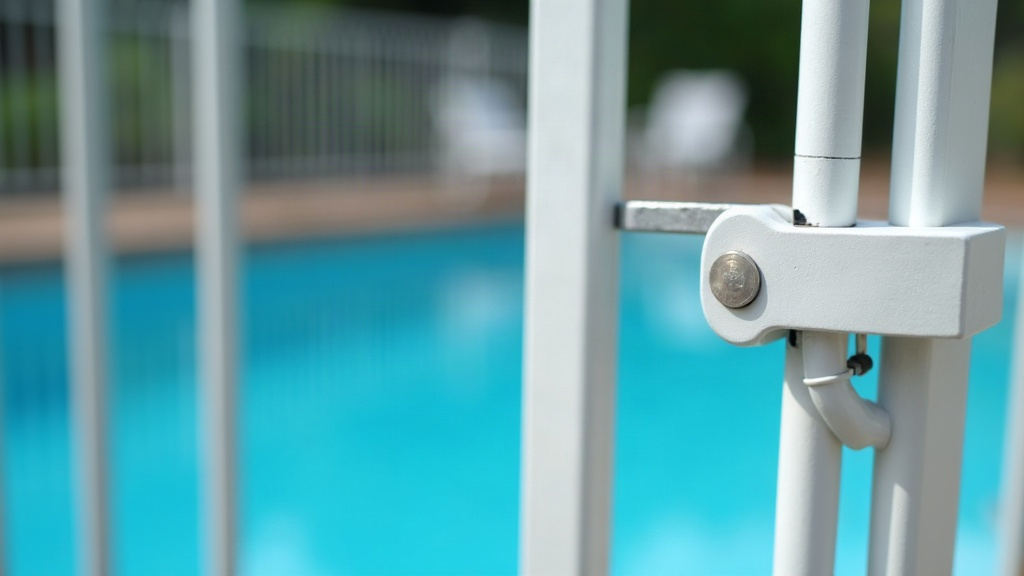
Gates typically must be self-closing and self-latching, swing away from the pool, and have the latch release mechanism mounted high enough that a young child cannot reach it, even by climbing. Many codes also require the latch to be on the pool side of the gate.
Common gate requirements include:
- A self-closing hinge so the gate cannot be left open
- A self-latching mechanism, not just a manual latch someone has to remember to use
- Latch release height set well above a small child’s reach
- Swing direction away from the pool so pressure from a child pushing does not open it
A gate that is propped open, blocked by a hose reel, or has a broken self-closer no longer functions as a barrier, regardless of what it looked like when installed.
Does the house itself count as part of the barrier?
In some jurisdictions, a wall of the house can serve as one side of the required barrier, but only if every door and window that opens onto the pool area meets separate alarm or latch requirements. This is one of the more commonly misunderstood parts of pool barrier code.
Where the house counts as part of the enclosure, codes often require:
- Door alarms that sound when a door to the pool area is opened
- Self-closing and self-latching mechanisms on those doors
- Specific alarm requirements for sliding doors, which are a frequent unsupervised access point
None of these alarms are a stand-in for a person watching the pool. They are there to make an unnoticed opening less likely to go unnoticed, which is a different job entirely.
Are pool alarms required in addition to a fence?
Many jurisdictions require an additional layer beyond the fence itself, such as a door alarm, gate alarm, or a water-surface or subsurface pool alarm, particularly where a house wall forms part of the barrier. Requirements vary widely on this point.
Where alarms are mandated, code usually specifies:
- What triggers the alarm (a door opening, or disturbance at the water surface)
- How loud the alarm must be and where it must be audible
- Whether the alarm can be temporarily disabled by an adult, and for how long
An alarm can alert someone that access has occurred, but it does not prevent that access, and it does not replace the moment-to-moment attention of a supervising adult.
Do above-ground pools need the same barrier as in-ground pools?
Many codes treat an above-ground pool’s own wall as part of the barrier, provided the exterior is climb-resistant and any ladder or steps are removable or lockable when the pool is not in use. But this exemption is not universal, and some jurisdictions still require a separate perimeter fence.
Points that typically get checked on above-ground pools include:
- Whether the pool wall itself is smooth enough to resist climbing
- Whether the ladder can be secured, removed, or locked away from the pool
- Whether a deck attached to the pool creates an access point that needs its own gate
A pool bought as a seasonal or temporary setup can still trigger a local permit requirement, so it is worth checking before installation, not after. General information on what buying a pool involves is covered in the buying and costs section.
Do spas and hot tubs need a barrier too?
Many codes exempt a spa or hot tub from a full pool fence if it has a code-compliant, lockable safety cover that is kept closed and secured whenever the spa is not in active use. The requirement is about the cover being a genuine locking barrier, not just a floating cover for warmth or debris.
Even where a hard, locking cover satisfies the letter of the code, it does the same job as any barrier: it slows access when nobody is watching. It is not a reason to leave a young child near an open or uncovered spa unsupervised. More on how hot tubs differ from pools day to day is in the hot tubs and spas section.
What happens during a pool barrier inspection?
An inspector typically checks fence height and gap sizes, tests that gates self-close and self-latch from various positions, confirms latch height, and looks at any door or window alarms required where the house forms part of the enclosure. They may also check for recent changes like added furniture or landscaping that compromise the barrier.
Common reasons a barrier fails inspection include:
- A gate propped open or held with a hook instead of latching properly
- Furniture, planters, or equipment placed close enough to the fence to be used to climb over
- A broken or disconnected self-closing hinge
- Gaps that have widened due to a settling fence post or damaged panel
Barriers are not a one-time installation. A fence that passed inspection years ago can drift out of compliance through wear, a broken latch, or a nearby object that was never there when it was first approved.
Who should be asked about local requirements?
The local building department, planning office, or health authority responsible for pool permits is the correct source for exact height, gap, gate, and alarm requirements. A licensed fence contractor or pool builder familiar with local code can also confirm what a specific property needs before work begins.
Because requirements differ by state, province, county, and sometimes even by municipality within the same region, no article can substitute for that local check. This is also the point at which any structural fence, deck, or gate installation work should go to a licensed contractor rather than being treated as a weekend project, particularly where it involves securing footings, working near existing structures, or tying into house wiring for alarms.
What else belongs in a layered safety plan besides a fence?
A compliant barrier is one layer among several that typically include constant adult supervision, door and gate alarms, locked access when the pool is unsupervised, and children learning to swim. No single layer, including the fence, is designed to work alone.
A reasonable layered approach generally includes:
- A designated adult watching the water at all times children are present, without distraction
- A code-compliant fence and self-latching gate kept in good repair
- Door or gate alarms where required, tested regularly
- Locking the pool area or securing above-ground ladders when not in use
- Swim lessons appropriate to the child’s age, understood as a skill layer, not a safety guarantee
For a fuller explanation of how these layers fit together and why none of them stands alone, see what layered pool safety actually means, and browse the safety section for related topics. General pool ownership basics, including what a new owner needs to plan for before a pool is even built, are covered in the pool basics section.
Pools Shop publishes general information, not professional advice. Pool chemicals, electrical work and structural work are genuinely hazardous and are governed by local codes that vary — use a qualified professional for anything you are not certain about, and follow the instructions on the product in front of you rather than a general guide. Nothing here is a substitute for active adult supervision around water: no cover, alarm, fence or device makes a pool safe on its own.