A pool alarm is a device that detects something — a splash, a wave, motion in the water, or a gate or door opening — and sounds a warning. It can buy seconds of notice. It cannot watch a child, stop a fall, or replace an adult paying attention to the water.
That distinction matters more than the marketing on the box. Pool alarms are one layer in a safety plan, not a stand-in for supervision. Understanding what they actually sense, and what they miss, helps set realistic expectations before relying on one.
What types of pool alarms exist?
Most pool alarms fall into a few categories, each sensing a different kind of event. None of them “watch” the pool the way a person does — they react after something has already happened.
- Surface wave alarms float on the water and detect the ripples or waves caused by something entering the pool.
- Subsurface (underwater) alarms use sensors mounted below the waterline to detect displacement caused by a body entering the water.
- Wearable alarms attach to a child’s wrist and sound if the wearable becomes submerged.
- Gate and door alarms trigger when a pool gate, fence gate, or a door leading to the pool area is opened.
Each type answers a narrow question — was there a splash, is this wearable underwater, did this gate open — and nothing more.
What can a pool alarm actually detect?
A pool alarm detects the specific event it’s built to sense: a disturbance on or under the water’s surface, a submerged wearable, or an opened gate or door. It cannot detect a person standing at the edge, a slow entry, or a struggle that doesn’t trigger its sensor threshold.
Surface and subsurface alarms are generally tuned to filter out background noise like wind, rain, or the pool’s own circulation, so they don’t go off constantly. That filtering means small entries — a young child slipping in quietly rather than jumping — can sometimes fall below the threshold that triggers the alarm.
Wearable alarms only work if the wearable is actually on the child and functioning. A device left in a bag, a low battery, or a forgotten wristband provides no protection at all.
What can a pool alarm not do?
A pool alarm cannot prevent an entry into the water — it can only report one after it has started. It cannot see, cannot judge urgency, and cannot call for help itself. It only makes a sound; a person still has to hear it, understand it, and respond immediately.
Some situations a pool alarm will typically miss or cannot address:
- A person already in the water who is in distress but not causing enough disturbance to retrigger the alarm.
- Someone entering through a route the alarm doesn’t cover, such as climbing over a fence away from a monitored gate.
- A false sense that the area is covered when the alarm is turned off, unplugged, or the battery has died.
- Any delay between the alarm sounding and an adult being close enough, and free enough, to respond.
None of this makes an alarm useless. It makes it one part of a layered plan, not the plan itself. For a broader look at how the different layers fit together, see what layered pool safety actually means.
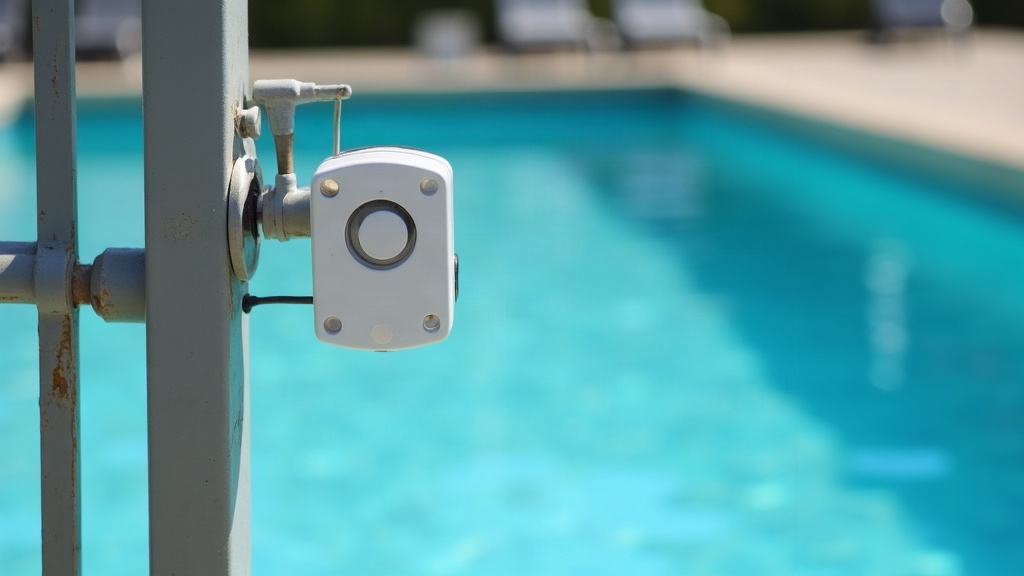
Does a pool alarm replace supervision?
No. Nothing on the market — alarm, cover, fence, or lesson — replaces a designated adult actively watching the water whenever anyone, especially a child, is in or near it. An alarm is a backup layer that may give a warning if that supervision lapses for a moment; it is not a substitute for the supervision itself.
Drowning is often described as quiet and fast. A person can go under without the loud splashing many people picture, which is part of why relying on a sound-based device alone is risky. The safest approach treats an alarm as one more chance to catch a problem, sitting behind — never instead of — a person whose job in that moment is watching the pool.
Where does a pool alarm fit alongside a fence or cover?
A pool alarm works best as one layer among several: a compliant barrier around the pool, self-closing and self-latching gates, a cover when the pool isn’t in use, swim lessons, and constant supervision when anyone is in or near the water. Each layer covers a gap the others don’t.
A fence or gate can slow or stop access when no one is watching. A cover can block casual access when the pool is closed for the season or the day. An alarm can flag that a gate opened or the water moved when it shouldn’t have. None of these layers is designed to work alone, and local regulations often require several of them together — not as a suggestion, but as a legal minimum in many areas.
Requirements for barrier height, gate self-closing hardware, and alarm placement vary by jurisdiction, so it’s worth checking local code and permit requirements directly rather than assuming a manufacturer’s claim meets the legal standard. A good starting point is understanding what pool barrier and fence codes typically require, then confirming the specifics with the local building or planning authority.
What should someone check before buying a pool alarm?
Before choosing a pool alarm, it helps to check what type of event it detects, how it’s powered, whether it needs regular testing, and whether it’s rated for the way the pool is actually used — including with a cover on or with a hot tub attached.
- Detection type: surface, subsurface, wearable, or gate — each catches a different scenario, and some pools use more than one.
- Power and battery life: an alarm with a dead battery gives no warning at all, so check how it signals low power and how often that needs checking.
- Interaction with covers: a cover that sits on the water can interfere with wave or subsurface sensors, so check the manufacturer’s guidance on using the two together.
- False alarm tolerance: heavy wind, rain, or a running pump can trigger some models; understand how the specific product handles that before assuming every alert is real.
- Manufacturer instructions: installation position, sensitivity settings, and testing intervals vary by product, so the label and manual are the reliable source, not general assumptions.
None of this is a substitute for reading the actual product documentation for the specific alarm being considered, since sensitivity, range, and reliability differ between manufacturers and this article cannot speak to features it hasn’t tested.
How does a pool alarm fit into everyday pool ownership?
A pool alarm sits alongside the routine parts of owning a pool — checking equipment, maintaining water, and keeping the deck and surrounding area in good order. It’s a small piece of a much larger set of habits that keep a pool running and reasonably supervised.
For readers building out that broader picture, the Safety archive covers barriers, layered planning, and related topics in more depth, while the Pool Basics archive and Buying & Costs archive are useful starting points for anyone still deciding what equipment a pool actually needs versus what’s optional.
An alarm is a genuinely useful tool when it’s understood correctly: a warning device, not a guardian. Its value comes from being one honest layer in a system that depends, above everything else, on someone watching the water.
Pools Shop publishes general information, not professional advice. Pool chemicals, electrical work and structural work are genuinely hazardous and are governed by local codes that vary — use a qualified professional for anything you are not certain about, and follow the instructions on the product in front of you rather than a general guide. Nothing here is a substitute for active adult supervision around water: no cover, alarm, fence or device makes a pool safe on its own.