A pool pump pulls water out of the pool, pushes it through the filter to strip out debris, and sends it back through the return jets. It’s the heart of circulation — without it, water sits still, chlorine stops moving through the pool evenly, and debris and algae get a foothold within days.
What is the pump’s actual job?
The pump moves a set volume of water through the plumbing system on a schedule, cycling every gallon in the pool through the filter over time. It doesn’t clean water itself — that’s the filter’s job — but nothing gets filtered, heated, or chemically treated without the pump moving it there first.
Think of the pump as the circulatory system’s muscle. It creates suction on one side (pulling water in from the skimmer and main drain) and pressure on the other (pushing filtered water back out through the returns). Everything downstream — filter, heater, chlorinator, salt cell — depends on that flow existing in the first place.
How does water actually get from the pool to the pump?
Water enters through the skimmer at the surface and the main drain at the bottom, travels through underground pipes, and arrives at the pump’s strainer basket before the impeller pulls it through.
The skimmer handles floating debris — leaves, bugs, sunscreen film — while the main drain pulls from the deep end, helping keep the whole body of water moving rather than just the top layer. Readers wanting the fuller picture of how these two work together, and why relying on just one leaves gaps, can see the real difference between a skimmer and a main drain explained in more depth.
Once water reaches the pump, a spinning impeller inside flings it outward under pressure, forcing it onward to the filter. That spinning part is essentially the only moving component in the whole system, which is why pump problems usually trace back to something blocking or straining that motion.
What happens between the pump and the filter?
After the pump pressurizes the water, it passes through the filter, where trapped material — sand bed, cartridge pleats, or a layer of diatomaceous earth, depending on filter type — physically strains out particles before the water heads back to the pool.
The pump and filter are a pair, not two separate systems. A pump can move water perfectly and the pool will still cloud up if the filter is clogged, hasn’t been cleaned, or is the wrong size for the pump’s flow rate. Likewise, a struggling pump means the filter simply isn’t getting enough water to do its job on schedule.
For a broader walk-through of the full loop — skimmer or drain, to pump, to filter, to heater or chlorinator, back to the returns — the explanation of how a pool actually circulates water covers each stage in order.
Why does the pump matter for chemicals and water clarity?
Circulation is what carries chlorine, algaecide, or any other treatment evenly through the whole pool instead of leaving it concentrated near where it was added. Without steady flow, chemicals settle unevenly and problem areas — corners, steps, shaded ends — can develop algae even while the rest of the water tests fine.
This is also why pump run time matters more than most owners expect. A pool that circulates for too few hours a day may never fully turn over its water, meaning parts of the pool are effectively getting “stale” water while chemicals are working elsewhere. The right run time depends on pool volume, pump flow rate and local climate, so there’s no single number that fits every pool — a local pool professional or the pump’s own documentation is the right place to work that out for a specific setup.
None of this changes how chemicals should be handled. Chlorine products and pool acid must always be stored separately and never combined directly — mixing them produces toxic gas, which has caused real harm. An article can explain what a chemical does and what to test for; the amount to add always depends on current test readings and the exact product on the shelf, so the product label is the reliable guide, not a rule of thumb.
What are the different parts inside a pump?
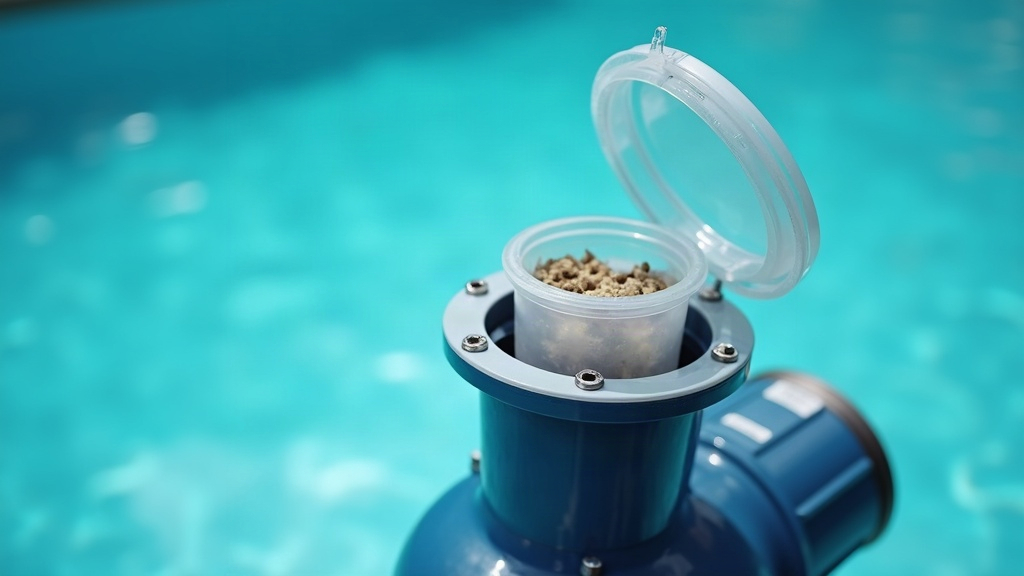
A typical residential pump has a motor, an impeller, a strainer basket, and a housing that seals it all together. Each part has one job, and most pump complaints trace back to one specific part rather than “the pump” as a whole.
- Strainer basket: catches larger debris before it reaches the impeller, preventing clogs and protecting the moving parts.
- Impeller: the spinning component that actually creates flow by flinging water outward under pressure.
- Motor: spins the impeller and is the part most likely to wear out or need electrical attention over time.
- Seals and housing: keep water contained and pressurized rather than leaking out at every joint.
Knowing which part is which helps when describing a problem to a professional — “the basket keeps filling with debris” points to something very different than “the motor is humming but not spinning.”
What does it mean when a pump is single-speed, dual-speed, or variable-speed?
These terms describe how much control the pump gives over flow rate. Single-speed pumps run at one fixed speed whenever they’re on. Dual-speed pumps offer two settings. Variable-speed pumps can run at a wide range of speeds, often adjusted to match exactly what the filter and pool actually need at a given moment.
Running a pump slower for longer, when the equipment supports it, can move the same total volume of water with less strain on the motor — this is one reason variable-speed pumps have become common. Exact energy savings depend heavily on local electricity rates, pool size and how the pump is programmed, so it’s worth asking an installer to walk through the numbers for a specific pool rather than relying on a general percentage figure.
Can a pool owner install or wire a new pump?
No — pump installation and wiring is licensed electrical work, not a weekend project. Pumps sit near a large body of water, run on dedicated electrical circuits, and are governed by local electrical code covering bonding, grounding and circuit protection.
A qualified electrician or licensed pool professional should handle installation, replacement wiring, or any repair involving the motor’s electrical connections. What a homeowner can reasonably do is describe the problem clearly — noise, leaking, tripped breaker, reduced flow — and ask the professional what’s involved and what it will take to fix. Getting quotes from more than one licensed installer is a reasonable step before committing to a repair or replacement.
What are signs a pump might need attention?
Common warning signs include unusual noise, reduced water flow from the returns, visible leaking around the housing, or a strainer basket that fills with debris unusually fast. None of these confirm exactly what’s wrong on their own, but they’re useful details to report to a professional.
- Reduced pressure at the return jets, suggesting restricted flow somewhere in the system.
- A humming motor that isn’t actually spinning the impeller.
- Visible water pooling at the base of the pump housing.
- A noticeably louder or grinding sound compared to normal operation.
Any of these are reasonable prompts to call a licensed pool professional rather than opening up the motor housing. Pump motors involve electrical components working close to water, and that combination is exactly the kind of code-governed work that belongs to a licensed trade.
Does the pump play any role in pool safety?
A pump keeps water circulating and chemically balanced, but it has no role in preventing drowning. Barriers, alarms, learning to swim, and — above all — a designated adult actively watching the water are the layers that actually matter for safety around a pool, and nothing about the equipment pad changes that. Local code often sets requirements for fencing, gates and alarms around residential pools, and those requirements vary by location, so checking with the local building department is the right step before assuming any barrier meets the legal standard.
For more on the fundamentals of how a residential pool actually works day to day, the Pool Basics section is a reasonable starting point.
Pools Shop publishes general information, not professional advice. Pool chemicals, electrical work and structural work are genuinely hazardous and are governed by local codes that vary — use a qualified professional for anything you are not certain about, and follow the instructions on the product in front of you rather than a general guide. Nothing here is a substitute for active adult supervision around water: no cover, alarm, fence or device makes a pool safe on its own.