A pool needs daily circulation because sitting water doesn’t clean itself. Running the pump pushes water through the filter, which strains out debris, and it carries sanitizer to every corner of the pool. Skip circulation and the filter stops working, sanitizer settles unevenly, and algae and cloudiness can take hold within a day or two.
What does circulation actually do for a pool?
Circulation is the process of the pump pulling water in, pushing it through the filter, and returning it to the pool. That movement is what lets the filter catch dirt and lets chemicals spread evenly instead of pooling in one spot.
Without circulation, a pool is really just a large, still tank of water with chemicals dumped in one place. Filtration, sanitizing, and even heating all depend on the water actually moving past the equipment doing the work. For a fuller breakdown of how the loop works from skimmer to return jet, see how a swimming pool actually circulates water.
What happens if a pool isn’t circulated daily?
Without daily circulation, sanitizer can’t reach all areas of the pool evenly, so some zones lose protection faster than others. Debris settles instead of getting filtered out, and warm, still water becomes a much easier environment for algae to establish itself.
- Cloudy or hazy water, especially near the bottom and corners
- Green or slippery patches starting in shaded or low-flow areas
- Uneven sanitizer levels — fine in one spot, gone in another
- Debris and fine particles that never make it to the filter
These problems tend to snowball. A pool that goes cloudy is harder to sanitize because sunlight and organic material both work against the sanitizer, and by the time it’s visibly green, restoring clarity usually takes more time and more product than staying ahead of it would have.
How does the pump move water around the whole pool?
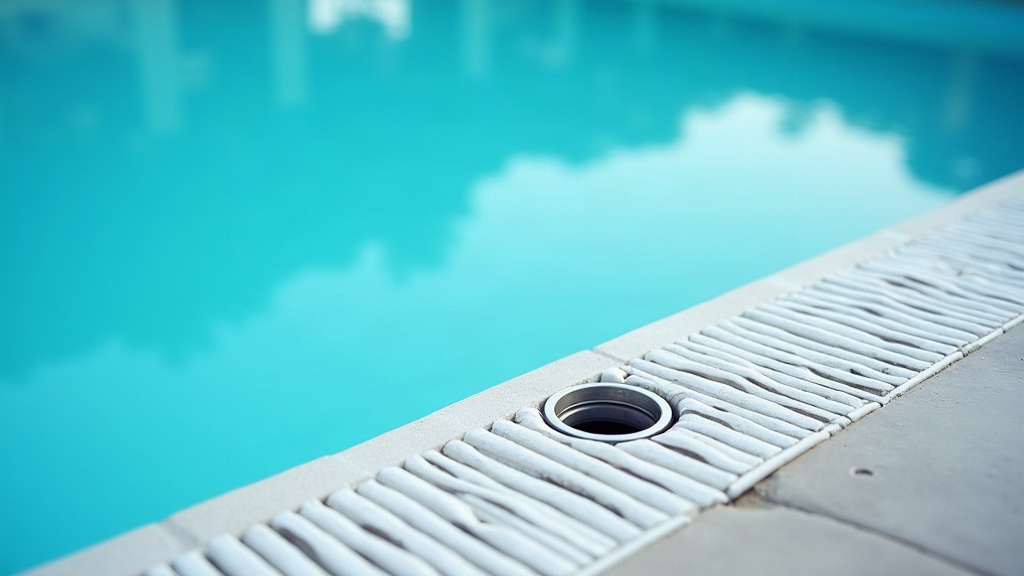
The pump draws water in through the skimmer and main drain, forces it through the filter, and sends it back out through return jets aimed to create a circular flow. That flow pattern is what keeps water moving instead of stagnating in corners.
Skimmers and the main drain do different jobs in that intake side of the loop — skimmers pull from the surface where floating debris and oils collect, while the main drain pulls from the bottom. The difference matters for how well a pool actually circulates; it’s covered in more detail in skimmer vs. main drain: what’s the real difference.
The pump itself is the engine behind all of this. For readers who want the mechanics of what’s happening inside that housing, what does a pool pump actually do walks through it in plain terms.
How long should a pool pump run each day?
Run time depends on the pool’s volume, the pump’s flow rate, and how much debris and sun exposure the pool gets — there’s no single number that fits every pool. Turning over the entire volume of water at least once a day is the general goal.
Warmer weather, heavy pool use, nearby trees, and higher bather loads all push toward longer run times. A pool that’s shaded, lightly used, and in a cooler climate can often get by with less. Because of this variation, it’s worth avoiding invented rules of thumb about exact hours per day — the honest answer is that it depends on the specific pool, and a pool professional familiar with the equipment on site can help fine-tune a schedule.
Many owners split run time across the day rather than running the pump in one long stretch, particularly to cover peak sun hours when sanitizer breaks down fastest and peak use hours when the pool is dirtiest.
Can a pool be circulated with a smaller or variable-speed pump to save energy?
Variable-speed pumps can run longer at a lower speed, which keeps water moving without the higher energy draw of running a single-speed pump at full power the whole time. The right settings still depend on the pool’s size and the pump’s own specifications.
This is a case where the pump’s own documentation and a professional’s guidance matter more than a general rule. An oversized or undersized pump for the pool’s volume can leave circulation weaker than it looks on paper, so matching equipment to the pool is a job worth discussing with someone familiar with the site. General background on pump types and roles is available in the pumps, filters & heaters section.
Does circulation replace testing and adding chemicals?
No. Circulation distributes sanitizer and helps the filter do its job, but it doesn’t sanitize the water on its own and it doesn’t replace regular testing. A pool still needs its own chemical readings checked and adjusted based on current conditions.
Test strips or a test kit remain the way to know what’s actually happening in the water — pH, sanitizer level, and other readings can shift daily depending on weather, bather load, and sunlight. Always follow the instructions on the specific product’s label rather than guessing at amounts, since the correct amount depends on the pool’s volume and the current test results.
Chlorine-based products and acid-based products must always be stored separately and never combined — mixing them can produce dangerous gas. This applies to storage as well as to adding products to the pool; add them to the water separately, never together.
Is poor circulation ever a sign of an equipment problem?
Yes. Weak or uneven circulation can point to a clogged filter, a failing pump, a closed or partially blocked valve, or an issue with the plumbing itself. Persistent problems are worth investigating rather than compensating for with extra chemicals.
Pump motors, wiring, bonding and grounding near a pool are code-governed work that should be handled by a licensed electrician or pool professional — not a weekend project. If a pump is tripping breakers, making unusual noises, or simply not moving water the way it used to, that’s a sign to call someone qualified rather than to open up the equipment. The pool basics hub is a good starting point for understanding normal versus abnormal signs before making that call.
Does circulation matter for pool safety?
Circulation keeps water clear enough to see the pool floor and anyone in it, which supports visibility — but it is not a safety measure on its own. Clear water helps a watching adult see what’s happening; it does not substitute for that adult being there.
Barriers, alarms, and lessons all add layers of protection around a pool, and local code often sets requirements for fencing and alarms that are worth checking with a local building or code authority. None of those layers, including clear water, changes the fact that constant, direct adult supervision is what actually prevents drowning. Nothing on this list replaces a designated adult watching the water whenever anyone is in or near the pool.
What’s the simplest way to keep circulation on track?
A consistent daily run time, a filter that gets checked and cleaned on a normal schedule, and regular testing cover most of what a pool needs. Watching for warning signs — cloudiness, weak jets, unusual pump noise — catches most problems before they become expensive ones.
- Keep the pump running on a schedule that suits the pool’s size and use
- Check and clean the filter as directed by its manufacturer
- Test water regularly and follow product labels for any additions
- Call a qualified professional for pump, wiring, or plumbing issues
None of this is complicated once it becomes routine. The habit of daily circulation, paired with regular testing, is what keeps a pool from turning into a bigger job than it needs to be.
Pools Shop publishes general information, not professional advice. Pool chemicals, electrical work and structural work are genuinely hazardous and are governed by local codes that vary — use a qualified professional for anything you are not certain about, and follow the instructions on the product in front of you rather than a general guide. Nothing here is a substitute for active adult supervision around water: no cover, alarm, fence or device makes a pool safe on its own.