Pools lose water without any leak mainly through evaporation, splash-out from swimmers, and backwashing the filter. On a hot, windy, or low-humidity day, an uncovered pool can lose a noticeable inch or more a week from evaporation alone — no cracked pipe or liner tear required.
Is it normal for a pool to lose water?
Yes. Some water loss is expected and has nothing to do with a leak. Sun, wind, low humidity, splashing, and routine filter maintenance all remove water from a pool continuously. The question isn’t whether a pool loses water — it’s whether the amount lost matches what evaporation and normal use would explain.
How much water loss is from evaporation?
Evaporation is usually the single biggest cause of water loss in an open pool, and it changes with the weather rather than staying constant. Heat, direct sun, low humidity, and wind all speed it up, which is why loss is often worse in summer and on breezy days than during calm, cool, or humid stretches.
A few things make evaporation worse:
- Higher water temperature relative to air temperature
- Wind moving across the surface
- Low humidity in the surrounding air
- An uncovered pool sitting overnight
- Water features like fountains or spillovers that increase exposed surface area
Because evaporation depends on conditions that shift day to day, it’s normal for the rate of water loss to change through the season without indicating anything has gone wrong.
Could splash-out and backwashing explain it?
Yes, and both are easy to overlook. Splash-out from swimming, diving, or pool toys sends water over the edge and down the deck drain, and it never comes back. Backwashing a sand or DE filter — running water backward through it to clean the media — sends gallons out through the waste line on purpose.
Other everyday causes worth ruling out:
- Splash-out from active swimming or games
- Backwashing or rinsing a filter as part of routine cleaning
- Water drawn off during testing or when adding chemicals via a feeder
- A partially open or leaking waste valve left in the wrong position after backwashing
A pool that hosted a pool party on a hot weekend, then got backwashed the next morning, can easily show a level drop that looks alarming but adds up cleanly once both factors are counted.
What is the bucket test and how does it work?
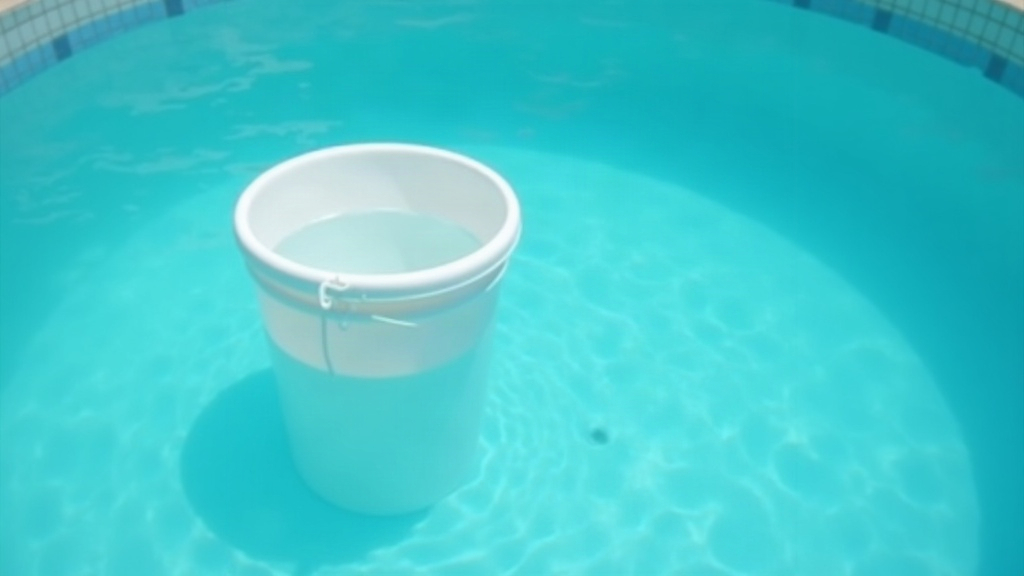
The bucket test compares water lost to evaporation against water lost from the pool overall. Place a bucket on a step so its rim sits just above the pool’s waterline, fill it to match the pool level, mark both the bucket and pool water lines, then check again after a day or two with the pump running normally.
If the pool’s level drops noticeably more than the bucket’s, something beyond evaporation is likely at work. If both drop by roughly the same amount, evaporation is a reasonable explanation and there’s no strong case for a leak yet.
Running the test over a couple of dry, calm days gives a cleaner comparison than testing right after rain or a windstorm, since both can throw off the bucket’s reading too.
Does equipment run time affect water loss?
Yes — the pump, filter, and any water features run through cycles that move and expose water, and each one can account for some of the drop. Understanding what a pool pump actually does helps explain why longer run times, more backwashing, or an active spillover all add up to more water leaving the system, separate from any leak.
Pools also need consistent movement to stay clean and balanced, which is covered in more detail in why a pool needs daily circulation and what turnover rate is and why it matters. Neither article suggests circulation itself wastes water, but the plumbing path — skimmers, main drains, filters — is worth understanding when trying to work out where water goes. The difference between a skimmer and a main drain and a broader look at how a pool actually circulates water are useful background for anyone trying to picture the whole system before assuming a leak.
Can a pool cover reduce water loss?
Yes, a cover placed over the water when the pool isn’t in use slows evaporation by blocking sun and wind contact with the surface. This is a genuine way to cut water loss and can also reduce how hard the heater and pump work to maintain conditions.
That said, a cover is a water-conservation and heat-retention tool, not a safety barrier, and it should never be treated as one. Any cover, fence, alarm, or net around a pool is one layer in a system — supervision by a designated adult watching the water is the layer that actually prevents drowning, and nothing replaces it. Barrier and cover requirements vary by location, so check local code before assuming a product satisfies any legal safety obligation.
When does water loss actually mean a leak?
Water loss likely points to a real leak when the pool keeps dropping at a similar rate on cool, calm, low-swimming days, when the bucket test shows a clear gap, or when the level stops dropping once the pump is turned off. A leak that only appears while the pump runs often points toward the plumbing or equipment pad rather than the shell itself.
Other signs worth taking seriously:
- Wet spots, soft ground, or unusually lush grass near the equipment pad or pool shell
- A consistent drop that doesn’t slow down in cooler or shadier weather
- Cracks, staining, or shifting tile at the waterline
- A noticeably higher water bill with no matching increase in evaporation conditions
- Air bubbles in the return lines or a pump that struggles to hold prime
None of these confirm a leak on their own, but together they shift the odds away from ordinary evaporation and splash-out.
What should you check before calling a professional?
Before assuming the worst, run through the ordinary explanations first: check the weather pattern over the past week, confirm whether backwashing happened recently, and run the bucket test over a calm couple of days. These steps cost nothing and rule out the most common causes.
If the pool still seems to be losing more water than conditions explain, it’s reasonable to bring in someone who can pressure-test the plumbing or dye-test the shell and fittings. Leak detection, along with any repair involving plumbing, structural cracks, or equipment wiring, is licensed trade work — not a weekend DIY project. A qualified pool professional or licensed electrician should handle anything involving bonding, grounding, or wiring near the water, and any structural repair to a shell or deck should go through a licensed contractor familiar with local permit requirements.
For readers still getting oriented on how pools are built and how their systems fit together, the Pool Basics hub and the Pumps, Filters & Heaters hub cover the fundamentals referenced throughout this article. Anyone comparing pool types before a build or renovation may also find it useful to read about vinyl liner, fiberglass, and concrete pools, since each material behaves differently when it comes to settling, cracking, and long-term water retention.
Most water loss has a simple, non-alarming explanation. Tracking weather, backwash timing, and a quick bucket test over a few calm days usually answers the question before it becomes a bigger concern.
Pools Shop publishes general information, not professional advice. Pool chemicals, electrical work and structural work are genuinely hazardous and are governed by local codes that vary — use a qualified professional for anything you are not certain about, and follow the instructions on the product in front of you rather than a general guide. Nothing here is a substitute for active adult supervision around water: no cover, alarm, fence or device makes a pool safe on its own.