“Chlorine lock” is a nickname, not an official chemical term — it describes chlorine that stops sanitizing effectively, usually because cyanuric acid (stabilizer) has built up too high, or because something in the water is consuming chlorine faster than it can work. Testing, not guessing, tells you which.
What does “chlorine lock” actually mean?
Pool owners use the phrase to describe a pool that keeps testing positive for chlorine on a strip or kit, yet the water still turns cloudy, green, or smells strong, and shock treatments seem to do nothing. It feels like the chlorine is “locked up” and unable to do its job.
There’s no single molecule or reaction that causes this. What’s really happening is that something in the water chemistry is interfering with chlorine’s ability to kill algae and bacteria and oxidize waste, even though a test shows chlorine is present. Understanding what chlorine actually does in a pool helps make sense of why it can be present but still ineffective.
What actually causes it?
A handful of real, testable conditions get lumped under the “chlorine lock” label. They’re worth separating out because each has a different fix.
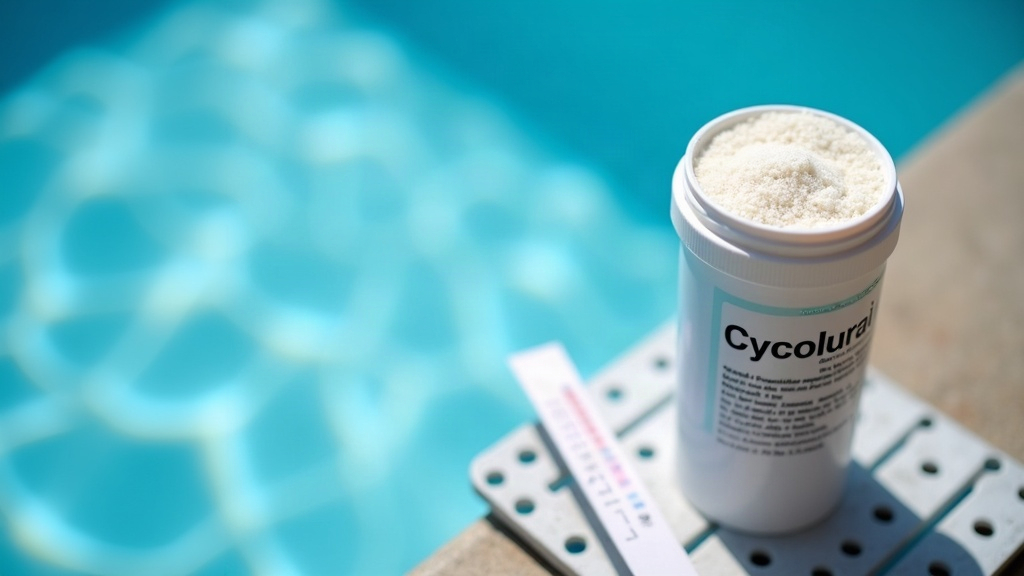
- High cyanuric acid (stabilizer) levels. Stabilizer protects chlorine from breaking down in sunlight, but too much of it makes chlorine sluggish at killing contaminants — even when a test shows chlorine is present in the water.
- High chlorine demand. Heavy bather load, algae, rainstorm debris, or a sudden influx of organic matter can consume chlorine faster than it’s being added, so the pool never gets ahead of the demand.
- Combined chlorine buildup. When chlorine reacts with ammonia and nitrogen compounds from sweat, urine, or organic debris, it forms combined chlorine (chloramines), which is a weaker sanitizer and the source of that sharp “chlorine smell” many people mistake for too much chlorine.
- pH or alkalinity out of range. Chlorine’s killing power changes with pH. Water sitting outside its normal range can make chlorine far less effective even at what should be an adequate level.
The difference between free, combined, and total chlorine is the single most useful thing to understand here, because a basic test strip that only reads “chlorine” can hide which of these is really going on.
Is high cyanuric acid the main culprit?
It’s the most common one, especially in outdoor pools that use stabilized chlorine products or tablets for months without a partial drain. Cyanuric acid doesn’t break down or get consumed the way chlorine does — it accumulates over a season and stays until water is diluted or replaced.
The details of what stabilizer is, why it’s added, and how it builds up unnoticed are covered in this explainer on cyanuric acid and pool stabilizer. It’s worth reading in full before assuming stabilizer is the issue, since a test is the only way to confirm it.
How can you tell what’s really going on?
Testing in a specific order narrows it down:
- Test free chlorine and combined chlorine separately, not just “total chlorine.” A high combined chlorine reading points toward chloramines and organic waste, not stabilizer.
- Test cyanuric acid. Many home test strips include this; some pool stores can run a more precise test. A high reading suggests stabilizer buildup is part of the problem.
- Check pH and total alkalinity. Both affect how well chlorine functions, and getting them into range is often what makes a “stuck” chlorine level start working again. The relationship between total alkalinity and pH is worth understanding on its own, since one affects the stability of the other.
- Think back over recent use: a pool party, a storm, days of no circulation, or a stretch of very hot weather can all spike chlorine demand temporarily.
If the water is cloudy on top of a chlorine problem, the common causes of cloudy pool water are worth ruling out too, since filtration and circulation issues often show up alongside chemistry problems, not instead of them.
Can chlorine lock be fixed, or does the water need to be replaced?
There’s no single answer, because it depends on what’s actually driving it. If cyanuric acid is very high, the practical fix is diluting the water — draining part of the pool and refilling with fresh water — since stabilizer doesn’t reduce on its own. If the issue is combined chlorine from organic waste, a superchlorination (shock) treatment following the product label is the usual approach, sometimes paired with extra filtration time.
Whatever the cause, follow the dosing and application instructions printed on the actual product being used — concentration, pool volume and current readings all affect how much is needed, and that number can’t be guessed from an article. Never combine different pool chemicals directly, and store chlorine products and acid separately; mixing chlorine and acid produces a toxic gas.
Does poor circulation make it worse?
Yes, indirectly. Chlorine needs to move through the whole pool to reach contaminants, and it needs to pass through the filter to have debris and organic matter removed. A pool that isn’t circulating and filtering enough each day gives chlorine less opportunity to work, which can look identical to a chemical “lock” problem from the outside.
This is where turnover rate and daily circulation matter as much as the chemistry itself. A pool with plenty of chlorine but a clogged filter or short pump run time can still struggle to stay clear.
How can it be prevented going forward?
- Test cyanuric acid periodically, not just chlorine and pH, especially in pools that rely on stabilized chlorine tablets all season.
- Keep pH and total alkalinity within their normal ranges so chlorine works efficiently instead of being wasted. Details on what pH does in a pool explain why this step gets skipped so often and why it matters.
- Shower before swimming and encourage bathers to do the same — sweat, sunscreen, and body oils are a major source of the organic waste that consumes chlorine.
- Run the pump and filter long enough each day; a pool that isn’t circulating properly can’t distribute or filter chlorine effectively no matter how much is added.
- After heavy bather loads, storms, or algae blooms, retest sooner than the usual schedule rather than assuming the last reading still applies.
Anyone unsure whether their filter, pump run time, or a partial drain is the real fix should look at the basics of how the whole system works together — the water chemistry section and pumps, filters and heaters section cover the pieces most often behind a stubborn chlorine problem. For anyone still learning the fundamentals of pool upkeep in general, the pool basics hub is a reasonable starting point before troubleshooting specific chemistry issues.
Pools Shop publishes general information, not professional advice. Pool chemicals, electrical work and structural work are genuinely hazardous and are governed by local codes that vary — use a qualified professional for anything you are not certain about, and follow the instructions on the product in front of you rather than a general guide. Nothing here is a substitute for active adult supervision around water: no cover, alarm, fence or device makes a pool safe on its own.