A solar cover is a lightweight plastic sheet, usually covered in small air-filled bubbles, that floats directly on a pool’s surface. It works by trapping heat from sunlight and slowing evaporation, which is the main way a pool loses both warmth and water. It is a heat-retention tool, not a safety barrier.
What exactly is a solar cover made of?
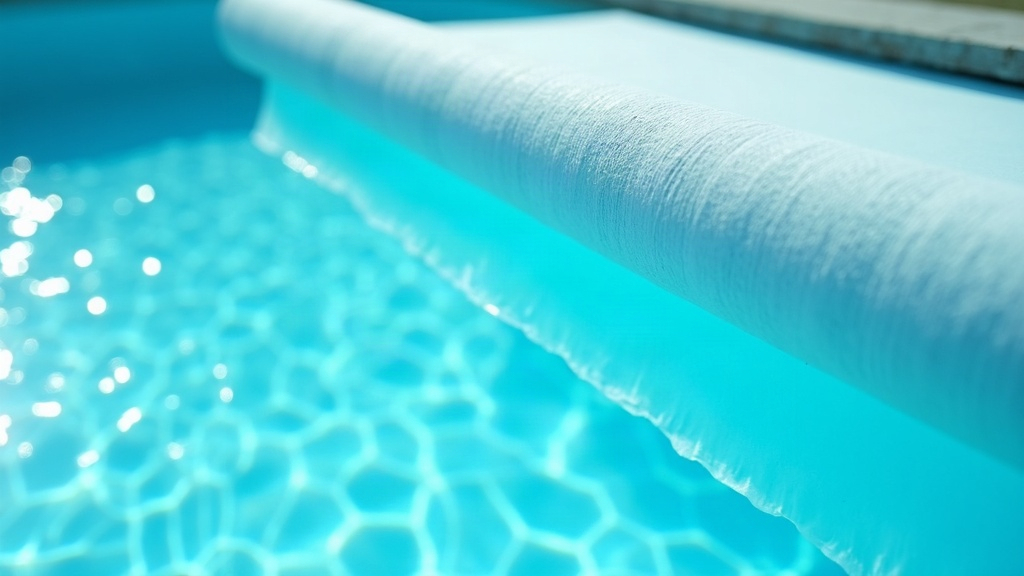
Most solar covers are sheets of UV-treated plastic, often polyethylene, formed into a pattern of small air bubbles similar to bubble wrap. The bubbles face down into the water and act as tiny insulating pockets, while the flat top side faces the sun.
Covers are sold by thickness and by the density of the bubble pattern. Thicker covers generally hold up longer to sun exposure and pool chemicals, but they are also heavier to handle. None of this is a fixed lifespan promise — UV exposure, chemical levels, and how carefully a cover is rolled and stored all affect how long one lasts in practice.
How does a solar cover actually heat a pool?
A solar cover works mainly by letting sunlight through to warm the water while trapping that heat underneath the sheet, similar to how a greenhouse traps warmth. It also stops warm surface water from evaporating, which is one of the fastest ways a pool cools overnight.
Sunlight passes through the clear or lightly tinted plastic and warms the water directly. Once the water is warm, the cover sits on top like an insulating layer, reducing how much heat escapes into the air. This matters more overnight, when air temperature drops and an uncovered pool loses heat quickly from its exposed surface.
The effect is more noticeable on pools that already get decent sun and less noticeable on shaded pools or in cold climates where the water starts far below comfortable swimming temperature to begin with.
Does a solar cover reduce evaporation as well as heat loss?
Yes. A solar cover sits as a physical barrier between the water surface and the air, which slows evaporation. Since evaporation is also the main way a pool loses water and heat together, cutting it down helps with both at once.
This is worth understanding on its own terms, separate from heating. A pool can lose a surprising amount of water to evaporation even when there is no leak at all — covered in more detail here — and telling the difference between ordinary evaporation and an actual leak is its own useful skill, explained in this comparison.
Because a solar cover slows evaporation, it also slows the loss of chemicals that evaporate or break down in sunlight, which can mean chemical levels hold steadier between tests.
Does a solar cover replace a pool heater?
No. A solar cover can raise water temperature somewhat and helps hold heat that a heater or the sun has already added, but it is not a substitute for a heater in a colder climate or for extending a swim season significantly on its own.
Pool owners deciding between a heater and a cover — or wondering whether they need both — are really deciding how much they want to control temperature versus how much they’re willing to work with what the sun and insulation provide. For anyone weighing an actual heater purchase, the difference between gas heaters and heat pumps and what a heater does to running costs are worth reading before deciding. A solar cover is often used alongside a heater, since it reduces the heat loss that the heater would otherwise have to keep replacing.
Is a solar cover the same as a safety cover?
No, and this distinction matters. A solar cover is a thin floating sheet designed to manage heat and evaporation. It is not rated to hold weight, it is not secured to the pool deck, and it does not prevent a person or pet from going into the water underneath it.
A solar cover should never be described or treated as making a pool safer around children or pets. Drowning prevention relies on layers working together — physical barriers that meet local code, alarms, supervision, and swim ability — and none of those layers is optional or interchangeable with the others. A floating solar cover is not one of those layers. If anything, a cover on the water can make an in-progress incident harder to see, so it should never be relied on as any kind of safeguard.
The layer that actually matters most, always, is a designated adult watching the water. Anyone researching genuine safety barriers, fencing or alarms should check their local code and permit requirements, since standards for pool barriers vary significantly by location.
How is a solar cover used day to day?
A solar cover is typically floated on the water when the pool is not in use — overnight, or during the day if nobody is swimming — and rolled back for access when the pool is used. Many owners keep it on a reel at poolside for easier handling.
- Cover the pool after the day’s last swim, once chemicals have had time to circulate.
- Remove and roll the cover before swimming, since it is not designed to be swum under or pushed aside in the water.
- Store the cover out of direct sun when not in use, if a reel or shaded spot is available, to reduce UV wear.
- Rinse off debris and check for tears periodically, since a torn cover loses its air pockets and much of its effect.
Handling a solar cover on a larger pool is genuinely physical work, especially wet. A reel system reduces the effort, but even then it is worth thinking through before buying a cover far bigger than the pool actually needs.
Does a solar cover affect water chemistry?
A solar cover can change how quickly certain chemical readings drift, mostly by slowing the sunlight and evaporation that would otherwise use up or dilute chemicals. It does not change what a pool needs tested or how those chemicals are added.
Chlorine broken down by UV light is one of the reasons outdoor pools burn through chlorine on sunny days; a cover reduces that direct exposure somewhat. It’s still necessary to test regularly rather than assume the cover is holding levels steady — the tools for that are covered in test strips versus liquid test kits. Whatever the readings show, always follow the specific product’s label for how much to add, and never store or combine different pool chemicals together — some combinations, particularly chlorine products and acid, produce dangerous gas.
A cover trapping heat can also make conditions more favorable for algae if circulation and sanitizer levels aren’t kept up, since warmer, stiller water sitting under a cover for long stretches is exactly the kind of environment discussed in what causes algae to take hold in a pool. Regular circulation, covered in why a pool needs daily circulation, still matters with a cover on.
What should someone check before buying a solar cover?
The main things to get right are size, thickness, and how it will be stored and handled day to day. A cover cut to the exact pool shape, with enough thickness for the local sun exposure, tends to perform better and last longer than a generic oversized one.
- Pool shape and size — an accurate fit reduces gaps where heat and moisture escape.
- Bubble density and thickness — heavier covers often insulate better but are harder to handle solo.
- UV resistance — covers exposed to strong, near-constant sun face more wear.
- Reel compatibility — a reel makes daily covering and uncovering far less of a chore.
Cost varies a lot by size, thickness and region, so it’s more useful to think about which of those factors matters for a specific pool than to expect a single price point. Anyone comparing pool equipment purchases more broadly may find the Buying & Costs section useful for that kind of decision-making.
Where does a solar cover fit with the rest of the pool’s equipment?
A solar cover is a low-cost, low-complexity add-on that works alongside — not instead of — the pool’s actual circulation and heating equipment. It doesn’t touch the pump, filter or heater directly, but it changes the conditions those systems work in.
For a wider look at how a pool’s systems fit together, the Pumps, Filters & Heaters archive and Pool Basics section cover the fundamentals a solar cover sits alongside, from circulation to filtration to heating choices. The Water Chemistry hub is the right place to keep tabs on how sanitizer and pH behave once a cover changes the pool’s exposure to sun and air.
Pools Shop publishes general information, not professional advice. Pool chemicals, electrical work and structural work are genuinely hazardous and are governed by local codes that vary — use a qualified professional for anything you are not certain about, and follow the instructions on the product in front of you rather than a general guide. Nothing here is a substitute for active adult supervision around water: no cover, alarm, fence or device makes a pool safe on its own.