Blowing out the lines pushes standing water out of the pool’s pipes so nothing is left inside to freeze. Water expands as it freezes, and pipe walls and fittings don’t flex enough to absorb that expansion. Skip this step in a freezing climate, and a pipe can crack somewhere it isn’t visible until spring.
What does “blowing out the lines” actually mean?
It means using air pressure to force water out of the plumbing that runs between the pool and the equipment pad, then plugging or draining the fittings so water can’t creep back in. It’s a physical, mechanical step, not a chemical one, and it happens near the end of the closing process described in what winterising a pool involves.
The lines in question are usually the skimmer line, the main drain line, and any return lines feeding jets around the pool. Each one holds water that sits in the pipe even after the pump is switched off, and that water has nowhere to expand if it freezes solid inside a fixed-diameter pipe.
Why does trapped water in a pipe cause damage?
Water is one of the few common substances that expands when it turns to ice rather than contracting. Inside a rigid pipe, that expansion has to go somewhere, and often it goes outward through the pipe wall or a fitting joint.
This is different from surface ice on the pool itself. A frozen pool surface is expected and generally harmless with the right winterising steps. The danger is water trapped inside a closed system — a straight run of pipe, a fitting, or the housing of the pump or filter — where there’s no room to move.
- Skimmer lines and return lines are usually the most exposed, since they run close to the surface near the pool wall.
- Main drain lines sit deeper and are less likely to freeze solid in most climates, but they still need attention where winters get consistently cold.
- Equipment left connected to the plumbing, including the pump and filter, can also hold water that needs draining separately.
How does the water actually get pushed out?
A blower, shop vacuum set to blow rather than suction, or a dedicated line-blowing tool is connected at one end of the plumbing, typically at a skimmer or return fitting, and air is forced through the pipe until water stops coming out the other end. Once a line is clear, it gets sealed — often with a rubber winter plug — so water can’t run back in from the pool or from groundwater.
Each line usually needs to be done separately, working through skimmers, returns, and any features like waterfalls or spillovers one at a time. Getting the sequence and the plugging right matters more than raw air pressure, and it’s easy to miss a line, especially on a pool with several return jets or add-on features.
This is a task many pool owners take on themselves in mild-to-moderate climates, but in areas with long, hard freezes, or on pools with more complex plumbing, some owners choose to have it done by a pool closing service that does this every season and knows the pool’s specific layout.
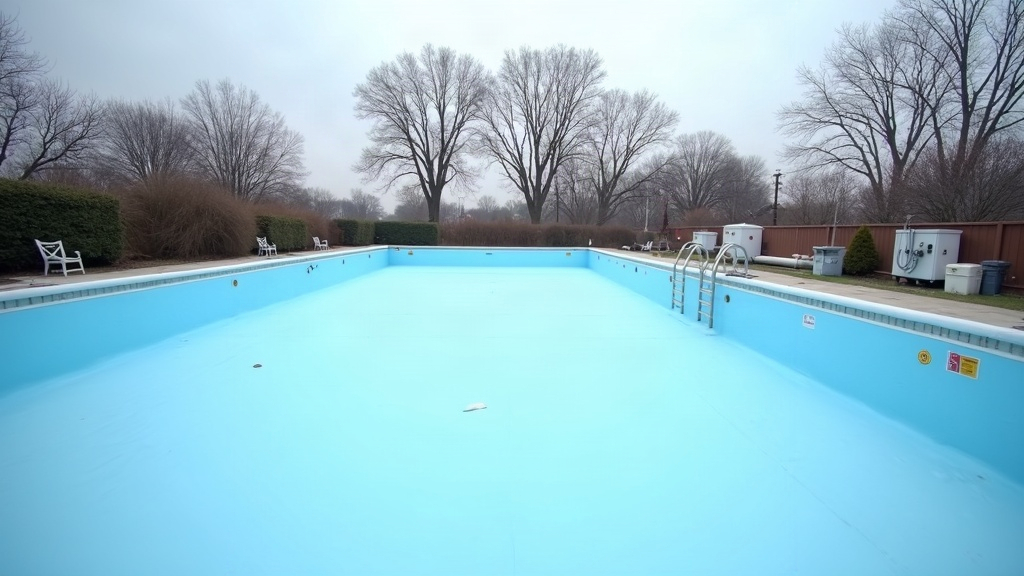
Does every pool need the lines blown out?
Not every pool does. It depends on climate and how the pool is built. In places where the ground and pool water never approach freezing, this step usually isn’t part of closing at all, and the process looks more like the water treatment and cover steps covered under opening and closing a pool.
In climates with a real winter, though, it’s considered one of the non-negotiable steps, alongside lowering the water level below the skimmer and adding products meant to keep the water stable while the pool sits idle. Local climate norms and how deep pipes are buried both affect how much risk a particular pool actually faces, so it’s worth checking what’s typical for the area rather than assuming.
What happens if a line still has water in it come spring?
A pipe that cracked over winter usually doesn’t announce itself right away. The first sign is often a pump that won’t hold prime, water pooling near a pipe run that shouldn’t be wet, or a return line that pushes far less water than it used to once the pool is reopened.
These are the same kinds of symptoms covered in what causes a pool pump to lose prime, and a hairline pipe crack is one of several possible causes worth ruling out. Diagnosing which pipe failed, and getting to it, often means digging near the pool deck or equipment pad — work that’s structural in nature and generally not a do-it-yourself repair.
Compared to that, blowing out the lines properly at closing time is the cheap, fast side of the equation. It’s a task measured in an afternoon, not an excavation.
What else is happening during closing at the same time?
Blowing out the lines rarely happens in isolation. It’s typically done alongside a handful of other steps that all protect different parts of the pool over winter:
- Balancing and adjusting the water chemistry so the pool sits in a stable state, following the guidance in water chemistry basics rather than guessing at levels.
- Lowering the water level below the returns and skimmer so ice forming at the surface doesn’t press against fittings.
- Cleaning the filter and, in many cases, storing cartridges or draining the tank, a step covered in what backwashing a filter does and related filter care articles.
- Removing, draining or servicing pumps and heaters that could hold water, since any electrical component near standing water and freezing temperatures is a job for a qualified technician if there’s uncertainty about how to isolate it safely.
- Fitting a winter cover appropriate to the pool and climate.
Skipping the line-blowing step while doing everything else is a bit like locking the front door and leaving a window open. The rest of the closing routine doesn’t compensate for water left sitting in the pipes.
Is this something an average pool owner can do alone?
Many owners manage it themselves with a shop vacuum and a set of winter plugs, particularly on a straightforward above-ground or simple in-ground pool. The core skills are patience and a clear idea of the plumbing layout — which lines exist, where they run, and where each one needs to be plugged.
Where it gets harder is on pools with a lot of added features, unusual plumbing runs, or equipment that involves gas heaters or electrical connections near the pad. In those cases, and in climates with severe winters where a mistake is costly to fix, hiring it out to someone who does it regularly is a reasonable choice rather than an admission of defeat.
Either way, the underlying reason to bother with it doesn’t change: pipes don’t have room for ice to expand into, and clearing the water out is the only reliable way to avoid finding that out the hard way in spring, right around the time covered in what happens when a pool is opened for the season.
Pools Shop publishes general information, not professional advice. Pool chemicals, electrical work and structural work are genuinely hazardous and are governed by local codes that vary — use a qualified professional for anything you are not certain about, and follow the instructions on the product in front of you rather than a general guide. Nothing here is a substitute for active adult supervision around water: no cover, alarm, fence or device makes a pool safe on its own.