An uncovered pool over winter collects leaves, dirt and organic matter that feed algae, loses sanitiser and balance faster from sunlight and rain, and leaves plumbing and equipment more exposed to freeze damage. The water usually turns cloudy or green, and reopening it in spring takes far more work and cost.
Why does leaving a pool uncovered matter so much in winter?
A pool cover isn’t just tidiness. It blocks sunlight that feeds algae, keeps debris out of the water and off the equipment, and reduces how much heat and water evaporate away. Without it, a pool is exposed to everything the season brings for months at a time, with nobody swimming to notice or fix small problems before they compound.
Cold weather doesn’t stop biological activity the way many owners assume. Algae can still establish in cooler water, especially once nutrients build up. Rain dilutes and shifts chemistry. Dust, pollen and organic debris keep arriving no matter the temperature.
What does an uncovered pool look like by spring?
Typically, dark green, cloudy or brown water, a heavy layer of sludge and leaves on the floor, and a stained waterline. In many cases sanitiser levels have collapsed entirely, algae has taken hold, and the filter has been working overtime or clogging with debris for months.
This isn’t guaranteed for every uncovered pool — some in mild, dry climates fare better than others — but it is the common outcome, and it’s the reason opening a pool for the season after an uncovered winter usually takes longer and costs more than opening one that was properly closed.
Why does the water turn green or cloudy without a cover?
Sunlight reaching the water, along with leaves, pollen and other organic debris settling in, gives algae and bacteria what they need to grow, while sanitiser breaks down faster in sunlight and gets consumed dealing with the incoming debris. The result is progressively worse water clarity over the season.
Algae taking hold is rarely one single cause — it’s usually a combination of low or absent sanitiser, warmish periods, and a steady supply of organic material. An uncovered pool over an entire winter checks all three boxes for weeks or months at a stretch, with no one testing or adjusting the water in the meantime.
Rain adds another layer. Rain changes pool water chemistry by diluting sanitiser and shifting pH and alkalinity, and a pool left open collects far more rainfall directly into the water than one under a cover.
What happens to the filter and pump over an uncovered winter?
The filter has to deal with a steady stream of leaves, dirt and organic debris instead of a controlled winter shutdown, which can mean clogging, staining and extra wear. If the system isn’t running or wasn’t properly winterised, trapped water in pipes and equipment is also at risk of freezing and cracking.
This is part of why blowing out the lines when closing a pool matters in freezing climates — water left sitting in plumbing can expand as it freezes and crack pipes, fittings or the pump housing. An uncovered pool doesn’t cause freeze damage by itself, but skipping the cover often goes hand in hand with skipping the rest of a proper closing routine, and that combination is where expensive damage tends to happen.
For a fuller picture of what a proper closedown includes, see what winterising a pool actually involves.
Does debris in the water actually damage equipment?
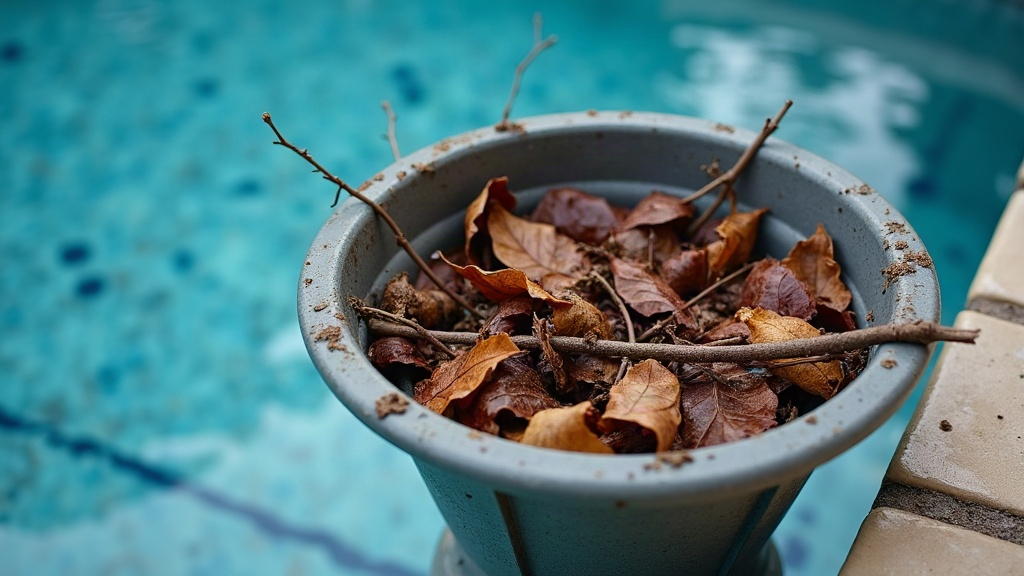
Yes — leaves and organic matter that reach the pump and filter can clog baskets, strain the pump, and leave organic residue that’s harder to clean out the longer it sits. A pool left open all winter typically pushes far more debris through the system than one that’s covered and shut down.
Heavy leaf fall in particular is a known strain point. The guide on dealing with pool leaves without wrecking the equipment covers why leaves left to break down in water are worse than leaves skimmed out promptly — and over an uncovered winter, nobody is doing that skimming.
Does an uncovered pool lose more water?
An open water surface loses more moisture to evaporation than a covered one, especially in windy or dry conditions, and rain adds water back inconsistently. Telling the difference between normal evaporation and an actual leak is harder over winter when nobody is checking levels regularly.
The article on evaporation versus a real pool leak explains what a normal seasonal drop looks like, and why pools lose water with no leak covers other contributors. Left unattended for months, a genuine leak can go unnoticed and get worse before anyone opens the pool up to check.
Is an uncovered pool a safety concern, not just a maintenance one?
Yes. An uncovered body of water is a drowning risk to children, pets and wildlife at any time of year, regardless of temperature or whether anyone intends to swim in it. Nothing about winter makes standing water safer to leave unattended and unbarriered.
A cover is one layer of protection, and even a rated safety cover is not a substitute for the other layers: secure fencing and gates, door and pool alarms where used, and — above all — a designated adult actually watching the water whenever children or pets have access to the area. No cover, fence, alarm or cover of any type replaces that supervision. Requirements for fencing, gates, alarms and covers vary by location, so check local code and permit rules for what’s legally required in your area rather than assuming a single national standard applies.
What should be done instead of leaving a pool uncovered?
The standard approach is a proper winter closedown: balance and adjust the water, clean the pool and filter, run water out of exposed plumbing where freezing is a risk, and fit an appropriate winter cover matched to the pool and local climate. Skipping steps tends to cause more work later, not less.
- Test and adjust water chemistry before closing, rather than leaving it to drift all winter
- Clean the pool thoroughly, including brushing walls and floor, before the cover goes on
- Clear and service the filter so it isn’t left dirty or under strain over winter
- Address plumbing appropriately for a cold climate to reduce freeze risk
- Fit a cover suited to the pool, and keep clearing debris and standing water off it through the season
The full sequence is covered in more depth in what does winterising a pool involve, and general upkeep between seasons is covered across the Cleaning & Maintenance hub.
What does it take to recover a pool that was left uncovered?
Recovering an uncovered winter pool usually means clearing heavy debris, testing water thoroughly, addressing algae with an appropriate shock treatment, cleaning or replacing filter media, and rebalancing chemistry over several days before the water is swim-ready again. It’s a bigger job than opening a pool that was closed properly.
For chemical steps, always test first and follow the product label in front of you for dosing — a bottle’s concentration and the pool’s actual volume and readings determine the amount, not a generic figure. Chlorine-based shock products and acid-based balancers should always be stored separately and never combined, since mixing chlorine and acid products can produce dangerous gas.
Shocking a pool explains what that treatment does and when it’s appropriate, and test strips versus liquid test kits covers how to get an accurate read on badly out-of-balance water before deciding on next steps. The Water Chemistry hub has further detail on rebalancing after a long period of neglect.
If the pump or filter shows signs of strain after a hard winter — unusual noise, reduced flow, pressure readings out of the normal range — it’s worth reviewing signs a pool pump is failing and what a filter pressure gauge tells you before assuming a simple clean will fix it. Anything involving wiring, the pump’s electrical connection, or suspected cracked housings and fittings is licensed electrical or plumbing work, not a DIY fix — an electrician or pool professional can check safe bonding and grounding near the equipment pad and confirm what actually needs replacing.
An uncovered winter is rarely catastrophic on its own, but it removes the one layer that would otherwise have kept sunlight, debris and rain out of the water for months. Covering the pool properly, alongside the rest of a normal closing routine, is what keeps spring opening manageable instead of a full cleanup project.
Pools Shop publishes general information, not professional advice. Pool chemicals, electrical work and structural work are genuinely hazardous and are governed by local codes that vary — use a qualified professional for anything you are not certain about, and follow the instructions on the product in front of you rather than a general guide. Nothing here is a substitute for active adult supervision around water: no cover, alarm, fence or device makes a pool safe on its own.