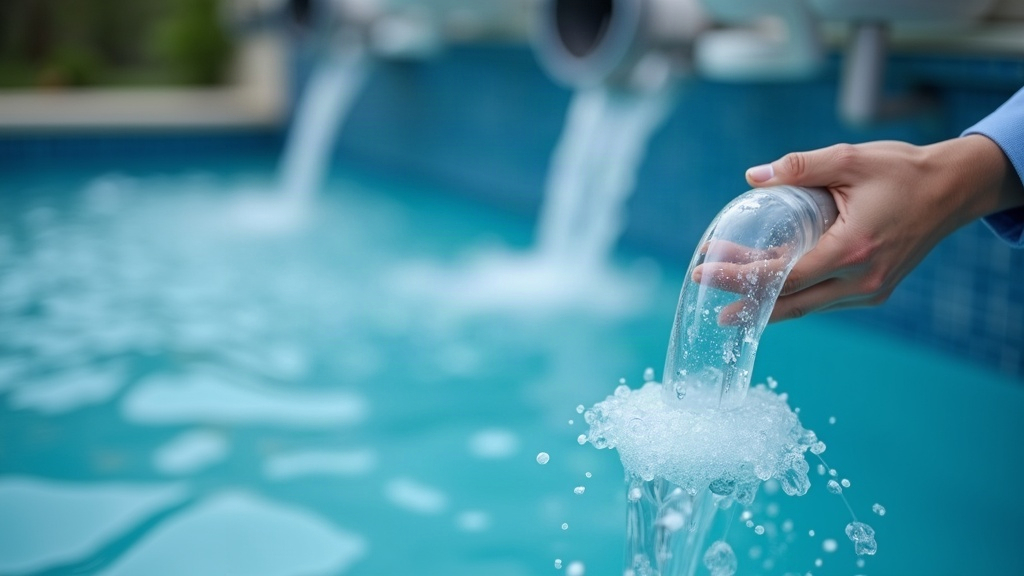
Backwashing reverses the normal flow of water through a sand or DE filter, pushing water backward through the filter media to loosen and flush out the dirt, oil and debris that have built up. That waste water goes out a separate line instead of back to the pool.
It’s essentially a controlled rinse cycle for the filter. Instead of water flowing down through sand or across DE-coated grids and back to the pool clean, the flow direction is reversed so trapped particles get knocked loose and carried out of the system entirely.
How does backwashing actually work?
A valve on top of the filter redirects incoming water so it enters from the bottom (or the side normally used for outflow) and exits through a waste port, taking loosened debris with it instead of sending it back into the pool.
On a sand filter, this typically means turning a multiport valve to a “backwash” setting. On a DE filter, the same reversal happens, though DE filters usually need fresh DE added afterward since backwashing strips the coating off the grids along with the trapped dirt. Cartridge filters work differently — they don’t backwash at all; the cartridge has to be removed and rinsed or replaced instead. For a broader look at how these systems fit together, the pumps, filters & heaters section covers the main types side by side.
Why does a filter need backwashing at all?
As a filter works, it traps dirt, oils, sunscreen residue and fine particles in the sand or DE coating. Over time this buildup restricts water flow, which raises pressure and reduces how well the pool circulates and filters.
Without backwashing, a sand or DE filter would just keep clogging until it stopped filtering effectively and put unnecessary strain on the pump. Regular backwashing keeps flow steady and keeps the filter doing its job. This ties directly into turnover rate — a clogged filter can’t move the volume of water a pool actually needs cycled through it.
How do you know when it’s time to backwash?
The most reliable sign is the filter’s pressure gauge reading noticeably higher than it did right after the last cleaning — many owners use a rise over the “clean” starting pressure as their cue, rather than a fixed schedule.
Relying on pressure rather than the calendar makes sense because how fast a filter dirties up depends on bather load, dust, pollen, algae growth and how the pool gets used. A pool with a birthday party one weekend might need backwashing sooner than usual; a quiet week might stretch it out. Watching the gauge, rather than guessing, avoids both over-backwashing (wasting water) and under-backwashing (poor filtration).
What happens if a filter is never backwashed?
Pressure keeps climbing, flow through the filter drops, and the pump has to work harder against that resistance. Filtration gets less effective, water can turn cloudy, and in more severe cases the strain can affect the pump or the filter itself.
A badly neglected filter isn’t just a water clarity problem — it’s also a circulation problem. Circulation is what carries chlorine and other chemicals around the pool and back through the filter, so a clogged filter can end up making chemistry harder to manage too, not just visibility. The connection between flow and clean water is explained in more depth in how a pool actually circulates water.
Does backwashing waste water?
Yes — backwashing sends a volume of water out through the waste line instead of back to the pool, and that water needs replacing. It’s a genuine trade-off: some water loss in exchange for a filter that keeps working properly.
This is worth keeping in mind when troubleshooting water level changes. A pool that’s noticeably lower after a backwash isn’t leaking — it’s simply down the water that went out the waste line. Anyone chasing a mystery water loss should check evaporation versus a real leak and why pools lose water with no leak before assuming backwashing is the culprit, since the causes can look similar at first glance.
Where does the waste water go?
The waste line usually runs to a drain, a designated dry well, a street gutter, or a garden area, depending on how the equipment pad was plumbed and what local rules allow.
What’s permitted here varies a lot by location — some areas restrict discharging pool water (which can carry chlorine and other residues) onto street drains or into storm systems. It’s worth checking local code or a municipal water authority before assuming a particular discharge point is fine. This is one of several reasons an equipment pad is laid out the way it is, with waste lines planned in from the start rather than added as an afterthought.
Does backwashing affect pool chemistry?
Backwashing itself doesn’t change chemistry directly, but the water lost has to be replaced with fresh fill water, which usually has different chlorine, pH and mineral levels than the water that was in the pool.
After any significant top-up, it’s worth retesting rather than assuming levels are unchanged. A test strip or liquid kit will show where things stand. Frequent backwashing paired with frequent top-ups can also be part of why calcium hardness or stabiliser levels drift over a season, since fill water rarely matches the pool exactly.
How is backwashing different from rinsing?
Rinsing is a short follow-up step, run right after backwashing, that flushes any remaining loose media or debris out through the waste line before switching the valve back to normal filtration — it settles the sand or DE bed and stops cloudy water from washing straight back into the pool.
Skipping the rinse step is a common reason pool water looks hazy right after a filter has been serviced. It’s a small step, but it matters for keeping the water clear once normal filtering resumes.
Can backwashing too often cause problems?
Backwashing more than necessary wastes water and, on DE filters, means adding fresh DE more often than needed. It won’t damage a well-maintained filter, but it’s an avoidable cost if the pressure gauge shows the filter isn’t actually due for a clean yet.
On the other hand, waiting too long between backwashes lets pressure climb higher than it should, which is harder on the pump and the filter’s internal components. Finding the right interval is really about watching the gauge rather than following a fixed rule, since bather load and debris vary pool to pool.
Does a cartridge filter ever need backwashing?
No — cartridge filters aren’t designed for it. Cleaning one means shutting down the pump, removing the cartridge, and hosing off the pleated material (or soaking it in a cleaning solution per the manufacturer’s instructions) before putting it back.
This is one of the practical differences worth knowing before choosing between filter types. The pumps, filters & heaters archive has more detail on how sand, DE and cartridge systems compare for maintenance effort and cost over time.
Why does backwashing matter for water clarity?
A filter that isn’t backwashed when it needs it lets more fine particles pass through or slows circulation, both of which show up as duller, hazier water rather than the crisp clarity a well-run filter produces.
Filtration is only one part of what keeps a pool looking clear — chemistry, circulation and regular brushing all play a role too. For the fuller picture, what actually makes pool water clear and how often a pool should be brushed both cover the pieces that work alongside filtration.
Is backwashing something an average pool owner can do?
Turning a multiport valve and watching a sight glass is a routine maintenance task most owners manage themselves. Anything involving the pump’s wiring, the filter’s plumbing connections, or unusual pressure readings that don’t resolve with a normal backwash is worth raising with a qualified pool professional rather than guessing.
Persistent high pressure, a valve that won’t seat properly, or water leaking from fittings can point to a mechanical issue beyond routine cleaning. For general upkeep guidance and where backwashing fits into a season, the cleaning & maintenance and pool basics hubs are useful starting points.
Pools Shop publishes general information, not professional advice. Pool chemicals, electrical work and structural work are genuinely hazardous and are governed by local codes that vary — use a qualified professional for anything you are not certain about, and follow the instructions on the product in front of you rather than a general guide. Nothing here is a substitute for active adult supervision around water: no cover, alarm, fence or device makes a pool safe on its own.