Entrapment happens when the suction from a pool or spa drain is strong enough to hold hair, a limb, clothing, or a person’s body against the outlet underwater. Older, flat drain covers made this more likely. Newer covers are domed or channeled to break that suction, which is why codes now require them.
What exactly is entrapment?
Entrapment is a mechanical hazard, not a chemical or water-quality one. It occurs at a suction fitting — usually a main drain at the bottom of a pool or spa — where water is being pulled toward the pump. If the cover over that fitting is missing, broken, or poorly designed, the suction at the opening can be strong enough to hold something in place.
Safety researchers and regulators generally describe several distinct types:
- Body entrapment — suction holds a swimmer against the drain, often against the torso or buttocks, preventing them from pulling away.
- Limb entrapment — an arm or leg is pulled into an opening.
- Hair entrapment — hair is drawn into a drain and wound around the grate, holding the swimmer’s head underwater.
- Mechanical entrapment — jewelry, a swimsuit drawstring, or clothing catches on the cover or fitting.
- Evisceration — a rare but catastrophic injury where a missing or broken cover exposes plumbing directly to the body.
All of these share the same root cause: an opening designed to move water instead pulls on a person.
Why is suction strong enough to trap someone?
A pool pump is built to move a large volume of water continuously, and that flow is concentrated at drain openings. Where the water circulates, and how it gets pulled toward the equipment, is explained in more detail in a guide on how a pool actually circulates water.
A single main drain with a small, flat cover concentrates that flow into a tight area. If a cover cracks, warps, or goes missing, the opening underneath is smaller still, which increases the suction at that one point. That is the physical condition entrapment standards were written to prevent.
Why did drain covers change?
Drain covers changed because entrapment incidents, including child deaths, led regulators to require covers and drain systems specifically engineered to prevent a person’s body from sealing against the opening. In the U.S., this shift is tied to a federal law and the safety standard it enforces.
The law is commonly known by the name of a child who died in a drain entrapment incident, and it required public pools and spas to install compliant anti-entrapment drain covers and, in many cases, additional layers of protection such as a second drain or a system that shuts the pump down automatically if suction spikes.
The underlying engineering standard covers how a cover is shaped, how much flow it can handle per unit of open area, and how it performs under testing that simulates a body or limb blocking part of it. Manufacturers certify covers against that standard, and covers carry a rating for a specific flow rate — which is why a cover from one pool cannot simply be swapped onto another without checking it is rated for that system.
What does a modern anti-entrapment cover actually do differently?
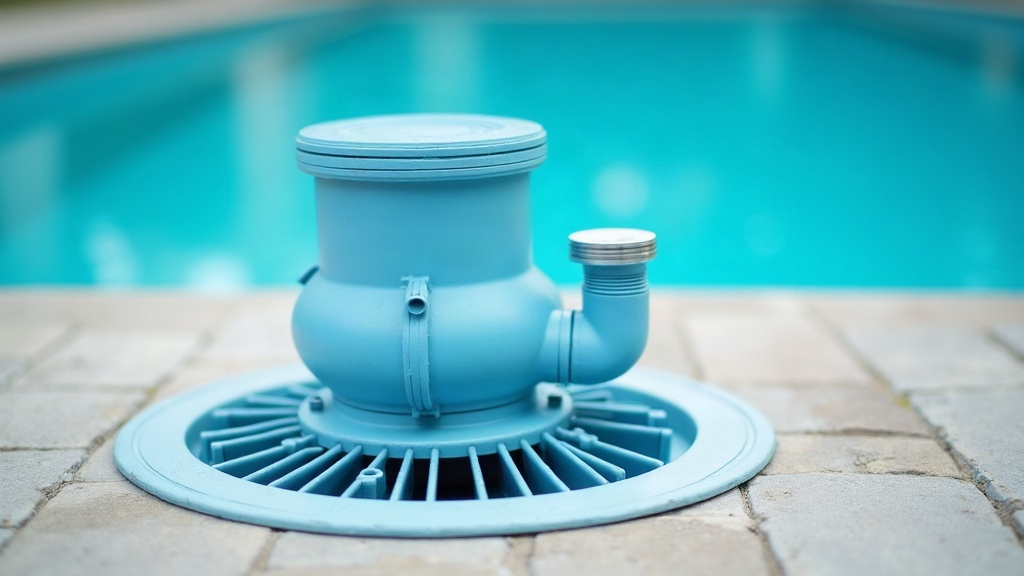
A compliant cover is designed so no single point of it can produce dangerous suction, even if part of it is blocked. It does this mainly by spreading the intake area over a larger, often domed or channeled surface instead of one flat opening.
Because the openings are spread out and angled, a body or limb covering part of the cover cannot seal off the whole intake the way it could with an old flat grate. The remaining open area keeps flow low enough that a person can pull away.
Systems built to the modern standard commonly combine several of these features:
- A cover engineered and rated for a specific flow, matched to the pump and plumbing it serves.
- Two main drains connected so that if one is blocked, the other still handles flow at a safe rate, rather than one drain taking on all the suction.
- A safety vacuum release system (SVRS) or equivalent that detects a sudden drop in flow — consistent with a blockage — and shuts the pump down.
- Regular inspection for cracked, missing, or loose covers, since a broken cover defeats the design regardless of how it was rated when new.
None of this is a do-it-yourself electrical or plumbing project. Anything involving the pump, its wiring, or how drains are plumbed together falls under licensed electrical and pool-building trades, and that work should be assessed and carried out by someone licensed to do it, not attempted as a weekend task.
Does this only apply to public pools, or backyard pools too?
Requirements vary by jurisdiction, and this is one of the clearest places where local code should be checked rather than assumed. Many regions extend anti-entrapment cover requirements to residential pools and spas as well, particularly for new construction, renovations, or whenever a drain cover is replaced.
Even where a backyard pool was built before current standards existed, an old, cracked, or missing drain cover is worth having assessed. A pool builder or service professional can check whether the existing drain system meets current requirements and what it would take to bring it up to date. Local building or health departments are usually the authority to confirm what applies in a specific area.
How is a main drain different from a skimmer, and does that matter here?
A main drain and a skimmer both pull water toward the pump, but they do it differently, and that difference matters for entrapment risk. A side-by-side explanation of how each one works is covered in a guide on the difference between a skimmer and a main drain.
In short, a skimmer draws from the surface and is generally a much lower-risk fitting because it is designed to pull in a thin layer of water, not to concentrate suction on a submerged body. A main drain sits at the bottom of the pool and is the fitting anti-entrapment standards are mainly concerned with, because that is where a person’s full body weight could rest against an opening.
Does an anti-entrapment drain cover make a pool “safe”?
No single feature, including a compliant drain cover, makes a pool safe on its own. A properly rated cover removes one specific mechanical hazard, but it does nothing about drowning risk from a lapse in supervision, a missed barrier, or a child who cannot yet swim.
Pool safety works in layers, and a compliant drain system is one layer among several, alongside physical barriers, alarms, and — most importantly — a designated adult actively watching the water whenever anyone is in or near it. What that layered approach looks like in practice is laid out in a broader guide on what layered pool safety actually means.
Fencing and barrier rules are a separate legal layer worth understanding on their own terms; a plain-language rundown is available in a piece on what pool barrier and fence codes typically require. Pool alarms are another layer, and it helps to know their real limits before relying on one, which is covered in a guide on what a pool alarm is and what it can’t do.
What should a pool owner actually check?
A homeowner does not need to be a technician to notice the basics. Worth a regular look:
- Whether the main drain cover is present, flat and cracked, warped, or clearly loose.
- Whether there is one main drain or two, since a single-drain setup carries different risk than a properly connected dual-drain system.
- Whether a service professional has confirmed the existing cover is rated to the current standard for the pool’s flow rate.
- Whether local code requires anything further for the pool’s age or type, which a local building department or a licensed pool professional can confirm.
Any actual replacement or reconfiguration of a drain system is specialized, code-governed work, and should go to a licensed pool contractor rather than being treated as a simple parts swap. Broader background on how a pool’s plumbing and equipment fit together is covered in the Pumps, Filters & Heaters archive, and general safety-layer topics are gathered in the Safety section.
Pools Shop publishes general information, not professional advice. Pool chemicals, electrical work and structural work are genuinely hazardous and are governed by local codes that vary — use a qualified professional for anything you are not certain about, and follow the instructions on the product in front of you rather than a general guide. Nothing here is a substitute for active adult supervision around water: no cover, alarm, fence or device makes a pool safe on its own.