A natural or biological pool is a swimming pool that uses plants, gravel, and biological filtration instead of chlorine or other sanitizers to keep water clear. It splits into two connected zones — a swim zone and a planted “regeneration zone” — and the sizing relationship between them is what actually determines whether the system works.
How does a natural pool actually work?
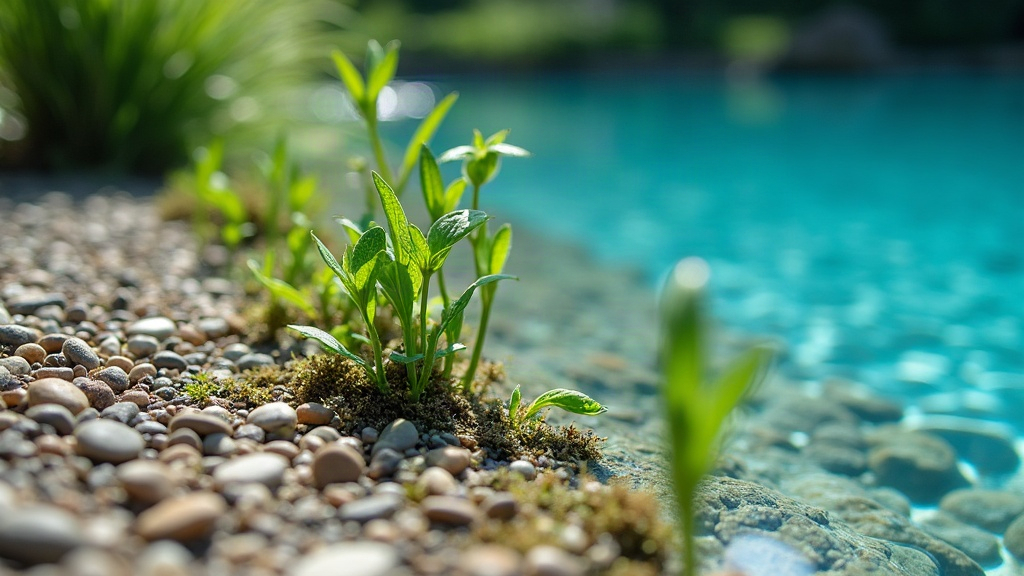
Water circulates slowly between the open swim area and a shallower zone planted with aquatic species and layered with gravel or mineral substrate. Plant roots and the biofilm growing on the gravel take up nutrients that would otherwise feed algae, while the substrate physically traps fine particles. There’s no chlorine, bromine, or comparable sanitizer added to the water at all.
This is a different approach from a saltwater pool, which still produces chlorine — just generated on site rather than added from a jug. A natural pool produces no disinfectant residual whatsoever. Clarity depends entirely on biology keeping pace with what goes into the water: sunlight, organic debris, and whatever bathers bring in.
How big does the regeneration zone need to be?
This is the number most articles skip, and it’s the one that decides whether a design will actually work. The regeneration zone — the planted area doing the filtering — typically needs a surface area equal to roughly 50% to 100% of the swim zone’s surface area. A small swim zone can sometimes get away with the lower end of that range; a pool that sees heavy bather use, direct sun, or falls near trees usually needs closer to a 1:1 ratio.
| Swim zone size (surface area) | Typical regeneration zone needed |
|---|---|
| Small plunge-style swim area | Roughly half the swim zone’s area |
| Mid-size backyard pool | Around two-thirds to three-quarters of the swim zone’s area |
| Larger or heavily used pool | Close to, or matching, the full swim zone’s area |
What drives where a given design lands on that range is plant density and species mix, how much sun and organic load the pool gets, local climate length, and how many bathers use it regularly. A designer who skips this ratio, or proposes a token planted strip, is proposing a pool that will likely struggle with clarity once summer bather load and heat arrive. Anyone quoting a project should be asked directly what ratio they’re designing to and why — a fair question alongside the others worth raising with any pool builder.
How fast does water move through a biological pool?
Water moves through the regeneration zone far more slowly than a chlorinated pool’s pump cycle moves water through a filter. Where a conventional pool aims for a full turnover of its total volume every several hours through the pump and filter, a biological pool’s flow through the plant zone is intentionally gentler — often taking somewhere in the range of 4 to 8 hours for water to make its way through that zone, rather than being pushed hard and fast.
The reason is that biological filtration needs contact time. Plant roots and biofilm can only process nutrients at the rate biology allows — pushing water through faster doesn’t clean it faster, it just reduces how much actually gets treated per pass. This is the opposite logic to a standard pool, where a stronger pump and higher turnover rate generally means clearer water, faster.
Practically, this means a natural pool clears more slowly after a disturbance — a storm, heavy use, a load of leaves — than a chlorinated pool would. Readers used to a conventional pool’s response time need to reset that expectation before committing to the system.
What keeps the water clear without chlorine?
Clarity comes from balance, not from a single product. Plant uptake of phosphorus and nitrogen starves algae of the nutrients it needs; gravel substrate and biofilm trap and break down organic particles; and the slower flow gives biology time to act instead of relying on a chemical residual to knock down anything that grows. Some designs add a skimmer and a low-flow circulation pump to move water between zones, but the pump’s job here is movement, not aggressive filtration.
Owners still test water — for pH and for nutrient indicators like phosphate — because a natural pool can tip toward algae growth just as a chlorinated one can if nutrients build up faster than the plants can use them. The chemistry involved is different in kind from a standard pool’s water chemistry routine, but the discipline of regular testing doesn’t go away.
What does a natural pool cost compared to a chlorinated pool?
A natural pool generally costs more to build than a similarly sized chlorinated pool of the same construction type, mainly because it needs more total excavated and lined area — the regeneration zone is additional square footage, not a bolt-on. Plant material, substrate depth, and any circulation pump also add to the build. Running costs shift too: no ongoing sanitizer purchases, but potentially more pump runtime hours spread across a low-flow schedule, and periodic plant maintenance and thinning.
What actually drives the final number is regional labor, excavation difficulty, and how much total surface area the two zones combine to — exactly the kind of variables that make it impossible to quote a figure that means anything without seeing the site. The general cost drivers for pool installation apply here too, on top of the extra zone; it’s worth reading through what actually drives the cost of installing a pool before pricing a natural design, and comparing that against ordinary buying and running costs for context.
Is a natural pool safe for children?
A natural pool carries the same drowning risk as any other body of water, and the plants and gravel zone add nothing that makes supervision less necessary — if anything, a planted edge can make it harder to see someone in the water clearly. Nothing about the biological design substitutes for a designated adult watching the water whenever anyone is in or near it.
Barriers, alarms, and fencing still matter and should follow local code exactly as they would around a chlorinated pool — check requirements before building, since they vary by jurisdiction. The layered approach covered in what layered pool safety actually means applies fully here, and it’s worth reading how to make a pool safer for young children regardless of which filtration system a pool uses.
What maintenance does a biological pool need?
Plants need thinning, dead growth needs clearing, and the gravel substrate benefits from periodic attention so it doesn’t clog with sediment. Debris removal matters more here than in a chlorinated pool, since there’s no sanitizer to help break down what falls in — a point covered generally in dealing with leaves without wrecking pool equipment. Owners also watch for the same green-water warning signs that affect any pool; the causes explained in why a pool turns green right after opening are largely nutrient-driven, and nutrient control is exactly what the regeneration zone is built to manage.
Any pump, skimmer plumbing, or lighting installed around a natural pool is still code-governed electrical and equipment work, and belongs with a licensed installer rather than a weekend project — the same rule that applies to any pool’s pumps, filters, and heaters.
Does a natural pool suit every yard and climate?
It doesn’t. The regeneration zone needs real square footage — often close to matching the swim zone itself — so a small lot that barely fits a conventional pool usually can’t fit a biological one without shrinking the swim area substantially. Climate matters too: a short, cool swim season gives plants less time to establish and process nutrients each year, which is a factor worth weighing alongside the broader question of whether a pool makes sense in a short summer climate at all.
Anyone choosing between pool types more broadly may also find it useful to compare footprint and use case in plunge pool vs. lap pool: how to actually choose, since the space math is a similar exercise.
Is a natural pool worth choosing?
A natural pool is worth choosing for a household that wants a chemical-free swimming feel, has the yard space for a properly sized regeneration zone, and is comfortable with a slower, more seasonal-feeling clarity cycle than a chlorinated pool delivers. It is not a shortcut to lower maintenance — it trades chemical dosing for plant care and patience, and it only works if the zone ratio and flow rate are sized correctly from the start.
Pools Shop publishes general information, not professional advice. Pool chemicals, electrical work and structural work are genuinely hazardous and are governed by local codes that vary — use a qualified professional for anything you are not certain about, and follow the instructions on the product in front of you rather than a general guide. Nothing here is a substitute for active adult supervision around water: no cover, alarm, fence or device makes a pool safe on its own.