A pool usually turns green right after opening because algae grew in the water while the pool sat closed, often with little or no sanitizer working, and the moment sunlight and warmth return, that algae multiplies fast. It’s a chemistry and biology problem, not a sign anything is broken.
What actually causes the green color?
The green tint comes from algae — tiny plant-like organisms that were already present in trace amounts and multiplied during the off-season. Metals in the water, especially dissolved copper or iron, can also tint water green, but algae is by far the more common cause after a winter closure.
Algae needs three things to take hold: water, sunlight, and a lack of active sanitizer to keep it in check. A closed pool over winter often has all three, especially toward the end of the season when a cover lets some light through or the water underneath warms up.
Why does chlorine disappear over a closed season?
Chlorine and other sanitizers break down over time, even when nothing is swimming in the water. Sunlight, warm temperatures and the sheer number of months a pool sits closed all use up available sanitizer well before opening day arrives.
Once chlorine drops to nothing, the pool has no defense against whatever algae spores or organic material were already present. By the time the cover comes off, that population can have had weeks to grow unchecked.
Does a cover left on all winter make this worse?
A cover that lets in light, holds standing water, or has gaps allowing debris in gives algae more of what it needs. A cover that stays tight, opaque and well-maintained reduces light exposure but does not eliminate the chemistry side of the problem.
What actually happens to a pool left uncovered over winter is worth understanding in more detail, since exposure to sunlight and debris compounds the same issue described here.
Why does the green show up so suddenly at opening?
The pool doesn’t turn green in an instant — the algae has usually been growing under the cover for some time, but it isn’t visible until the cover comes off and daylight hits the water directly. Warmer spring temperatures also speed up algae growth right around the time most pools get opened.
Removing the cover exposes water that may have been quietly clouding for weeks. What actually happens when a pool is opened for the season covers the wider process this fits into, including why the first few days often look worse before they look better.
Does poor closing procedure make green water more likely?
Yes. A pool closed without balanced water chemistry, without a proper shock treatment, or without the plumbing lines cleared gives algae a head start that shows up the following spring. What does winterising a pool involve is a good place to see the full list of steps that reduce this risk.
Skipping the step of clearing water from the plumbing lines can also leave stagnant water sitting in pipes over winter, which is its own separate problem. Why blowing out the lines matters when closing a pool explains what that step actually protects against.
What should be tested before doing anything to a green pool?
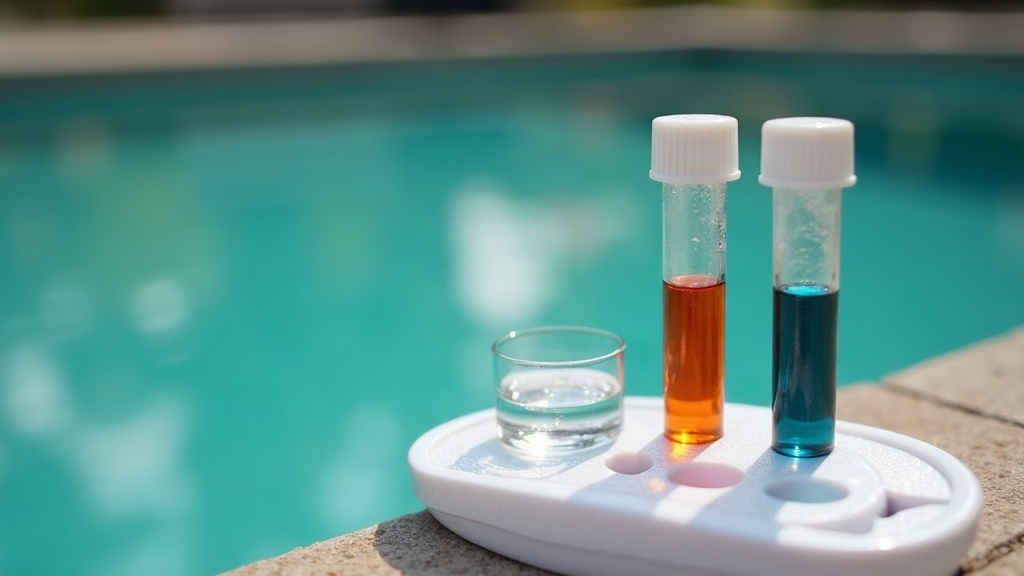
Before adding any product, test the water for pH, total alkalinity, and sanitizer level, along with metals if the pool has a history of staining or unusual color. Numbers guide what actually needs correcting rather than guessing.
A liquid test kit typically gives a clearer read on lower ranges than test strips, which matters when water is this far out of balance. Pool test strips vs liquid test kits explains the tradeoffs between the two if choosing new testing equipment.
- pH — affects how well sanitizer can work at all
- Total alkalinity — keeps pH from swinging once corrected
- Sanitizer level — shows how much of a deficit needs to be closed
- Metals — rules out a green tint that isn’t algae-related
What actually clears green pool water?
Clearing green water generally involves balancing pH and alkalinity first, then applying a strong dose of sanitizer — often called shocking — followed by running the filter continuously and brushing the pool to loosen algae clinging to surfaces. What is shocking a pool and when is it done covers this process and what it’s meant to achieve.
Always follow the label on the specific product being used rather than a general rule of thumb, since strength and required amounts vary by product and by how much water the pool holds. Chlorine products should always be stored separately from acid or other pool chemicals and never combined directly — mixing chlorine and acid produces a toxic gas, and this has caused real harm. If storage or handling questions come up, that separation is the one rule worth memorizing.
Does the filter need to run harder during cleanup?
Yes — clearing algae depends heavily on the filter catching what the chemical treatment kills and loosens. Running the pump for extended periods, sometimes continuously for a day or more, and backwashing or cleaning the filter partway through is standard practice during a green-to-clear recovery.
What does backwashing a filter do explains what that process removes, and when does a pool filter need cleaning rather than backwashing covers the difference for sand, cartridge and DE systems working overtime during a cleanup. A filter pressure gauge climbing faster than usual during this period is a normal sign that it’s catching more debris than usual — what does a filter pressure gauge actually tell you explains how to read that.
Will brushing actually make a difference?
Brushing the walls, steps and floor loosens algae that has attached to surfaces, where it’s more resistant to chlorine than algae suspended in the water. Skipping this step is one of the most common reasons green water takes longer than expected to clear. How often should a pool actually be brushed covers a normal maintenance schedule once the pool is back to clear.
What causes algae to come back after a pool looks clear?
Algae can return if sanitizer levels are allowed to drop again, if phosphates in the water are feeding regrowth, or if a small population survived in a spot the filter and brush didn’t reach. What causes algae to take hold in a pool covers the underlying conditions in more detail, and what is phosphate in pool water, and does it matter is worth checking if green water becomes a repeat problem season after season.
Is a green pool a sign of a bigger equipment problem?
Not usually — a green pool right at opening is far more often a water chemistry issue than an equipment failure. That said, a pump or filter that wasn’t properly winterized, or one that’s struggling to circulate water, can slow down recovery. How does a pool circulate water and how long do pool pumps and filters typically last are useful background if the pump seems weaker than expected once it’s running again.
How can next year’s opening be less dramatic?
Closing the pool with balanced chemistry, an adequate shock treatment, cleared plumbing lines, and a cover that fits well and blocks light goes a long way toward preventing a green surprise the following spring. The opening and closing archive covers the seasonal steps that make the biggest difference, and the water chemistry archive is worth bookmarking for keeping levels in range once the pool is clear and back in regular use.
None of this changes the basic rule that applies to any open body of water: a clear, chemically balanced pool is not the same thing as a supervised one. Nothing about water clarity or sanitizer level substitutes for a designated adult actively watching anyone in or near the water.
Related reading
Winter Cover vs Solar Cover: What Each One Actually Does, Should a Pool Be Drained for Winter? The Real Answer, What Happens If a Pool Is Left Uncovered Over Winter?, Why Blowing Out the Lines Matters When Closing a Pool, What Does Winterising a Pool Involve? A Clear Guide.
Pools Shop publishes general information, not professional advice. Pool chemicals, electrical work and structural work are genuinely hazardous and are governed by local codes that vary — use a qualified professional for anything you are not certain about, and follow the instructions on the product in front of you rather than a general guide. Nothing here is a substitute for active adult supervision around water: no cover, alarm, fence or device makes a pool safe on its own.