Why Does Pool Water Go Cloudy?
Pool water goes cloudy when tiny particles — dust, body oils, algae cells, or mineral residue — stay suspended in the water instead of settling out or being filtered away. That usually points to one of four things: weak filtration, poor circulation, unbalanced chemistry, or an early algae bloom.
What Causes Cloudy Pool Water?
Cloudiness is a symptom, not a single problem. The particles causing the haze can come from several sources at once, which is why the same milky look can have different fixes depending on the pool.
- Filter not catching fine debris because it’s dirty, undersized, or run for too few hours a day
- Water not moving past the filter often enough, so particles recirculate without being trapped
- Sanitizer or pH out of range, letting organic material build up instead of breaking down
- Early-stage algae growth, which can look like a green or grey haze before it turns into visible clumps
- High levels of dissolved minerals or total dissolved solids clouding the water even when it’s clean
Working through these possibilities in order — filter, circulation, chemistry, then algae — is a practical way to track down the cause rather than guessing.
Could Poor Filtration Be the Problem?
Yes — a filter that’s clogged, undersized for the pool, or not run long enough each day will let fine particles pass straight through instead of catching them. This is one of the most common reasons water looks dull or hazy even when chemical readings seem fine.
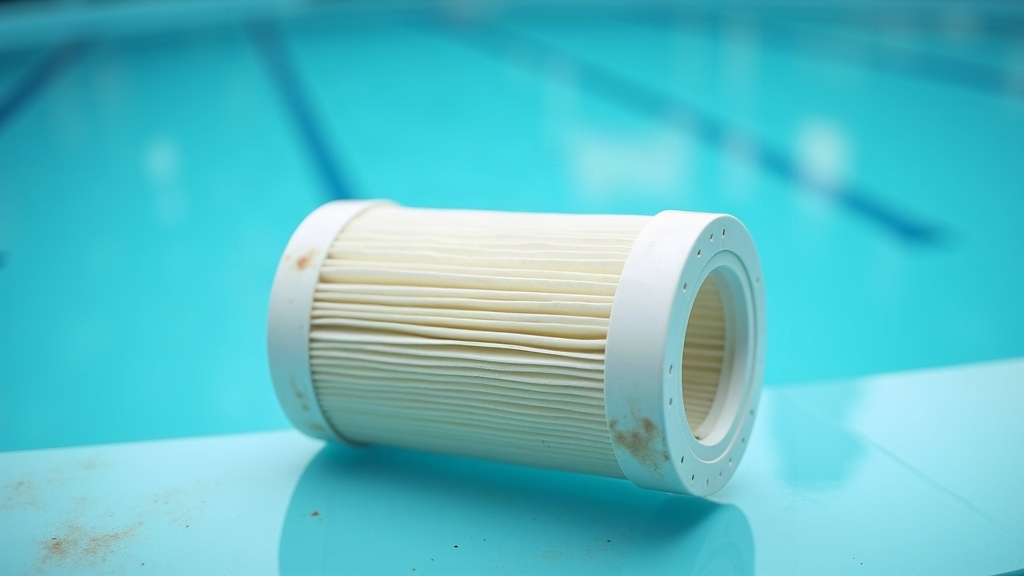
Every filter has a point where trapped debris starts blocking flow rather than helping it. A pressure gauge reading noticeably higher than when the filter was clean is usually the signal that it needs backwashing or cleaning, depending on the filter type. For a walkthrough of what a filter actually does and where it sits in the system, see what’s on a pool equipment pad and what a pool pump actually does.
Running the filter for too few hours a day is just as common a cause as a dirty filter. Some owners cut back run time to save on energy costs, not realizing that the water needs to pass through the filter a certain number of times per day to stay clear — a concept covered in more detail in what turnover rate is and why it matters.
Could Chemical Imbalance Be Causing Cloudiness?
Yes — when sanitizer levels or pH drift outside the normal range, organic material and fine particles are less likely to be neutralized or to clump together where the filter can catch them. Testing the water is the only reliable way to know if this is the cause.
A basic test kit or test strips will show sanitizer level, pH, and total alkalinity. Readings outside the range printed on the product label are worth correcting, following the dosing instructions on that specific product rather than any number found elsewhere — the correct amount always depends on the pool’s volume and the current readings, not a fixed figure.
Sanitizer keeps ahead of the organic load a pool sees every day — sunscreen, skin oils, sweat, leaves. When it falls behind, cloudiness is often the first visible sign. Chlorine-based products and acid-based products must always be stored separately and never combined; mixing sanitizer and acid can produce dangerous gas.
Could Algae Be Turning the Water Cloudy?
Yes — algae doesn’t always show up as visible green clumps right away. A fine haze, a slightly green or grey tint, or water that looks cloudy despite a clean filter can all be early algae growth, especially in warm weather or after a few days of low sanitizer.
Algae spores are present in most pool water and in the environment around it; sanitizer keeps them from establishing a foothold. Once levels drop — from heavy rain, heavy bather load, or simply running low — algae can bloom quickly. Brushing the walls and floor helps knock loose material into the water where the filter can remove it, but the underlying sanitizer level needs correcting too, following the product label for the specific situation.
Could Circulation or Turnover Be the Issue?
Yes — even a clean, correctly sized filter can’t clear the water if it isn’t reaching every part of the pool. Dead spots near steps, corners, or behind ladders let particles and algae settle out of the flow entirely.
Circulation depends on the pump running long enough each day and the returns being aimed to push water around the whole pool rather than in one direction. It’s also worth checking that the skimmer and main drain are both pulling their share of the flow, since a blocked skimmer basket can quietly reduce circulation without any obvious sign. See the real difference between a skimmer and a main drain and how a pool actually circulates water for more on how these pieces work together. The reason a pool needs to run its pump every single day, not just when it looks dirty, is explained in why a pool needs daily circulation.
How Do You Know Which Cause It Is?
Start with the filter pressure gauge, then test the water, then look closely at the haze itself. A quick sequence of checks usually narrows down the cause without needing to guess.
- Check the filter pressure gauge against its clean reading — a high reading points to filtration
- Test sanitizer, pH, and alkalinity — readings outside the normal range point to chemistry
- Look at the color of the haze — green or grey tints point toward algae
- Check pump run time and return flow around the whole pool — short run times or dead spots point to circulation
More than one of these is often true at the same time, since a struggling filter and falling sanitizer often show up together after a run of hot weather or heavy pool use.
How Do You Clear Cloudy Pool Water?
Cloudy water clears once its actual cause is addressed — there’s no single product that fixes every type of cloudiness. In general, correcting chemistry, cleaning or replacing the filter media, and running the pump long enough are the three levers that matter most.
Once the underlying cause is corrected, clearing can still take a day or more, since the filter needs time to physically pull the suspended particles out of the water. Running the filter continuously during this period, rather than on its normal schedule, speeds up the process. Avoid the temptation to add more of any product than the label recommends — overdosing doesn’t clear water faster and can create its own problems.
If total dissolved solids or mineral buildup are suspected — common in older pools or those that have never had a partial water change — a partial drain and refill, done carefully, is sometimes the only real fix. This is worth researching further rather than guessing at, since draining a pool incorrectly can affect a vinyl liner or an in-ground shell; see the differences between vinyl liner, fiberglass, and concrete pools for how each pool type responds to being drained.
When Should You Call a Professional?
A pool store water test, a pool service technician, or a filter specialist is worth calling in when cloudiness doesn’t clear after a few days of correct filter running and balanced chemistry, or when the filter, pump, or plumbing itself seems to be the problem rather than the water.
Any work involving the pump’s electrical connections, wiring, bonding, or grounding is licensed electrical work and shouldn’t be attempted as a DIY project — a technician can explain what a repair involves and what to ask about. The same applies to anything structural, like cracks or plumbing buried in concrete. For a broader look at how pool equipment fits together and what tends to need attention over time, the Pumps, Filters & Heaters and Pool Basics hubs are a good starting point, and anyone weighing the cost of new equipment against ongoing cloudy-water frustration may find the Buying & Costs hub useful for understanding what drives those decisions.
Pools Shop publishes general information, not professional advice. Pool chemicals, electrical work and structural work are genuinely hazardous and are governed by local codes that vary — use a qualified professional for anything you are not certain about, and follow the instructions on the product in front of you rather than a general guide. Nothing here is a substitute for active adult supervision around water: no cover, alarm, fence or device makes a pool safe on its own.