Free chlorine is the sanitizer that is still available to kill germs and control algae. Combined chlorine is chlorine that has already reacted with contaminants and lost most of its sanitizing power. Total chlorine is simply free plus combined added together — it tells you what’s there, not how much is still working.
Understanding the difference matters because a pool can show a “chlorine” reading on a basic test strip and still have a problem. The number that actually protects swimmers is free chlorine. The number that often explains a strong chemical smell or red eyes is combined chlorine. For background on what chlorine is doing in the water in the first place, see what chlorine actually does in a pool.
What is free chlorine?
Free chlorine is the portion of chlorine in the water that has not yet reacted with anything. It is the active sanitizer available to break down bacteria, algae and organic material. This is the figure that matters most day to day, and it’s the one most test kits are built around.
Free chlorine gets used up continuously. Sunlight, swimmers, rain, debris and warm water all consume it. That’s why a pool that tested fine yesterday can test differently today, and why routine testing rather than a one-off check is the reliable approach.
What is combined chlorine?
Combined chlorine, sometimes called chloramines, is chlorine that has already reacted with contaminants like sweat, oils, urine and other organic matter. It has done its job but is now a weaker, less useful compound still floating in the water. It contributes little to ongoing sanitizing.
Combined chlorine is also the main source of the sharp, “chlorine smell” many people associate with pools. Counterintuitively, a strong chemical smell usually means there isn’t enough free chlorine to keep up with what’s being introduced into the water — not that there’s too much chlorine overall.
What is total chlorine, and how is it calculated?
Total chlorine is the sum of free chlorine and combined chlorine. It’s a useful number only when read alongside the free chlorine figure, because on its own it doesn’t say whether the chlorine present is actively sanitizing or already spent.
Most test kits and strips report total chlorine and free chlorine separately, or sometimes total chlorine and free chlorine on the same strip with different color pads. Subtracting free chlorine from total chlorine gives the combined chlorine figure:
- Total chlorine minus free chlorine equals combined chlorine.
- A low or zero combined chlorine reading generally means the chlorine present is doing useful work.
- A combined chlorine reading that makes up a large share of the total suggests the water is carrying a load of contaminants the chlorine has already used itself up on.
Why does combined chlorine matter so much?
Combined chlorine matters because it’s a signal, not just a number. A rising combined chlorine reading tells the owner that organic load — sweat, sunscreen, body oils, leaves — is outpacing the sanitizer, even if the total chlorine reading still looks reassuring.
It also connects to water clarity and comfort. Pools with persistently high combined chlorine often develop the cloudiness, eye irritation and strong odor that get blamed on “too much chlorine” when the real issue is the opposite. For more on what actually keeps water looking clear, see what actually makes pool water clear and why pool water goes cloudy.
How do you test for each type?
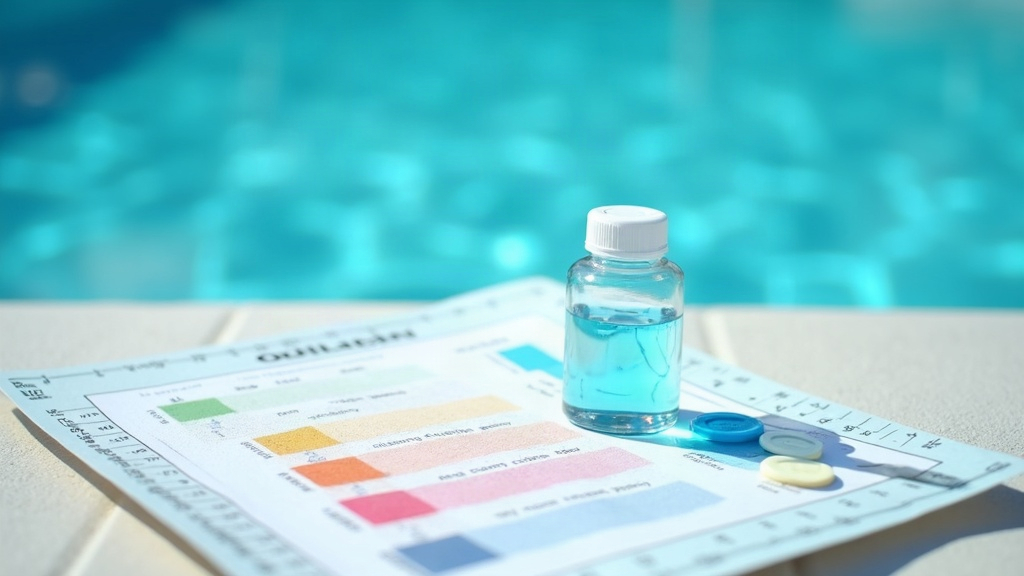
Home test strips and liquid test kits are both able to distinguish free chlorine from total chlorine, though the level of precision varies by product. Read the instructions on the specific kit in front of you rather than assuming one brand works like another.
- Test strips: dip and compare the color pads for free chlorine and total chlorine against the printed chart, following the timing given on the label.
- Liquid (DPD) test kits: these use a color-change reaction and tend to give a more precise result, particularly for combined chlorine once free chlorine is subtracted from total.
- Digital photometers: these remove some of the guesswork in color matching and are popular with owners who test frequently.
Whichever method is used, testing at a consistent time of day — before the pool has been used, rather than right after a party of swimmers — gives more comparable results over time.
What should free chlorine and combined chlorine readings look like?
Free chlorine should sit within the range recommended by the test kit manufacturer or by public health guidance for the area, and combined chlorine should be a small fraction of the total reading. Because acceptable ranges vary by product and by local regulation, always check the label on the test kit and the pool code that applies locally rather than relying on a single number quoted elsewhere.
As a general pattern, healthy water tends to show most of its chlorine as free chlorine, with very little left over as combined chlorine. When combined chlorine climbs toward matching or exceeding free chlorine, that’s a sign to look at what’s driving demand on the sanitizer.
What causes high combined chlorine?
High combined chlorine usually comes from more contaminants entering the water than the current chlorine level can handle. Heavy bather load, hot weather, poor circulation and infrequent testing are the most common contributors.
- Busy periods with lots of swimmers, especially children, introduce more organic material at once.
- Warm, sunny conditions accelerate chlorine loss, leaving less free chlorine available to keep up.
- Poor water movement lets contaminants sit in corners and behind ladders instead of reaching the sanitizer. Circulation problems are covered in why a pool needs daily circulation and how a pool actually circulates water.
- Infrequent testing means a chlorine dip goes unnoticed until combined chlorine has already built up.
How is high combined chlorine corrected?
High combined chlorine is corrected by restoring an adequate free chlorine level and improving whatever is limiting circulation or overloading the water with contaminants. The specific product and amount needed depends on the pool’s volume, its current test readings, and the concentration of the product being used — always follow the instructions on the label of the product in hand rather than a general figure from an article.
Beyond chemical adjustment, a few practical habits help keep combined chlorine down:
- Testing regularly enough to catch a rising trend before it becomes a persistent problem.
- Making sure the pump is running long enough each day to turn over the full volume of water — see what turnover rate is and why it matters.
- Keeping skimmers and filters clear so debris and oils are removed rather than left to react with chlorine — the mechanics of this are explained in skimmer vs main drain: what’s the real difference and what a pool pump actually does.
Chlorine products should always be stored separately from acids and other pool chemicals, and never combined with each other. Mixing certain pool chemicals, particularly chlorine products with acid, can produce toxic gas and has caused serious injury and death. If storage or handling questions come up, treat “keep them apart” as the non-negotiable rule.
Where does this fit into overall pool care?
Free, combined and total chlorine readings are just one part of a wider water chemistry picture that also includes pH, alkalinity and sanitizer stabilizer levels. None of these numbers exist in isolation — a shift in one often explains a shift in another.
For owners building a fuller picture of routine maintenance, the Water Chemistry section and Pool Basics section cover related topics from filtration to daily circulation. Anyone weighing up equipment upgrades that affect water turnover and sanitizer demand may also find the Pumps, Filters & Heaters section useful, and those pricing out a new build or renovation can start with Buying & Costs.
None of this replaces active supervision around the water itself. Good chemistry keeps a pool sanitary and comfortable, but it does nothing to prevent drowning — that risk is managed only by a designated adult watching the water, every time anyone, especially a child, is in or near it.
Pools Shop publishes general information, not professional advice. Pool chemicals, electrical work and structural work are genuinely hazardous and are governed by local codes that vary — use a qualified professional for anything you are not certain about, and follow the instructions on the product in front of you rather than a general guide. Nothing here is a substitute for active adult supervision around water: no cover, alarm, fence or device makes a pool safe on its own.