pH is a measure of how acidic or basic pool water is, on a scale most pools are tested against between roughly 7.2 and 7.8. It matters because pH controls how well chlorine works, how comfortable the water feels, and how much it corrodes or scales pool surfaces and equipment.
What does pH actually measure?
pH is a number that describes the balance between acidic and basic conditions in water. Low numbers mean the water is more acidic; high numbers mean it’s more basic, or alkaline. Pool water sits in a narrow target band because both extremes cause real problems, just different ones.
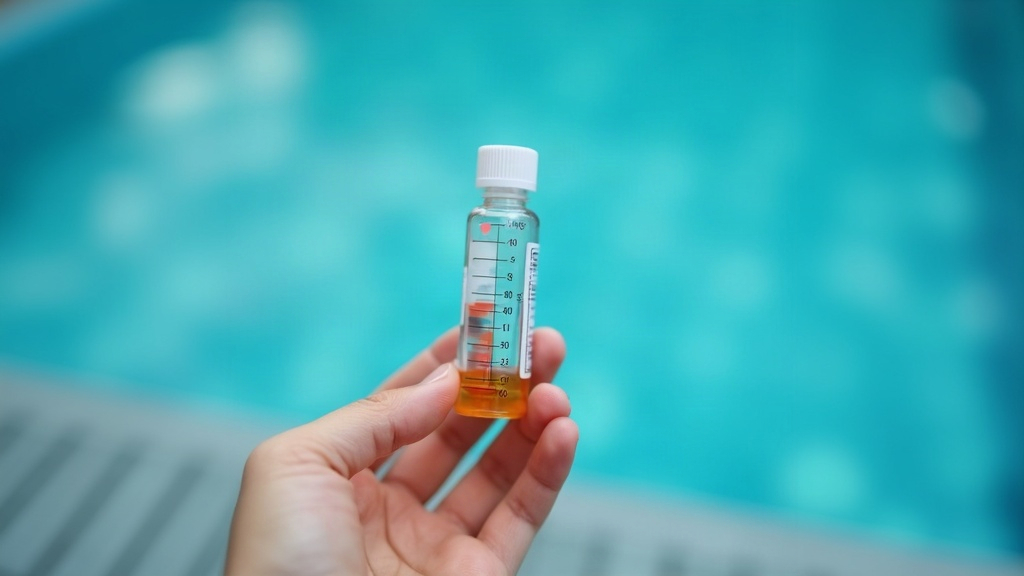
A test kit or test strip reads pH by reacting a chemical indicator with a water sample, producing a color that’s compared against a reference chart or read by a digital meter. It’s a quick test, and it’s one of the two or three readings worth checking regularly, alongside the chlorine levels discussed in this comparison of free, combined and total chlorine.
Why does pH affect chlorine so much?
pH determines how much of the chlorine in the water exists in its active, sanitizing form versus a weaker form. When pH drifts high, a larger share of the chlorine added becomes less effective at killing bacteria and controlling algae, even if the total chlorine reading looks fine.
That’s why two pools can show the same chlorine number on a test strip and behave completely differently — one clearing up nicely, the other turning cloudy or green. For a deeper look at what chlorine is actually doing once it’s in the water, see what chlorine actually does in a swimming pool. pH is essentially the dial that decides how well that process works.
What happens if pH is too low?
Low pH means the water is too acidic. It tends to cause eye and skin irritation, and it makes water more aggressive toward metal fittings, pool ladders, heater components and plaster or grout. Left unchecked over time, acidic water can etch surfaces and corrode metal parts around the pool equipment pad.
Swimmers sometimes describe low-pH water as feeling “sharp” or leaving skin dry and tight. It’s not always dramatic in the short term, but it’s a pattern worth correcting rather than ignoring, since the cost of corrosion shows up later in equipment repairs.
What happens if pH is too high?
High pH means water is too basic, or alkaline. It’s associated with cloudy water, scale buildup on tile and equipment, reduced chlorine effectiveness, and skin or eye irritation of its own kind, often described as itchy rather than sharp.
High pH is one of several possible reasons water looks hazy instead of clear. If cloudiness shows up alongside a high pH reading, that’s a useful clue, though it’s worth ruling out other causes too — this explainer on why pool water goes cloudy walks through the main suspects, and this one covers what actually makes water clear in the first place.
What’s the difference between pH and total alkalinity?
pH is a snapshot of how acidic or basic the water is right now. Total alkalinity is a related but separate measurement of the water’s ability to resist pH swings — think of it as a buffer that keeps pH from bouncing around every time something is added to the pool.
Pools with low alkalinity tend to have pH that swings sharply after every chemical addition, rain event or heavy bather load, which makes the water hard to keep balanced. Pools with alkalinity in a reasonable range hold their pH steadier, which is part of why test kits usually measure both together rather than pH alone.
How often should pH be tested?
Most pool owners test pH along with chlorine at least a couple of times a week during the swimming season, and more often during heavy use, after storms, or after adding fresh water. Hot tubs, with their smaller volume and higher bather load per gallon, typically need more frequent checks.
Consistency matters more than frequency for its own sake. A reading taken at roughly the same time of day, using the same test method, gives a much more useful trend than occasional spot checks with different tools.
What causes pH to drift in the first place?
Several ordinary things push pH up or down over time:
- Bather load — sweat and body oils tend to push pH upward
- Rainfall, which is often slightly acidic and can lower pH
- Some sanitizing products, which raise or lower pH as a side effect of what they do
- Fresh fill water, which carries its own starting pH and alkalinity
- Aeration from waterfalls, fountains or a heavily splashing pump return, which tends to push pH up over time
None of this means pH needs constant attention hour to hour. It means testing regularly and adjusting based on what the test shows, rather than guessing.
How is pH adjusted?
Pool owners use products designed to raise pH and separate products designed to lower it, chosen based on what the test result actually shows. The right amount to add depends on the pool’s water volume, current test reading and the specific product’s strength — figures an article can’t know in advance.
The label on the product in front of the reader is the only reliable source for how much to use and how to apply it. Chemicals should always be stored separately from each other, especially chlorine products and acid, since combining pool chemicals is never something to do — mixing chlorine and acid can produce toxic gas, which has caused real harm. Add products to water one at a time, never directly to each other, and never mix them.
Does pH affect pool equipment and surfaces?
Yes. Water that’s chronically too acidic or too basic accelerates wear on the parts that keep a pool running — heater exchangers, metal fittings, pump seals, and plaster or grout lines. Corrosion and scale buildup are both slow processes, which is part of why they’re easy to overlook until a repair bill shows up.
Balanced water is one of the cheaper ways to protect the investment sitting on the equipment pad, next to the pump and filter doing the daily work of keeping water moving — a process covered in more detail in how a swimming pool actually circulates water and why a pool needs daily circulation at all.
Does pH matter for a new pool or one being built?
It matters from the very first fill. New plaster, in particular, is sensitive to water chemistry in its early weeks, and getting pH wrong early can affect how the surface cures and looks long term. Anyone comparing pool surface types as part of a build or renovation can see how finish choice interacts with water chemistry in this comparison of vinyl liner, fiberglass and concrete pools.
For general orientation on what a new pool owner needs to understand before diving into water chemistry, the Pool Basics hub and Water Chemistry hub are good starting points, and anyone budgeting for ongoing costs can browse the Buying & Costs hub for what ordinary maintenance tends to involve.
What’s the simplest way to think about pH?
Treat pH as the setting that decides how well everything else in the pool works — chlorine effectiveness, swimmer comfort, and the lifespan of surfaces and equipment. Testing it regularly and adjusting based on real numbers, rather than guesswork, is the single habit that prevents the most downstream problems.
It won’t fix a leak, a clogged filter or a broken pump on its own — those are separate issues covered elsewhere, including why pools lose water even with no leak and what a pool pump actually does — but keeping pH in range is one of the few things every pool owner can check with a five-minute test and no special training.
Pools Shop publishes general information, not professional advice. Pool chemicals, electrical work and structural work are genuinely hazardous and are governed by local codes that vary — use a qualified professional for anything you are not certain about, and follow the instructions on the product in front of you rather than a general guide. Nothing here is a substitute for active adult supervision around water: no cover, alarm, fence or device makes a pool safe on its own.