A filter needs a real cleaning — not just a backwash — when backwashing stops bringing the pressure gauge back down to its normal starting point, when flow through the returns feels weak even after backwashing, or when the filter type simply doesn’t backwash at all, like most cartridge and some DE filters. Backwashing rinses loose debris; it doesn’t remove oils, scale or grease built up in the media.
What’s the actual difference between backwashing and cleaning?
Backwashing reverses the water flow through a sand or DE filter to flush trapped dirt out through the waste line. It’s fast, it uses no extra tools, and it’s meant to be routine. A full cleaning goes further — it targets the grease, body oils, sunscreen residue and mineral scale that cling to the filter media itself and don’t rinse away with reversed water flow.
Think of backwashing as shaking out a doormat and cleaning as actually washing it. One is a quick daily habit; the other happens less often but matters more when things have built up. For more on what backwashing physically does inside the tank, see what backwashing a filter actually does.
What pressure gauge reading means it’s time to clean, not backwash?
If backwashing brings the pressure down only slightly, or the pressure climbs back to the trigger point again within a day or two of backwashing, that’s the sign backwashing isn’t solving the underlying problem. A filter that keeps needing backwashed more and more often, with less and less improvement each time, usually has media that’s coated in something backwashing can’t shift.
Every filter has a “clean” starting pressure noted when it was new or last cleaned. A rise of several units above that baseline is the usual trigger to backwash. But if backwashing no longer brings the reading back near that baseline, the next step is a proper clean rather than another backwash cycle. Details on what’s mounted around the filter, including the gauge itself, are covered on the page about what’s on a typical pool equipment pad.
Do cartridge filters ever get backwashed?
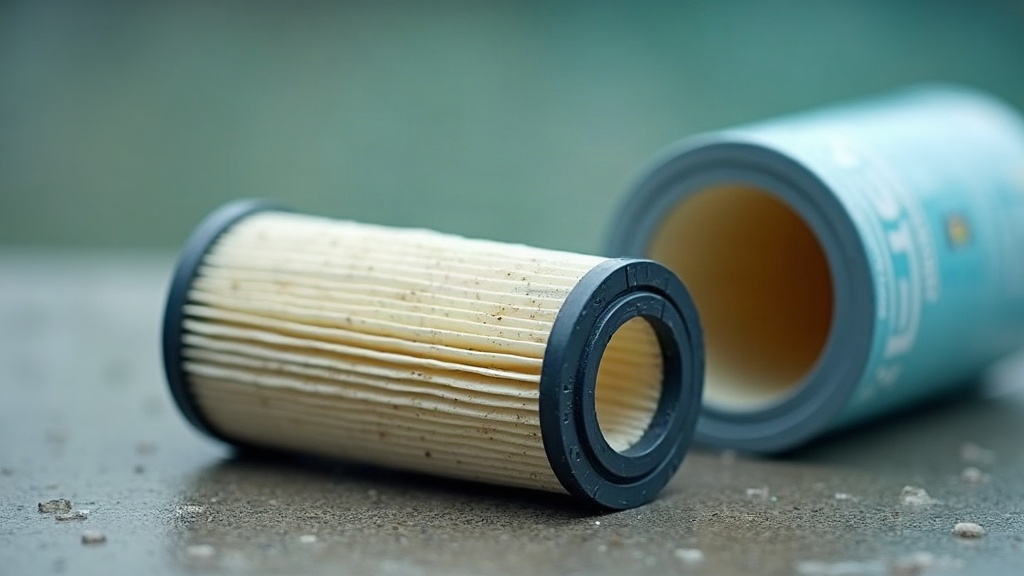
No — cartridge filters don’t have a backwash setting because there’s no multiport valve to reverse the flow. The only way to clean a cartridge filter is to shut down the pump, open the housing, remove the element, and rinse it or soak it.
This makes cartridge filters a different maintenance rhythm entirely. Instead of routine backwashing, the schedule is built around periodic hose-rinsing between soaks, and a deeper soak or replacement when rinsing alone stops restoring flow. If a system relies on a cartridge, the entire concept of “backwash vs. clean” narrows down to a single question: has the element been pulled and rinsed lately?
What about DE filters — do they need cleaning as well as backwashing?
Yes. DE filters do backwash, and backwashing flushes out most of the spent diatomaceous earth along with trapped debris. But the fabric grids inside still accumulate oils and fine residue over time that plain backwashing won’t remove, so the grids need to come out and be hosed down or soaked periodically, with fresh DE added afterward per the product’s own instructions.
Skipping that step eventually leads to grids that stay dirty even right after backwashing, and pressure that creeps up faster with each cycle. If the pool has ever gone cloudy despite a filter that seems to be running fine, a grid or cartridge overdue for cleaning is a common culprit — more on this in why pool water goes cloudy.
How often should a full clean happen regardless of pressure?
Even a filter that’s never showing high pressure benefits from a scheduled deep clean every so often, because oils and fine particles can coat media without raising pressure much until the buildup is severe. Heavy bather load, sunscreen use, algae events and hard water all speed this up.
A practical approach:
- Rinse or backwash on the pressure-rise schedule that’s normal for the filter type.
- Add a scheduled deeper clean at a set point in the season, regardless of pressure readings, especially after heavy swimming periods or an algae bloom.
- Clean sooner than planned if water looks less clear even though chemistry tests fine — a loaded filter is a common reason water won’t fully clear. See what actually makes pool water clear for how filtration fits into that picture.
Filters also work harder when the pool isn’t circulating enough water each day, so a filter that seems to need cleaning constantly is worth checking against the pool’s expected turnover rate and daily circulation routine — an undersized run time makes any filter look like it’s underperforming.
Are there signs the filter needs replacing, not just cleaning?
Sand that has channeled, clumped or lost its texture, cartridge pleats that stay grey and matted after a soak, or DE grids with torn fabric are signs cleaning has reached its limit. At that point, the media or element needs replacing rather than another cleaning attempt.
Sand media in particular can go years without full replacement, but exactly how long depends on bather load, water chemistry and how consistently the filter was cleaned — there’s no fixed number that applies to every pool, so it’s worth judging by performance rather than a calendar date alone. A filter that’s freshly cleaned and still won’t hold pressure or won’t clear the water is the clearest sign it’s a media or hardware issue rather than a maintenance one.
What happens if a filter is only ever backwashed and never cleaned?
Media that’s never properly cleaned gradually loses its ability to trap fine particles. Water may still look clear at a glance while carrying dissolved oils and sunscreen residue the filter can no longer catch, which often shows up as chronically hazy or dull-looking water rather than obviously dirty water.
It also puts more strain on the pump, since clogged or channeled media forces water to find the path of least resistance rather than passing through evenly. Over time this shortens the useful life of the filter media and can leave the pool relying more heavily on chemical treatment to compensate for filtration that isn’t doing its share.
None of this is urgent in the way a chemical or electrical hazard is — it’s a maintenance issue that shows up gradually. But a pool that seems to need more shock treatments or more frequent brushing than it should might have a filter that’s overdue for a real clean rather than another backwash. For the brushing side of that routine, see how often a pool actually needs brushing, and for the wider maintenance picture, the Cleaning & Maintenance and Pumps, Filters & Heaters sections cover the rest of the routine that keeps a filter from reaching this point in the first place.
Pools Shop publishes general information, not professional advice. Pool chemicals, electrical work and structural work are genuinely hazardous and are governed by local codes that vary — use a qualified professional for anything you are not certain about, and follow the instructions on the product in front of you rather than a general guide. Nothing here is a substitute for active adult supervision around water: no cover, alarm, fence or device makes a pool safe on its own.