No — a pool should not be fully drained for winter in almost all cases. Standard practice is to lower the water a few inches below the skimmer, not empty the pool. Full draining is reserved for specific repairs or very unusual site conditions, and doing it without knowing why can cause real structural damage.
Why is draining a pool for winter usually the wrong move?
An empty pool loses the weight of water that was holding the structure and liner in place. Groundwater pressure, soil movement, and — in vinyl and fiberglass pools — the shell itself can shift or “float” out of the ground once that counterweight is gone. This is a structural risk, not a cosmetic one.
Concrete pools can crack under uneven pressure. Vinyl liners can shrink, stretch, or pull away from the wall track once they’re not supported by water. Fiberglass shells have popped out of the ground entirely when a high water table pushed against an empty basin. None of this is guesswork worth taking on for a routine winter close.
So what actually happens to the water for winter?
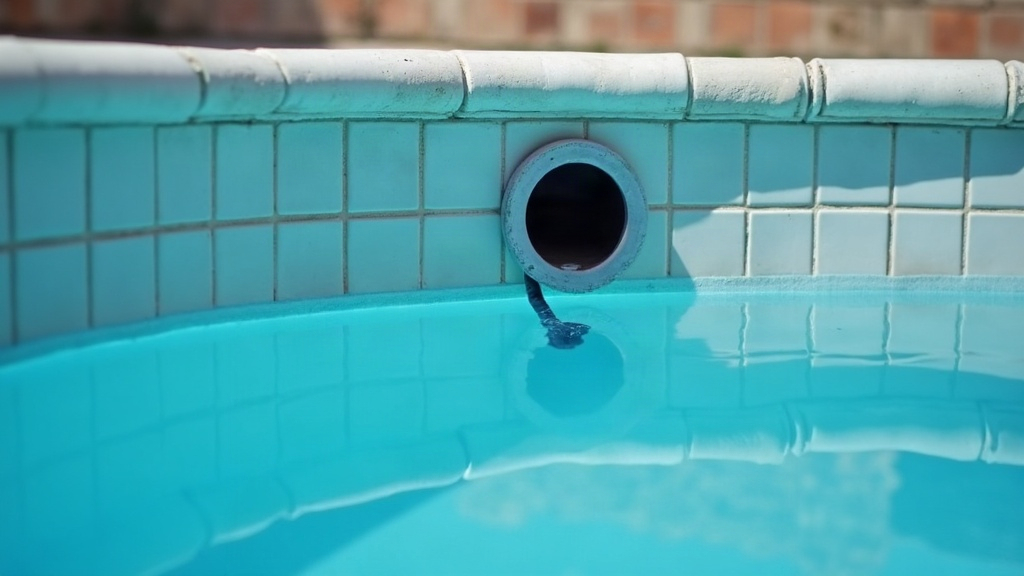
The water level gets lowered, not removed. It’s typically dropped below the skimmer opening (and sometimes below return lines, depending on the setup) so ice can’t sit inside plumbing fixtures and crack them. The rest of the pool stays full.
This partial lowering protects the skimmer and lines from freeze damage while leaving enough water in the pool to hold the structure steady through the cold months. It’s one part of a broader closing routine — read what winterising a pool actually involves for the full sequence.
What is the point of blowing out the lines if the pool isn’t drained?
Clearing water from the pipes prevents it from freezing and expanding inside them, which is what actually cracks plumbing — not the water sitting in the pool itself. Lines get blown out and plugged; the pool body stays mostly full.
This step is separate from lowering the water level and just as important. A cracked underground pipe is one of the more expensive and disruptive repairs a pool owner can face, and it’s largely preventable. There’s a dedicated explanation of why blowing out the lines matters when closing a pool.
Are there situations where a full drain is actually necessary?
Yes, but they’re specific: resurfacing work, liner replacement, major leak repairs, or moving equipment that sits below the current water line. In these cases, the drain is done as part of a planned job with a reason attached to it, not as a routine winter step.
Anyone facing one of these situations should ask a pool professional about the site’s water table, the pool’s construction type, and whether the shell needs bracing or hydrostatic relief valves opened during the empty period. This is structural and site-specific work, and it’s reasonable to get that assessment before agreeing to a full drain.
What happens if a pool is just left alone with no winter prep at all?
Left uncovered and unmanaged, a pool doesn’t stay in a safe holding pattern — it develops algae, loses chemical balance, and becomes a target for debris and freeze damage to equipment. The full picture is covered in what happens if a pool is left uncovered over winter.
Skipping proper closing steps to save time in autumn usually means more work — and often more expense — at opening. The condition a pool is in come spring depends heavily on how it was closed, which is explored in what actually happens when a pool is opened for the season.
Does pool type change the winter draining answer?
The basic rule — lower the water, don’t empty the pool — holds across vinyl, fiberglass, and concrete construction, though the reasons and risks differ slightly by type.
- Vinyl liner pools: an empty liner can shrink, wrinkle, or detach from its track; it also becomes vulnerable to punctures with nothing to hold it against the wall.
- Fiberglass pools: the shell is light relative to the ground around it and can shift or pop out without water pressure balancing the soil and groundwater pressure outside it.
- Concrete/gunite pools: less prone to floating, but an empty shell can crack under uneven ground pressure or freeze-thaw cycling in the surrounding soil.
Anyone unsure which category their pool falls into, or how their local ground conditions affect this, should check with whoever installed or services the pool rather than assume all pools behave the same way.
What about equipment — does it need draining too?
Pumps, filters, and heaters need water cleared from their housings and lines, separate from the pool body itself. Trapped water in a pump or filter tank can freeze, expand, and crack the housing — a repair that often means replacing the part entirely.
This is where seasonal prep connects to the pumps, filters and heaters side of pool care. Filters get backwashed and drained per their type — the differences between sand, cartridge and DE filters matter here, since each drains and stores differently over winter. Heaters, in particular, involve venting, gas or electrical connections, and drainage points that are best handled by whoever installed the unit, since incorrect draining can leave water sitting where it will freeze and split a heat exchanger.
Does water chemistry matter if the pool isn’t being drained?
Yes — balanced water sitting in a closed pool all winter resists algae and staining far better than water that’s neglected before closing. Testing and adjusting before closing is part of the job, not an optional extra.
Checking and correcting pH, sanitizer level, and calcium hardness before the cover goes on is worth doing properly. The water chemistry section covers what each of those readings means and what to test for. As with any pool chemical, follow the label on the product in hand for amounts, and always store sanitizers and pH-adjusting chemicals separately — never mixed.
What’s the bottom line for someone closing a pool this year?
Lower the water below the skimmer, clear the lines, balance the chemistry, and cover the pool — don’t empty it. Full draining is a targeted repair step, done for a specific structural reason with professional input, not a routine part of winter closing.
For a full walkthrough of the season’s tasks in order, the opening and closing section lays out the sequence from first cold snap to spring startup. Getting each step right in the right order is what actually protects the pool over winter — not how much water is left in it.
Pools Shop publishes general information, not professional advice. Pool chemicals, electrical work and structural work are genuinely hazardous and are governed by local codes that vary — use a qualified professional for anything you are not certain about, and follow the instructions on the product in front of you rather than a general guide. Nothing here is a substitute for active adult supervision around water: no cover, alarm, fence or device makes a pool safe on its own.