A winter cover blocks sunlight, keeps out leaves and debris, and is built to sit on a closed pool for months, sometimes under snow or rain. A solar cover is a thin, light material meant to float on open water during swim season to slow evaporation and hold in some heat. They are not interchangeable, and using one in place of the other usually causes problems.
What is a winter cover doing that a solar cover is not?
A winter cover is doing three jobs a solar cover was never designed for: keeping debris and organic matter out of closed water, blocking enough light to slow algae growth over a long idle period, and physically holding up under weather. A solar cover is doing a completely different, much narrower job — reducing evaporation and warming the top layer of water while the pool is actively used.
What does a winter cover actually cover for?
A winter cover is built for a pool that is not circulating, not being tested regularly, and not being watched day to day. It has to keep the water inside reasonably clean and dark for an entire off-season.
- Solid, opaque material that blocks most sunlight reaching the water
- Fitted tightly with clips, water bags, or an anchoring system so wind cannot get underneath
- Rated to shed or support some weight from rain, snow, or debris pooling on top
- Meant to stay in place for the length of a closure, not removed and refolded daily
Blocking light matters more than most owners expect. Algae needs sunlight along with warmth and nutrients, and a dark, undisturbed pool is a much harder place for it to establish. That’s part of what winterising a pool is built around — see what winterising a pool involves for the fuller picture of how the closing process fits together.
Why doesn’t a solar cover do this job in the off-season?
A solar cover isn’t opaque, isn’t built to bear weight, and isn’t meant to sit untouched for weeks or months. Using one as a winter cover leaves the pool exposed to light and debris in ways a proper winter cover is designed to prevent.
Solar covers are made from a translucent bubbled material specifically so sunlight can pass through and warm the water underneath — that’s the entire mechanism behind how they work. For the off-season, that translucency works against the pool owner: light gets through, algae has an easier path to establishing, and the material itself has no real capacity to hold snow load or shed heavy rain. For a closer look at what a solar cover is actually doing during the swim season, see what a solar cover is and how it works.
Does a winter cover keep the pool safe?
No. A winter cover is a maintenance tool, not a safety barrier, and it should never be treated as one. A solid cover, a locked gate, an alarm, and swim skills are separate layers — none of them replace a designated adult actively watching the water whenever anyone could reach it.
Some winter covers are marketed with safety language, and some jurisdictions do regulate pool barriers, gates, and cover specifications as part of local code. That’s a legal requirement worth checking, not a reason to relax supervision. A cover that keeps debris out of closed water is not the same thing as a cover rated and installed as a barrier, and the difference matters enough that it should never be assumed. Always check local code and permit requirements for barriers, and never let any product stand in for a person watching the water.
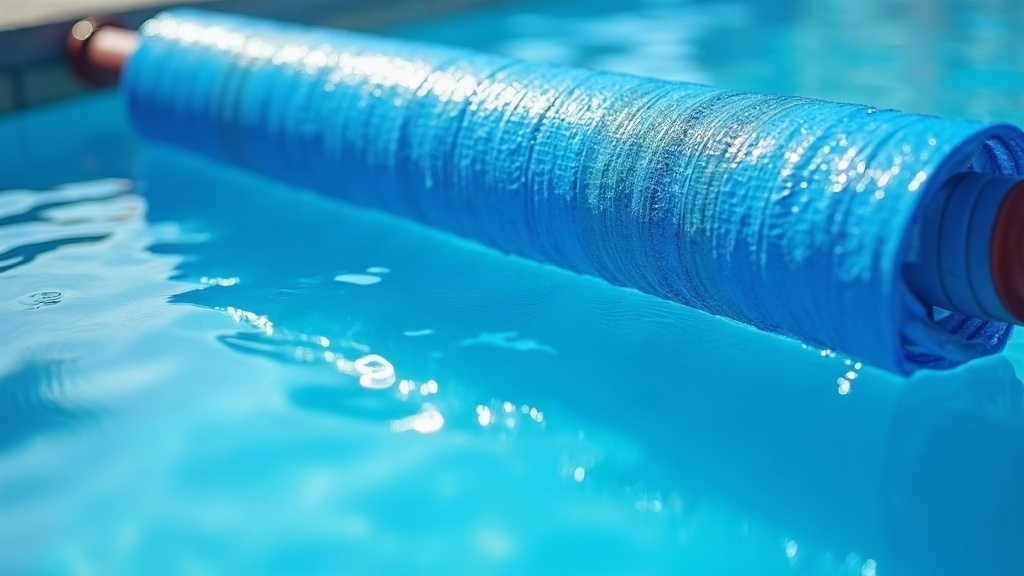
What happens if a solar cover is left on over winter?
Left on through a closure, a solar cover tends to degrade faster, does little to stop debris or algae, and can trap leaves and grime against the water surface instead of keeping them off it. It also isn’t built to be walked on or to bear the weight of standing water or snow, which puts stress on material that isn’t designed for it.
The bubbles that give a solar cover its heat-retaining property break down with prolonged sun exposure and cold, and a pool closed for the season gets neither the circulation nor the attention that would catch a problem early. For more on what an uncovered or poorly covered pool goes through during closure, see what happens if a pool is left uncovered over winter.
Can a winter cover double as a solar cover?
Not really. A winter cover’s opaque, heavier material is built for blocking light and shedding weather, not for warming water, and it’s typically removed entirely once the pool reopens rather than left floating during the swim season. Trying to use one as a daily solar cover defeats the point of both products.
The two covers solve opposite problems. A solar cover lets light in on purpose; a winter cover keeps it out on purpose. Owners who want both evaporation control during the season and proper protection during closure generally need two separate covers, used at the right time of year for each.
What should a winter cover be able to handle?
A winter cover should hold up to the local climate — rain pooling, wind, and where relevant, snow load — without collapsing into the water or tearing at its anchor points. What it needs to handle varies a lot by region and pool type, so there’s no single spec that fits every pool.
- How well it’s anchored, since a loose edge lets wind lift it and debris slip underneath
- Whether standing water or snow needs to be cleared off periodically rather than left to sit
- Whether the pool’s water level was set correctly before closing, which affects how the cover sits
- Whether plumbing was properly cleared before the cover went on
That last point connects to a separate part of closing a pool. A cover only protects what’s above the waterline — it does nothing for water left sitting in pipes, which is why blowing out the lines when closing a pool matters as its own step, and why some owners weigh whether to drain the pool for winter at all versus leaving it mostly full and covered.
Do winter covers stop algae completely?
No cover stops algae on its own — it only limits one of the conditions algae needs. A tight-fitting, opaque winter cover reduces the light reaching the water, which makes it harder for algae to get established, but nutrients and warmth can still be present underneath.
What actually lets algae take hold is a combination of factors, not light alone. For a fuller explanation of those conditions, see what causes algae to take hold in a pool. A good winter cover is one layer of prevention, not a guarantee, which is part of why reopening in spring usually involves a real chemical check rather than assuming the water is fine because it was covered all winter — see what actually happens when a pool is opened for the season.
When should each cover be used?
A solar cover belongs on the pool during the active swim season, on and off the water as needed, to cut evaporation and add a bit of warmth. A winter cover belongs on the pool once it’s closed for the season and comes off only when it’s time to reopen.
Using the right cover for the right season is a small decision with a real payoff: less debris to clean out in spring, a pool that’s easier to bring back into balance, and equipment that isn’t fighting a mess that built up over months. For the broader routine that closing and opening fit into, the Opening & Closing section and the Pool Basics section cover the full seasonal cycle in more detail.
Pools Shop publishes general information, not professional advice. Pool chemicals, electrical work and structural work are genuinely hazardous and are governed by local codes that vary — use a qualified professional for anything you are not certain about, and follow the instructions on the product in front of you rather than a general guide. Nothing here is a substitute for active adult supervision around water: no cover, alarm, fence or device makes a pool safe on its own.