Suction cleaners plug into the skimmer or a dedicated suction line and rely on the pool’s own pump to create the pull that moves them. Pressure cleaners use water pushed out from the return side, often with a booster pump, to drive themselves and collect debris in a bag. Robotic cleaners are self-contained units with their own motor and filter, plugged into a power outlet and independent of the pool’s circulation system entirely.
What is a suction-side cleaner and how does it work?
A suction cleaner attaches to the skimmer basket or a dedicated suction port and uses the vacuum created by the pool’s own pump to crawl the floor, pulling loose debris back through the plumbing to the filter.
These are usually the least expensive cleaners to buy. They move somewhat randomly across the floor, following whatever path the suction and their internal mechanism direct them to, so coverage over a single cleaning cycle can be uneven. Because debris travels all the way back through the pool’s plumbing, anything picked up ends up at the filter rather than in a separate bag, which means the filter is doing extra work. Fine debris like sand or algae fragments can also increase how often backwashing or filter cleaning is needed.
Suction cleaners also depend entirely on the pump running. If the pump’s schedule is short to save energy, the cleaner only works during that window. Understanding what the pool pump actually does helps explain why a suction cleaner’s performance is tied so closely to pump run time and plumbing condition.
What is a pressure-side cleaner and how does it work?
A pressure cleaner connects to the return line and is driven by water being pushed out, not pulled in. Debris is captured in its own attached bag or canister rather than traveling back through the filter.
Because the debris stays in a bag on the cleaner itself, pressure cleaners take some of the load off the filter, which can matter for pools that struggle with fine debris or frequent leaf fall. Many pressure cleaners run off the pool’s existing return pressure, though some higher-performing models are designed to work with a dedicated booster pump for stronger movement.
Adding a booster pump means new plumbing and a new electrical circuit near water — that is licensed electrical and plumbing work, not a weekend project, and any wiring near a pool needs to meet local code for bonding and grounding. A licensed electrician or pool professional can advise on what a booster pump installation actually requires for a specific site.
Pressure cleaners tend to need their bags emptied more often than a suction cleaner needs its basket checked, since all the collected debris stays with the unit rather than moving to the main filter.
What is a robotic pool cleaner and how does it work?
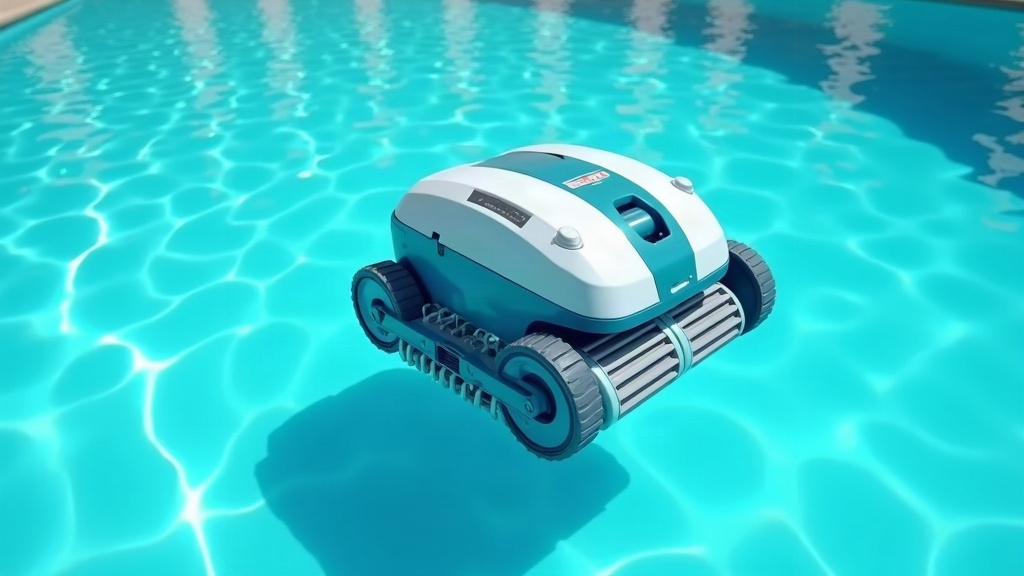
A robotic cleaner is a self-driving unit with its own motor, pump and filter bag or cartridge, plugged into a standard power outlet through a low-voltage transformer. It does not rely on the pool’s pump or plumbing at all.
Robotic cleaners typically use programmed or sensor-guided patterns to cover the floor, walls and sometimes the waterline more systematically than a suction cleaner’s more random path. Because filtering happens inside the unit, none of the collected debris passes through the pool’s main filter system, which can reduce demand on whichever filter type the pool uses.
They run independently of the pump’s schedule, so a robotic cleaner can operate on its own cycle regardless of when the main circulation system runs — which is a separate question from why a pool still needs daily circulation for chemical distribution and turnover, a job the cleaner does not replace. For a closer look at what these units actually accomplish, see what do robotic pool cleaners actually do.
Which type of cleaner cleans best?
Robotic cleaners generally offer the most thorough and even coverage because their movement isn’t dependent on pump suction or return pressure, and many models can climb walls and clean the waterline. Suction and pressure cleaners are usually strongest on open floor areas.
None of the three types substitutes for occasional manual brushing. Algae and biofilm cling to steps, corners and rough surfaces that automated cleaners often miss, which is part of why regular brushing still matters even with an automated cleaner running.
Debris type matters too. Fine silt and algae are handled differently by each system — a suction cleaner sends it to the main filter, a pressure cleaner and a robotic cleaner both catch it in their own bag, generally making cleanup faster since there’s no separate backwash or filter-clean step tied to that debris.
Do these cleaners affect water chemistry or circulation?
None of the three cleaner types treats or balances water chemistry. They physically remove debris, which can reduce organic load that would otherwise consume sanitizer, but testing and adjusting chemistry is a separate task altogether.
Debris left to decompose on the floor can contribute to demand on chlorine and to the conditions that let algae take hold, so regular mechanical cleaning — by whichever method — supports water clarity indirectly. It doesn’t change what’s actually keeping the water sanitized or balanced. Routine testing still belongs in the maintenance routine regardless of which cleaner is running; the water chemistry basics that govern clarity and sanitizer levels are unaffected by how debris gets removed from the floor.
Suction cleaners in particular interact with the pool’s plumbing and skimmer or main drain system, so a cleaner that seems to be losing suction is sometimes actually flagging a clogged basket, a weak pump, or an airlock somewhere in the line rather than a fault with the cleaner itself.
What does each type cost to own over time?
Purchase price is only part of the picture, and actual costs vary by pool size, cleaner model, local electricity and water rates, and how much manual maintenance a household is willing to do — so it isn’t possible to state a figure that applies broadly.
Suction cleaners are usually the cheapest to buy but add wear to the pump and filter over time, since they route debris through the whole system. Pressure cleaners without a booster pump sit in the middle; those requiring a booster pump involve a larger upfront cost tied to that electrical and plumbing work. Robotic cleaners tend to have the highest purchase price but run on their own low-voltage power draw and don’t add wear to the pool’s pump or filter system, which can offset some of that cost over the unit’s working life.
Anyone comparing options as part of a wider pool purchase or renovation may find it useful to browse buying and cost considerations before deciding, since a cleaner is rarely bought in isolation from decisions about pump size, filter type and overall equipment budget.
Which cleaner suits a particular pool?
The right choice depends on pool shape, surface type, debris load, budget and how much hands-on maintenance an owner wants to do. There’s no single correct answer — each type trades off cost, convenience and how much load it places on the rest of the equipment.
- A small, low-debris pool with a simple shape may do fine with an inexpensive suction cleaner.
- A pool under trees or with a lot of fine debris often benefits from a pressure or robotic cleaner that keeps debris out of the main filter.
- Pools with irregular shapes, steps, or a need for waterline cleaning tend to see the most benefit from a robotic cleaner’s independent movement.
- Anyone running a pump on a shortened schedule to manage energy use may find a robotic cleaner more practical, since it isn’t limited to the pump’s operating hours.
Whichever cleaner is chosen, it works alongside — not instead of — routine tasks covered under general cleaning and maintenance practices, and alongside the equipment covered on the pump and filter side under pumps, filters and heaters. A cleaner keeps the floor tidy; it doesn’t replace testing, brushing, or keeping an eye on how the whole system is circulating and filtering water day to day.
Pools Shop publishes general information, not professional advice. Pool chemicals, electrical work and structural work are genuinely hazardous and are governed by local codes that vary — use a qualified professional for anything you are not certain about, and follow the instructions on the product in front of you rather than a general guide. Nothing here is a substitute for active adult supervision around water: no cover, alarm, fence or device makes a pool safe on its own.