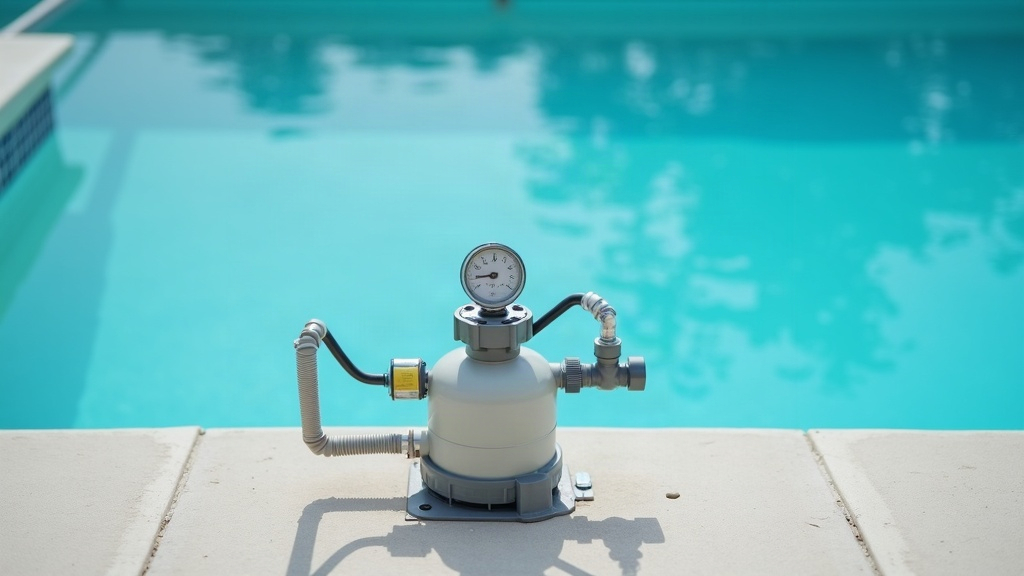
A filter pressure gauge measures how much resistance the water is meeting as it pushes through the filter media. A rising number means the filter is catching debris and getting harder to push water through. A low or zero reading usually means low flow, a closed valve, or a pump problem, not a clean filter.
What is the pressure gauge actually measuring?
It measures the water pressure inside the filter tank, on the side where water enters before passing through the sand, cartridge, or grid media. That reading only means something when it is compared to a baseline — the pressure the system showed right after the filter was last cleaned or backwashed, with clean media and a full pump basket.
Every pool’s baseline is different. It depends on the filter type, the pump’s flow rate, and how the plumbing is laid out. There is no single “correct” number that applies to every pool, which is why writing down the starting pressure after each cleaning is more useful than comparing to a number from a manual or a neighbour’s pool.
Why does filter pressure rise over time?
Pressure rises because the filter media is trapping dirt, oils, sunscreen residue, and fine particles, and that trapped debris makes the water work harder to get through. This is completely normal and is exactly what a filter is supposed to do.
As a rough guide many pool owners use, once the gauge climbs noticeably above its clean-and-freshly-cleaned baseline, it is a signal the filter media needs attention. The exact rise that matters depends on the equipment, so the trend matters more than any specific figure. For sand and DE systems this usually means backwashing; for cartridge filters it usually means pulling the elements out and hosing them down. The difference between those two actions is covered in when a filter needs cleaning rather than backwashing, and what backwashing physically does to the media is explained in what backwashing a filter actually does.
Why would filter pressure suddenly drop instead?
A sudden drop in pressure almost always points to reduced flow reaching the filter, not a suddenly cleaner filter. Common causes include a clogged skimmer or pump basket, a closed or partly closed valve, air getting into the system, or a pump that is struggling to move water.
A dropping gauge alongside weaker return flow at the jets or a noisy pump is worth paying attention to. Those are also classic signs that a pump may be starting to fail, which is covered in more detail in how to know a pool pump is failing. Because pumps, wiring and bonding around pool equipment are code-governed work, any suspected electrical or motor fault should go to a licensed pool or electrical professional rather than being investigated by taking the pump apart.
What counts as a “high” reading on a filter gauge?
A high reading is one that sits well above the clean baseline for that specific pool’s system, not a fixed number on the dial. Manufacturers sometimes mark a red zone on the gauge face as a general guide, but the more reliable reference point is always the reading logged right after the filter was last serviced.
When pressure sits in that elevated range, flow through the whole system slows down, which means less water is actually being filtered and circulated per hour. That connects directly to turnover rate and why it matters — a clogged filter can quietly stretch out how long it takes to cycle the whole pool’s volume through the filter, even though the pump is running the same number of hours.
What does a very low or zero reading mean?
A gauge sitting at or near zero while the pump is running usually means water is not reaching the filter in normal volume. This can be caused by a blocked suction line, a nearly empty pump basket, a valve left in the wrong position, or air being drawn into the system somewhere before the pump.
It is worth checking the obvious first: skimmer baskets, pump strainer basket, and any multiport or push-pull valve positions. If those are all clear and the reading is still low, the cause may be inside the pump housing or in buried plumbing, both of which are better assessed by someone experienced with the specific equipment rather than guessed at.
Does the type of filter change what the gauge means?
Yes — sand, cartridge and DE filters behave differently under pressure even though the gauge reads the same way on all three. Sand filters tend to show a gradual, steady climb as fine debris packs into the sand bed. Cartridge filters can show a faster rise because the pleated material has less overall capacity before it needs rinsing. DE filters often show the sharpest rise once the fine powder coating starts to clog, but they can also filter finer particles when clean.
The practical differences between the three systems, including how each one is cleaned and how long that cleaning tends to hold, are laid out in sand vs cartridge vs DE filters: the real difference. For cartridge owners specifically, how long filter cartridges actually last covers how rising pressure trends relate to when a cartridge is worn out versus just dirty.
How often should the gauge actually be checked?
Checking it whenever the pump is running — ideally as part of a quick weekly walk around the equipment pad — is enough for most home pools. It only takes a glance, and comparing that glance to the number written down after the last cleaning is what makes it useful.
- Note the pressure right after backwashing or rinsing the cartridge.
- Check again at the same point each week, with the pump running normally.
- Watch the trend over several weeks rather than reacting to one single reading.
- Check basket levels and valve positions before assuming the filter itself is the problem.
This kind of routine glance sits alongside the rest of a pool’s basic upkeep — the same visits that cover skimming, brushing and basket emptying described in Cleaning & Maintenance.
Where does the gauge fit into keeping water circulating properly?
Pressure, flow and filtration are all connected. The pump moves water, the filter cleans it, and the gauge is really a window into how easily that whole loop is working at any given moment. Understanding what the pump itself is doing in that loop is covered in what a pool pump actually does, and the bigger picture of why the water needs to keep moving at all is explained in why a pool needs daily circulation.
For anyone still getting familiar with what’s actually mounted on the equipment pad and what each part does, what a pool equipment pad is and what’s on it is a useful starting point, alongside the broader basics covered in Pool Basics and the equipment-specific articles in Pumps, Filters & Heaters.
What should be done once the gauge signals a problem?
If pressure has risen well above the clean baseline, backwashing or cleaning the filter media — matched to the filter type — is the usual next step. If pressure has dropped instead, the basket, valves and pump intake are the first things worth checking before assuming anything is broken.
Anything beyond that — a pump that won’t prime, unusual noise from the motor, or suspected wiring or bonding issues near the equipment pad — falls into licensed trade territory. A gauge is a diagnostic tool, not a repair one, and its main job is simply telling an owner when it’s time to look closer.
Pools Shop publishes general information, not professional advice. Pool chemicals, electrical work and structural work are genuinely hazardous and are governed by local codes that vary — use a qualified professional for anything you are not certain about, and follow the instructions on the product in front of you rather than a general guide. Nothing here is a substitute for active adult supervision around water: no cover, alarm, fence or device makes a pool safe on its own.