Hot tub water chemistry follows the same core principles as pool chemistry — sanitizer, pH, alkalinity — but everything happens faster and with less margin for error. A much smaller volume of water, higher temperature, heavier bather load per gallon, and constant agitation mean readings shift quickly and need checking far more often than a pool’s.
Why does hot tub water change faster than pool water?
A typical hot tub holds a small fraction of the water in a typical pool, yet it often carries a similar or even heavier bather load relative to that volume. Sweat, body oils, cosmetics and skin cells are diluted into far less water, so contaminant levels climb quickly after use.
Heat speeds up chemical reactions and encourages faster sanitizer breakdown, and the constant jet action pulls air into the water, which affects pH more than the gentler circulation in most pools. The result is a system that can look fine one day and be out of balance the next.
Does a hot tub need more sanitizer than a pool?
Not necessarily more in absolute terms, but sanitizer gets used up faster relative to the water volume, so it needs to be checked and topped up more frequently. Heat accelerates the breakdown of sanitizer, and a small volume has less capacity to absorb a spike in bather waste.
The basic job of a sanitizer — destroying bacteria and organic contaminants — is the same as in a pool. What differs is how quickly that capacity gets consumed. For background on what a sanitizer is actually doing in the water, see what chlorine actually does in a swimming pool and how to tell free, combined and total chlorine apart, since the same distinctions apply to a hot tub’s sanitizer readings.
Why do so many hot tubs use bromine instead of chlorine?
Bromine is a common choice for hot tubs because it stays more stable and less irritating at higher temperatures, and it doesn’t produce the same sharp smell that a chlorine imbalance can. Some hot tub owners still use chlorine-based products successfully — the choice usually comes down to personal tolerance, product form and manufacturer guidance for the specific tub.
Whichever sanitizer type is used, the same storage rule applies as with any pool chemical: keep different products stored separately, never combine chemicals directly, and always follow the label on the product actually in hand rather than a general recipe.
Does pH and alkalinity work the same way in a hot tub?
Yes — pH and total alkalinity mean the same thing in a hot tub as in a pool, but they tend to drift faster because of aeration from the jets and the smaller water volume. Both still need to sit in a workable range for sanitizer to function properly and for surfaces and equipment to stay protected.
The relationship between the two is worth understanding on its own terms; see total alkalinity vs pH: what’s the real difference and what pH is and why it matters for the underlying mechanics, which apply whether the water is in a pool or a hot tub shell.
Calcium hardness matters too, particularly because hot tubs run hotter and often have more complex plumbing with jets and heating elements where scale can build up out of sight. Why calcium hardness matters explains the balance between water that’s too soft and water that’s too hard.
Why does cyanuric acid matter less in a hot tub?
Cyanuric acid, often called stabilizer, protects chlorine from breaking down in direct sunlight. Many hot tubs are indoors, covered when not in use, or drained and refilled often enough that sunlight exposure is much lower than in an outdoor pool, so stabilizer is less often a factor.
For hot tubs that do use a chlorine-based sanitizer and sit outdoors, it’s still worth understanding what this ingredient does and why it can build up over time — see what cyanuric acid is and why it’s called pool stabiliser.
Why does a hot tub need water changes more often than a pool?
A hot tub typically needs a full drain and refill on a much shorter cycle than a pool because its small volume of water absorbs dissolved solids, body care products and sanitizer byproducts far faster. Once those levels build up, adding more sanitizer stops working as well, no matter how carefully it’s dosed.
A pool, by comparison, can often go much longer between full water changes because of its larger volume. The general principles behind that decision — what builds up in water over time and why it eventually needs replacing — are covered in how often pool water really needs to be replaced, though a hot tub owner should expect a noticeably shorter interval given the volume difference.
Why does foam show up in hot tubs but rarely in pools?
Foam is far more common in hot tubs because the jets constantly whip air into a small volume of water that’s often carrying residue from lotions, shampoos and detergent left on swimwear. A pool’s much larger volume dilutes those same residues enough that foaming rarely becomes visible.
Persistent foam usually points to a buildup of organic residue rather than a sanitizer problem on its own, and it’s a useful early signal that the water needs more frequent testing or an earlier-than-usual change.
Does testing need to happen more often in a hot tub?
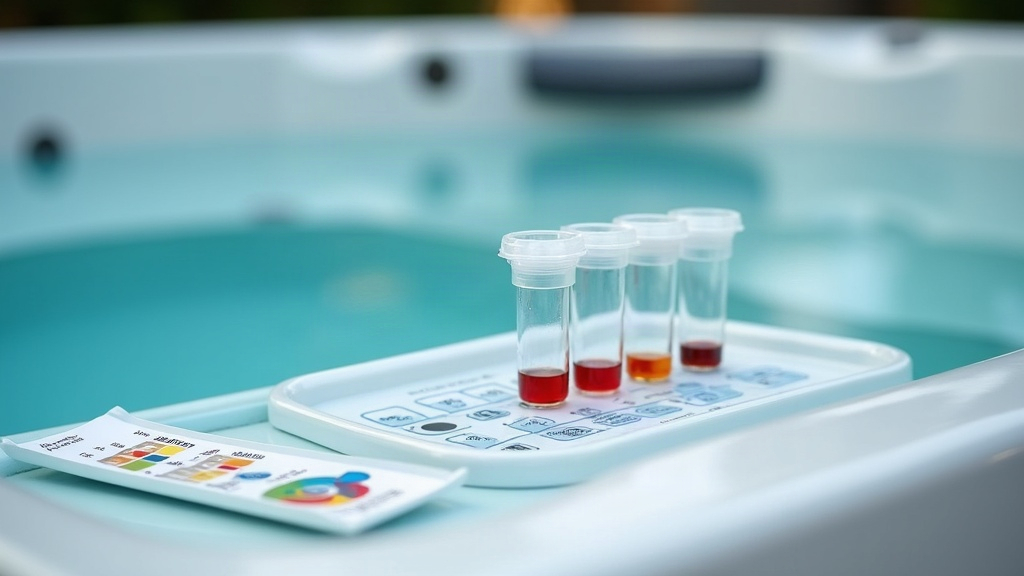
Yes. Because a hot tub’s chemistry can shift within a single day of use, testing before each use — or at minimum, every few days between uses — is far more important than the weekly rhythm many pool owners settle into. A quick check of sanitizer level, pH and alkalinity before getting in catches problems before they become uncomfortable or unsafe to use.
Both test strips and liquid test kits work on hot tubs, and the tradeoffs are the same ones pool owners weigh. Test strips vs liquid test kits: which is better covers the accuracy and convenience differences that apply to either type of water.
Does a saltwater system work the same way in a hot tub?
Some hot tubs use a salt-based sanitizer generator, similar in concept to a saltwater pool system, though scaled down for a much smaller volume. The generator still produces chlorine from dissolved salt — it isn’t a chlorine-free alternative, just a different way of delivering the same sanitizer.
For the underlying concept, do saltwater pools still use chlorine and what a saltwater pool is actually doing explain the process, which applies at hot tub scale as well.
What about filtration and circulation differences?
A hot tub’s filter works the same job as a pool filter — pulling debris and fine particles out of circulating water — but on a much smaller cartridge, cycling a much smaller volume, more often. Cartridge filters in hot tubs tend to need rinsing and replacement on a shorter schedule simply because they’re handling concentrated bather waste in less water.
The general principles of filter care, cartridge life and when cleaning is enough versus when a filter needs replacing are covered in how long filter cartridges last and sand vs cartridge vs DE filters, both useful background even though most hot tubs use a cartridge-style filter rather than sand or DE.
A note on heat, chemicals and safe handling
Hot tub chemicals carry the same handling rules as pool chemicals: store different products separately, never combine chemicals directly, and follow the label on the product actually being used rather than a general formula, since concentration varies by brand and by current water readings. If a hot tub is shared by children or anyone who needs closer watching in warm water, a designated adult keeping an eye on the water matters just as much as it does at a pool — chemistry balance doesn’t replace attentive supervision.
For the wider fundamentals that apply across both pools and hot tubs, the water chemistry archive and cleaning and maintenance archive cover testing routines, sanitizer types and the equipment that keeps water moving, including background from the pumps, filters and heaters archive on how circulation and heating affect water condition over time.
Pools Shop publishes general information, not professional advice. Pool chemicals, electrical work and structural work are genuinely hazardous and are governed by local codes that vary — use a qualified professional for anything you are not certain about, and follow the instructions on the product in front of you rather than a general guide. Nothing here is a substitute for active adult supervision around water: no cover, alarm, fence or device makes a pool safe on its own.