Scale is the hard, chalky or crusty mineral deposit that forms when pool water is carrying more dissolved calcium (and sometimes other minerals) than it can keep dissolved. As conditions push that calcium out of solution, it crystallizes onto the nearest surface — tile, plaster, metal, or the inside of equipment.
What actually is scale?
Scale is mostly calcium carbonate (or related calcium and mineral compounds) that has come out of the water and hardened onto a surface. It usually looks white or grey, feels rough or gritty, and does not wipe away the way algae or dirt does. It has to be broken down or physically removed.
It is different from staining caused by metals like iron or copper, which tends to tint a surface rather than build a raised crust. For a broader look at surface discoloration in general, the article on what causes stains on pool surfaces covers both categories side by side.
Why does scale form in a pool?
Water has a limited capacity to hold dissolved calcium and minerals. When that capacity is exceeded — because there is too much calcium in the water, the water is too alkaline, evaporation has concentrated the minerals, or the water is warm — the excess mineral has nowhere to go but out of solution and onto a surface.
Pool water is never perfectly stable. It is constantly gaining minerals from fill water, from products added to the pool, and from evaporation concentrating whatever is already dissolved. Scale is what happens when that balance tips too far toward “too much dissolved mineral for the water to hold.”
What water conditions make scale more likely?
A few conditions work together to push calcium out of solution. None of them cause scale on their own, but in combination they raise the odds significantly.
- Calcium hardness that has crept up over time, often from repeated fill water additions or evaporation
- pH that sits high for extended periods, which reduces how much calcium the water can hold
- Total alkalinity running high, which tends to pull pH upward and keep it there
- Warm water, since warmer water generally holds less dissolved mineral than cooler water
- Water that sits still or moves slowly in a corner of the pool or inside equipment, giving minerals more time to settle out
This is why calcium hardness, pH and total alkalinity are usually discussed together rather than in isolation. The pages on why calcium hardness matters, what pH actually does in a pool, and the difference between total alkalinity and pH go into each of these individually, but scale is really a story about all three interacting at once.
Where does scale show up first?
Scale tends to appear where water evaporates or where flow slows down. The waterline tile band is the classic spot, since water is constantly evaporating right at that edge and leaving minerals behind on the tile. That is a big part of the answer to why a pool gets a ring at the waterline in the first place — some of that ring is mineral scale rather than oil or dirt.
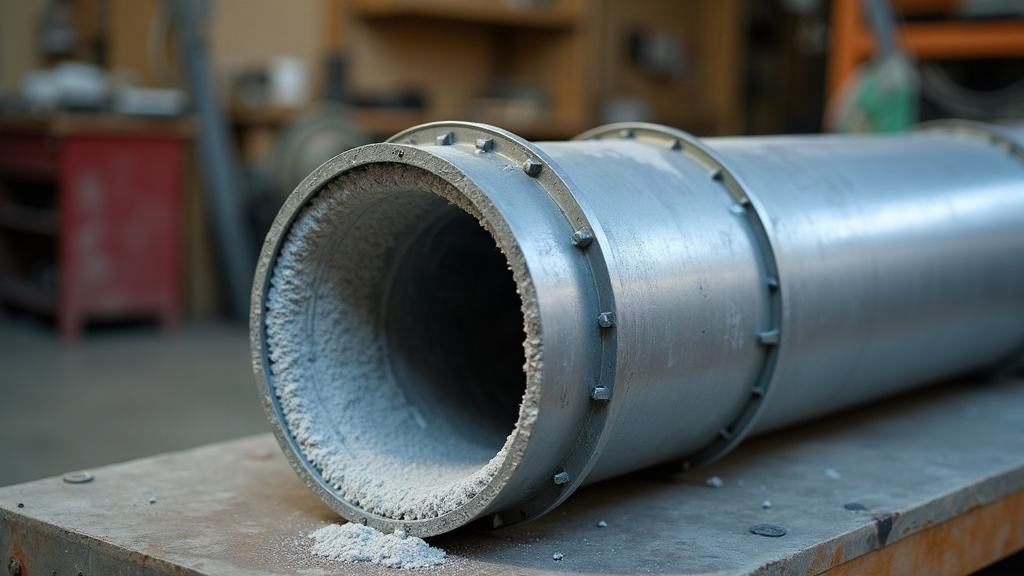
Scale also shows up inside the equipment on the pool equipment pad: inside heat exchangers, on heating elements, in narrow pipe fittings, and on cartridge or filter media where water moves slowly. Anywhere water sits warm and relatively still is a candidate.
How is scale different from other pool problems?
Scale is a mineral deposit, not a living organism and not a chemical imbalance you can “shock” away. It will not respond to sanitizer the way algae does, and it will not clear up on its own the way cloudy water sometimes will once filtration catches up. It has to be prevented by managing water chemistry, or physically addressed once it has formed.
It is also worth distinguishing scale from ordinary cloudiness. Cloudy water is usually about fine particles suspended in the water column, not mineral crust on a surface — the article on why pool water goes cloudy covers that separate issue, and the one on what actually makes pool water clear explains the conditions that keep water looking clean day to day.
Does scale actually damage equipment?
A layer of scale inside a heater’s heat exchanger or on a heating element acts like insulation between the heating surface and the water, which can make the heater work harder to deliver the same temperature. Scale buildup inside pipes and fittings can also narrow the effective opening over time, restricting flow.
Because heaters, pumps, and the wiring and gas connections that serve them are code-governed equipment, any suspected scale buildup inside a heater or concern about how it is affecting performance is a question for a licensed pool or HVAC technician rather than a DIY teardown. They can inspect the heat exchanger and advise on descaling or servicing options appropriate to that specific unit.
How can scale formation be reduced?
Reducing scale is mostly about keeping calcium hardness, pH and total alkalinity inside a normal range rather than letting any of them drift for long stretches. Regular testing is what makes that possible — without knowing where the numbers sit, there is no way to know whether scale conditions are building.
Practical habits that help:
- Testing water regularly rather than only when a problem is visible, using either test strips or a liquid test kit
- Brushing surfaces on a routine schedule, since brushing disturbs early mineral deposits before they harden — see how often a pool should actually be brushed
- Paying attention after heavy fill-water additions, since tap water can carry a meaningful amount of dissolved mineral depending on the source
- Keeping an eye on pH rather than letting it sit high for long periods
Some pool owners use products designed to help keep calcium in suspension in water that runs naturally high in minerals. As with any pool chemical, the label on the specific product is the source for how it is used, and chemical products should always be stored separately from each other and never combined — mixing pool chemicals, especially chlorine products with acids, can produce dangerous gas.
Can scale be removed once it forms?
Light scale on tile can often be worked loose with a suitable pool-safe scale remover and a brush or pumice-style tool made for pool surfaces, following that product’s label directions. Heavier or long-standing scale, or scale suspected inside plumbing or equipment, is a different situation and is better assessed by someone who works on pools professionally, since aggressive scraping or the wrong chemical approach can damage plaster, tile, or metal equipment.
Prevention is genuinely the easier path here. Once scale has hardened onto a surface it takes real effort — and sometimes a professional — to remove, whereas keeping calcium hardness, pH and alkalinity in a normal range through regular testing avoids most of the buildup in the first place.
For a wider view of how these chemistry factors interact day to day, the water chemistry section and the cleaning and maintenance section both cover related routines that help keep a pool from developing this kind of buildup in the first place.
Pools Shop publishes general information, not professional advice. Pool chemicals, electrical work and structural work are genuinely hazardous and are governed by local codes that vary — use a qualified professional for anything you are not certain about, and follow the instructions on the product in front of you rather than a general guide. Nothing here is a substitute for active adult supervision around water: no cover, alarm, fence or device makes a pool safe on its own.