Stains on pool surfaces are almost always caused by one of three things: dissolved metals like iron or copper that oxidize on the surface, organic debris such as leaves and algae that leave behind pigment, or water chemistry that’s out of balance and letting minerals settle out. Identifying which one is at work is the first step to dealing with it.
What’s the difference between metal stains and organic stains?
Metal stains tend to be reddish-brown, blue-green, black or purplish, and they often follow the shape of returns, ladders or metal fittings. Organic stains from leaves, berries or algae are usually brown, yellow or greenish, patchy, and show up wherever debris has settled and sat for a while.
A simple way to tell them apart at home is to brush the stain. Organic staining usually lightens or lifts somewhat with a firm scrub. Metal staining tends to be embedded in the surface and barely responds to brushing at all.
Why do metals like iron and copper cause stains?
Iron, copper and manganese can enter pool water from fill water, corroding equipment, or even some algaecides and clarifiers. When these metals oxidize, they leave a colored residue on plaster, tile grout, vinyl or fiberglass, particularly in areas where water sits still or where it flows past a metal fitting.
Copper is often the source of blue-green or teal-tinted stains, while iron is the usual culprit behind rust-orange marks. A test kit that checks for metals, alongside the routine checks for chlorine and pH, is the only reliable way to confirm which metal is involved rather than guessing from color alone. For background on testing options, see pool test strips vs. liquid test kits.
Can leaves and debris stain a pool?
Yes. Leaves, berries, seed pods and other organic matter that sit on the pool floor or against the walls can release tannins and pigments into the water. The longer they sit, especially in a warm, still pool, the more likely they are to leave a mark on plaster or vinyl.
This is one of the more preventable causes of staining, since it comes down to how quickly debris is removed rather than anything chemical. The article on dealing with pool leaves without wrecking the equipment covers how to clear debris without damaging skimmers, baskets or pump components in the process.
Does low chlorine or algae cause staining?
Algae itself can stain a surface, particularly black or mustard algae that clings stubbornly to plaster and grout even after the water clears up. Low or inconsistent chlorine levels give algae the opening it needs to take hold in the first place.
Understanding what allows algae to establish itself helps explain why some pools stain repeatedly in the same spots. The article on what causes algae to take hold in a pool goes into the conditions that let it grow. Routine brushing also matters here — algae that’s disturbed regularly has a much harder time anchoring to a surface than algae left undisturbed, which is covered in how often a pool should actually be brushed.
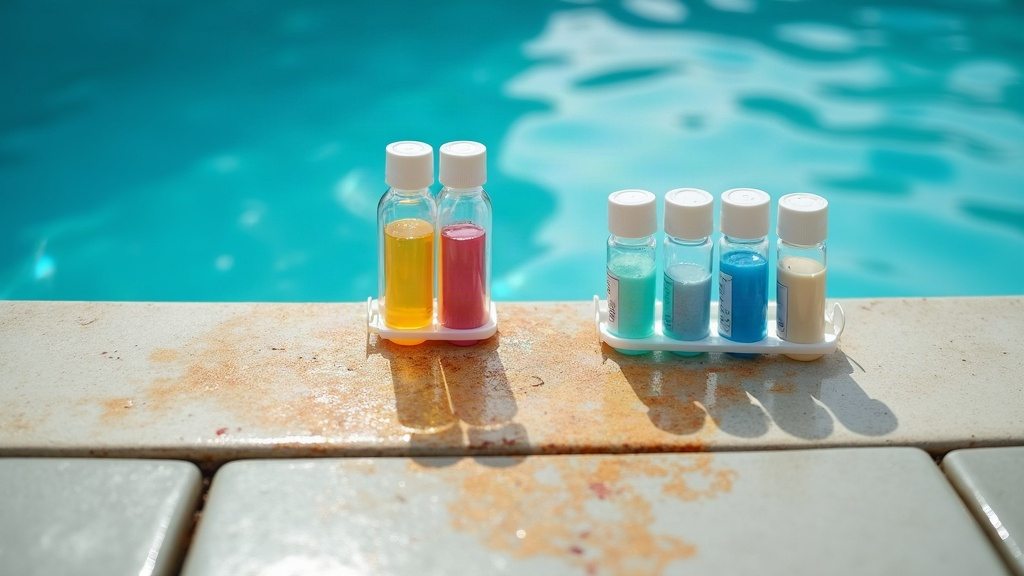
Why does the waterline get a stubborn ring?
The ring that forms right at the waterline is a distinct and very common type of staining, caused by a mix of body oils, sunscreen, dust and minerals that concentrate exactly where the water surface meets the air. It builds up slowly and is rarely a sign of a serious chemistry problem on its own.
This is common enough that it has its own detailed explanation: why does a pool get a ring at the waterline covers what forms it and how it’s typically cleaned off tile and plaster without damaging the surface.
How does water balance affect staining?
Pool water is meant to hold a certain amount of dissolved minerals in solution. When pH, total alkalinity or calcium hardness drift out of range, those minerals can come out of solution and deposit onto the pool surface, sometimes as scale, sometimes as a dull, chalky or discolored film.
High calcium hardness combined with high pH is a common driver of scale-type staining, which is why keeping hardness in a sensible range matters as much as chlorine does. See why calcium hardness matters in pool water and total alkalinity vs. pH: what’s the real difference for how these numbers interact. Getting pH right in the first place is covered in what is pH and why does it matter in a pool.
None of these balance issues are fixed by adding more of any one product. The right correction depends on the pool’s current test readings and its specific volume, so always follow the instructions on the product label in front of you rather than a general rule.
Can the pool’s surface material make staining more likely?
Yes. Plaster and other cementitious surfaces are porous and tend to absorb metals and organic pigment more readily than vinyl or fiberglass, which are smoother and less porous. That doesn’t make plaster a poor choice, but it does mean plaster pools often need a bit more attention to metals and water balance to avoid staining over time.
Vinyl and fiberglass surfaces can still stain, particularly from organic debris or from metal-rich water sitting against the same spot for a long period, but they typically respond better to gentle cleaning once a stain does appear. The differences between these surface types are laid out in vinyl liner vs. fiberglass vs. concrete pool: the real differences.
How can stains be prevented?
Prevention comes down to a handful of habits repeated consistently rather than any single product:
- Testing water regularly for chlorine, pH, alkalinity, calcium hardness and metals, rather than only when a problem is already visible
- Brushing the pool on a routine schedule so debris and early algae don’t get the chance to settle in
- Removing leaves and organic debris promptly instead of letting them sit on the floor or walls
- Keeping circulation and filtration running properly, since stagnant water in corners and shallow areas is more prone to both algae and mineral deposits
Circulation plays a bigger role in this than many owners expect, since areas with poor flow are exactly where staining tends to concentrate. Background on this is in why a pool needs to be circulated every day. The broader picture of water chemistry basics is covered across the Water Chemistry section, and general upkeep habits are collected in Cleaning & Maintenance.
When is a stain something to call a professional about?
Most staining is cosmetic and can be addressed with routine testing, brushing and, where appropriate, a stain-specific product used exactly as labeled. But some situations are worth a second opinion from a pool professional: staining that keeps returning no matter what’s tried, staining that appears alongside pitting, etching or rough patches on plaster, or discoloration that seems to be coming from a piece of equipment itself rather than the water.
Equipment-related staining can sometimes point to corrosion inside a heater, pump or the plumbing around the equipment pad, and any inspection or repair of that equipment involving wiring, bonding or gas connections is licensed work, not a weekend project. An overview of what typically sits on an equipment pad is in what is a pool equipment pad and what’s on it.
Never mix pool chemicals together when trying to treat a stain, and never combine chlorine products with acid-based products in an attempt to speed up a fix — this combination can produce dangerous gas. Store pool chemicals separately, follow the label on the specific product being used, and if a stain doesn’t respond to normal, labeled treatment, it’s reasonable to bring in someone with hands-on pool service experience rather than experimenting further.
Pools Shop publishes general information, not professional advice. Pool chemicals, electrical work and structural work are genuinely hazardous and are governed by local codes that vary — use a qualified professional for anything you are not certain about, and follow the instructions on the product in front of you rather than a general guide. Nothing here is a substitute for active adult supervision around water: no cover, alarm, fence or device makes a pool safe on its own.