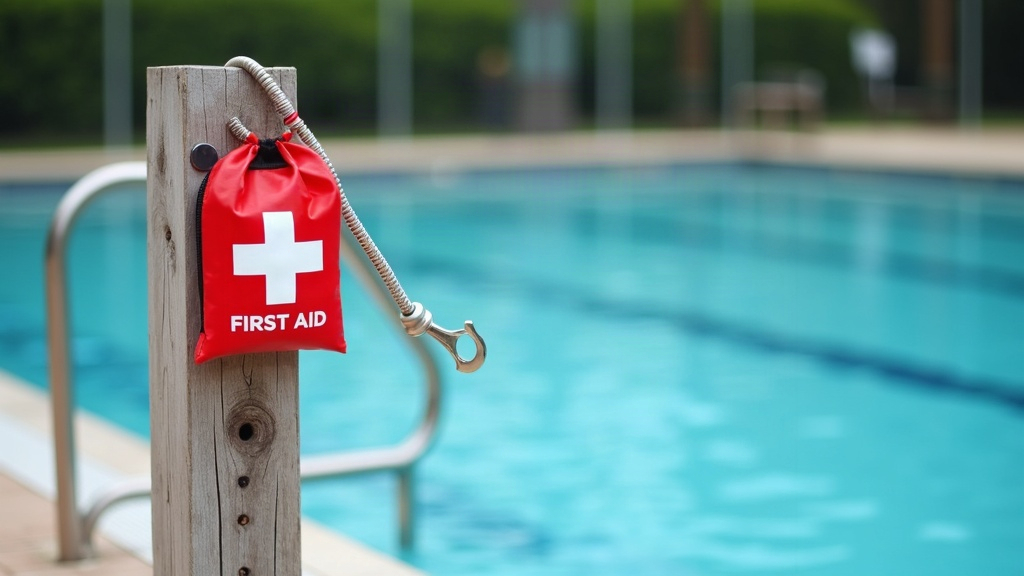
A pool area first aid setup should include a stocked first aid kit, a rescue aid such as a reaching pole or throw rope, a clear emergency contact list, a phone or way to call for help, and signage that tells anyone present what to do in the first minute. None of this replaces watching the water — it exists for the moments an adult is already responding to an incident.
Pool decks see scrapes, cuts, stings, slips and, far less often, something serious. The setup below is about being ready for the ordinary bumps and having the right tools within reach if something worse happens. It is not a substitute for supervision, swim skills, or the barriers and alarms covered on the Safety archive.
What goes in a poolside first aid kit?
A poolside kit should cover cuts, scrapes, stings, sprains and minor burns from hot decking or equipment, plus a few pool-specific items. It should be weather-resistant, stored somewhere shaded and dry, and checked regularly so nothing is expired or missing when it’s actually needed.
- Adhesive bandages in several sizes, plus larger gauze pads and wraps
- Antiseptic wipes or solution for cleaning cuts and scrapes
- Instant cold packs for bumps, sprains and stings
- Tweezers for splinters or stingers
- Medical tape and scissors
- A CPR face shield or barrier mask
- Disposable gloves
- Sunburn relief gel or aloe
- A whistle to draw attention if help is needed
Check the kit at the start of the season alongside other opening tasks — it fits naturally into the routine described in what actually happens when a pool is opened for the season, and again when closing up, similar to the checks covered in what winterising a pool involves.
What rescue equipment should be within reach?
A reaching pole (shepherd’s crook style) and a ring buoy with a line are the two standard non-entry rescue tools, and both should hang somewhere visible and unobstructed, never stored in a shed or garage. The point of both is to help someone in trouble without a rescuer having to enter the water themselves.
These tools work alongside, not instead of, the physical layers that reduce risk around a pool — fencing, self-closing gates, and covers. For a broader look at how those pieces fit together, see what layered pool safety actually means and why supervision is still what matters most.
What emergency information should be posted at the pool?
A visible sign or laminated card near the pool should list the property address (for anyone calling emergency services who doesn’t know it by heart), local emergency numbers, and basic CPR steps. It should be readable at a glance, not tucked in a drawer.
Anyone hosting pool gatherings benefits from knowing that a phone is reachable poolside, not left inside the house. A dropped call or a delay finding a phone matters far more than most equipment choices.
Does a pool alarm or cover belong in a first aid setup?
Alarms and covers are prevention layers, not first aid tools, but they belong in the same conversation because they reduce how often first aid is ever needed. A pool alarm can alert an adult to unexpected entry into the water, but it has real limitations and delays — details covered in what a pool alarm is, and what it can’t do.
Similarly, a properly rated safety cover differs meaningfully from a winter cover in what it’s built to bear, as explained in safety cover vs winter cover: the real difference. Barrier and fencing requirements vary by location, and checking local code is essential — see what pool barrier and fence codes typically require for the kinds of questions to ask a permitting office.
What should be kept away from the first aid area?
Pool chemicals should never be stored near the first aid kit, rescue equipment, or anywhere a child or pet could reach them. Chlorine products and acid-based products must always be stored separately and never combined — mixing them produces toxic gas, and this has caused real harm.
A dedicated, ventilated storage spot away from the pool edge and away from foot traffic is safer than a shelf near the equipment pad. For guidance on organizing this properly, see pool chemicals and storage: what owners need to know and why pool chemicals should never be mixed together.
What about electrical hazards near the pool deck?
A first aid setup should also account for the fact that water and electricity near a pool are a serious combination, and this is licensed-trade territory, not a DIY fix. Pumps, lighting, heaters and any bonding or grounding work should be installed and inspected by a licensed electrician familiar with local code.
If a reader is unsure whether an outlet, light fixture or pump connection near the pool is properly protected, that’s a question for a licensed electrician, not a weekend project. Background on the risks involved is covered in what the electrical hazards around a pool actually are and what bonding and grounding around a pool means.
What is entrapment, and does it belong in this checklist?
Entrapment is when suction from a drain or fitting traps part of a body or hair against an opening, and it’s rare in pools built or retrofitted to modern drain-cover standards, but it’s worth knowing about because it shapes what to check on an older pool. A first aid setup doesn’t fix entrapment risk — code-compliant drain covers do.
If a pool has original drain covers from decades ago, it’s worth asking a pool professional whether they meet current standards. More detail is in what pool entrapment is, and why drain covers changed.
Who should know how to use all of this?
Every adult who supervises the pool — not just the person who bought the kit — should know where it is, how the rescue pole is used, and what the emergency card says. A first aid setup that only one person understands is not much of a setup at all.
This is also a good moment to be honest about what none of this equipment does: it does not watch the water. A pool alarm, a locked gate, a stocked kit and a rescue pole are all useful, but a designated adult actually watching swimmers — with no other task competing for attention — is the layer that catches trouble before first aid is needed at all.
How often should the setup be checked?
A quick check at the start of the swim season, a mid-season glance, and a check before any large gathering is a reasonable rhythm for most households. Bandages get used, cold packs get borrowed, batteries in a poolside alarm or phone charger run down.
- Confirm kit contents and expiry dates
- Test that the reaching pole hangs freely and isn’t cracked or brittle
- Reprint or re-laminate emergency cards if they’ve faded
- Confirm a phone is reachable poolside during gatherings
- Check chemical storage is still separate, locked, and ventilated
None of this is complicated, but it’s easy to overlook once a pool becomes part of the daily background of a home. Pairing it with the broader routines covered across the Safety archive and Pool Basics archive keeps the whole picture — chemistry, equipment, and safety — working together rather than as separate afterthoughts.
Pools Shop publishes general information, not professional advice. Pool chemicals, electrical work and structural work are genuinely hazardous and are governed by local codes that vary — use a qualified professional for anything you are not certain about, and follow the instructions on the product in front of you rather than a general guide. Nothing here is a substitute for active adult supervision around water: no cover, alarm, fence or device makes a pool safe on its own.