Yes. A saltwater pool still relies on chlorine to sanitize the water — it just doesn’t come out of a jug or a bucket of tablets. A device called a salt chlorinator uses electricity to convert dissolved salt into chlorine, continuously, right in the plumbing. The chlorine itself works exactly the same way once it’s in the water.
So what does “saltwater pool” actually mean?
It means the pool makes its own chlorine on-site instead of the owner adding it by hand. Salt is dissolved in the water at a low level, and a chlorinator cell converts some of that salt into chlorine as water passes through it. The chlorine then does the same sanitizing job it would in any other pool.
The salt level in these pools is far lower than seawater and is not the part doing the sanitizing — the chlorine it produces is. For a deeper explanation of the conversion process itself, see What Is a Saltwater Pool Actually Doing?
Where does the chlorine come from if no one is adding it?
It comes from an electrolytic cell built into the pool’s plumbing, usually near the pump and filter. As salty pool water flows through the cell, a low-voltage current splits the salt apart and chlorine is released into the water on the other side.
This happens continuously while the pump is running and the chlorinator is switched on, rather than as a single dose added once or twice a week. That’s the main practical difference from manually dosing chlorine — the production is steady rather than in batches. The equipment involved sits alongside the rest of the gear at the pool equipment pad, and it only works if water is actually moving through it, which is why daily circulation matters just as much here as in any other pool.
Does a saltwater pool still need chlorine testing?
Yes — arguably more consistently than a manually dosed pool, since the chlorinator’s output needs to be checked against what the water is actually reading. Free chlorine, pH, and stabilizer levels still need regular testing, the same as any chlorinated pool.
A chlorinator can be producing chlorine and the level can still drift too high or too low depending on bather load, sunlight, and how the output setting is dialed in. Testing tells the owner whether the setting needs adjusting — not the chlorinator’s display, which only shows what it’s set to produce, not what’s actually in the water. Comparing test strips against a liquid test kit is a reasonable way to get more confidence in the numbers before making any change to the chlorinator’s output.
What’s the difference between free, combined, and total chlorine here?
These terms mean exactly the same thing in a saltwater pool as in any other. Free chlorine is what’s available to sanitize; combined chlorine has already reacted with contaminants and is much less effective; total chlorine is both added together.
A chlorinator producing plenty of free chlorine can still end up with a smelly, irritating pool if combined chlorine builds up — the fix is usually the same shock treatment used in any pool, described in What Is Shocking a Pool, and When Should It Be Done? The distinction is explained more fully in Free vs Combined vs Total Chlorine: What’s the Difference?
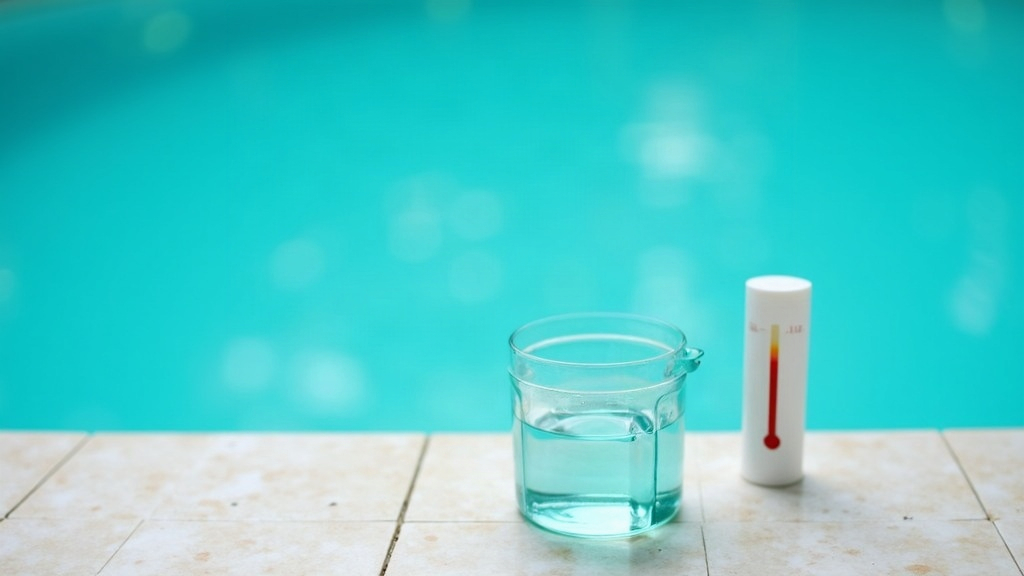
Why does a saltwater pool sometimes smell of chlorine?
That smell usually means chlorine is low or has been used up fighting contaminants, not that there’s too much of it — the same is true in any chlorinated pool, saltwater or not.
The sharp odor most people associate with “too much chlorine” is actually a sign of combined chlorine byproducts building up while free chlorine runs low. A saltwater pool with a poorly set chlorinator can smell exactly like a manually dosed pool that’s been neglected. The reasons behind that smell are covered in Why Does a Pool Smell of Chlorine When Chlorine Is Low?
Does stabilizer still matter with a saltwater pool?
Yes. Cyanuric acid, often called stabilizer, protects chlorine from breaking down too quickly in sunlight, and outdoor saltwater pools need it just as much as any other outdoor chlorinated pool.
Too little stabilizer and sunlight burns off chlorine fast, even with a chlorinator running steadily. Too much stabilizer, and chlorine’s ability to sanitize effectively can drop — a condition sometimes called chlorine lock, explained in What Is Chlorine Lock and What Actually Causes It? More detail on what stabilizer does and why it’s tracked separately from chlorine is in What Is Cyanuric Acid and Why Call It Pool Stabiliser?
What about pH, alkalinity, and calcium hardness?
All three still need to be tracked. Salt chlorinators don’t change the fact that pH drifts, alkalinity buffers that drift, and calcium hardness affects scaling and surface comfort — the chemistry underneath is unchanged.
Some chlorinator processes tend to push pH upward over time, which makes regular pH testing worth staying on top of rather than assuming it stays put. What Is pH and Why Does It Matter in a Pool? and Total Alkalinity vs pH: What’s the Real Difference? cover why these numbers move independently of chlorine level. Calcium hardness plays into scale on tile and equipment surfaces, discussed in Why Does Calcium Hardness Matter in Pool Water?
Does a saltwater pool skip liquid chlorine, tablets, and granules entirely?
Mostly, day to day — but many owners still keep a backup chlorine product on hand for shocking the pool, covering a chlorinator outage, or boosting levels quickly after heavy bather load or a storm.
Chlorinators are built to maintain a baseline, not necessarily to spike chlorine fast when it’s needed. Owners who keep manual chlorine products around for backup should store them exactly as label instructions specify, away from acid and other pool chemicals, and never combine chemical products directly — mixing chlorine products with acid produces dangerous gas. The differences between chlorine forms are laid out in Liquid Chlorine vs Tablets vs Granules: The Real Difference.
Does the chlorinator affect water clarity too?
Chlorine’s job is sanitizing, not clarity by itself — clear water depends on filtration, circulation, and balanced chemistry working together, whether the chlorine came from a chlorinator or a jug.
A pool can have perfectly adequate chlorine and still turn cloudy if filtration or circulation is falling behind. What Actually Makes Pool Water Clear? and Why Does Pool Water Go Cloudy? cover the other factors involved, and turnover rate explains how much water needs to pass through the filter and chlorinator each day for either to do its job properly.
Does the equipment itself need special handling?
The chlorinator cell, its power supply, and the wiring around it are electrical equipment operating near a body of water, and any installation, repair, or replacement of that wiring is licensed electrical work, not a DIY project.
Bonding, grounding, and the electrical connections for a salt chlorinator are governed by local electrical code for exactly the reason any pool equipment is — water and electricity together carry real risk. An owner can learn what the cell does and how to read its display, but wiring work should go to a licensed electrician who can confirm it meets local code. The broader equipment picture, including where the chlorinator sits relative to the pump and filter, is covered in the Pumps, Filters & Heaters hub.
Is a saltwater pool more or less work than a chlorine-dosed pool?
Less hands-on dosing, generally, but not less testing or attention. The chemistry still needs checking on a regular schedule, and the chlorinator itself needs occasional inspection and cleaning per its manufacturer’s instructions.
Anyone comparing pool types before buying or converting should weigh the upfront cost of the chlorinator equipment against the reduced need to buy and handle chlorine products — a tradeoff explored further in the Buying & Costs hub. For the water chemistry fundamentals that apply regardless of how chlorine gets into the water, the Water Chemistry hub and Pool Basics hub are good starting points.
What’s the bottom line?
A saltwater pool is still a chlorinated pool. The salt is a raw material for making chlorine on-site rather than an alternative to it, and everything chlorine does — and everything that needs testing around it — still applies.
Owners who understand that tend to have an easier time troubleshooting: a cloudy or smelly saltwater pool almost always traces back to the same chlorine, pH, or stabilizer issues that show up in any chlorinated pool, not to some separate “saltwater problem.”
Pools Shop publishes general information, not professional advice. Pool chemicals, electrical work and structural work are genuinely hazardous and are governed by local codes that vary — use a qualified professional for anything you are not certain about, and follow the instructions on the product in front of you rather than a general guide. Nothing here is a substitute for active adult supervision around water: no cover, alarm, fence or device makes a pool safe on its own.