Before buying a house with a pool, check four things: the age and condition of the equipment (pump, filter, heater), whether the barrier and fence meet local code, the state of the water and surface, and whether the pool has any history of leaks or structural repairs. Any one of these can mean real, ongoing cost.
A pool changes what a house is. It is not just a feature in the listing photos — it is a piece of equipment with its own running costs, its own legal obligations, and its own risks if it has been neglected. A buyer who only looks at the water on a sunny showing day can miss the parts that matter most.
How old is the pool equipment?
Ask the seller directly for the age and service history of the pump, filter and heater, and look at the equipment pad yourself. Corrosion, cracked housings, or a pump that sounds rough are signs of money coming due.
Pumps, filters and heaters all wear out on their own timelines, and none of them last forever. It helps to know roughly how long pool pumps and filters typically last so a buyer can judge whether the current setup is near the end of its useful life or has years left in it. A pump showing signs of failing — noise, weak flow, or a motor that won’t hold prime — is a near-term replacement cost, not a maybe.
Also worth asking: is the pump a single-speed or a variable speed pump? Older single-speed pumps tend to run harder and cost more to operate, since the pump is typically the single biggest energy user tied to the pool. That’s a running-cost question worth factoring into an offer, alongside a general sense of what a pool costs to run each year.
Is the heater gas or electric, and does it work?
Ask to see the heater run, and ask what fuel it uses. A heater that hasn’t been serviced, or one whose type isn’t clear, is worth a professional look before closing — heater and gas connections are licensed work, not something to assess casually.
Gas heaters and heat pumps behave very differently in terms of running cost and how quickly they warm water; understanding the real difference between a gas heater and a heat pump helps set expectations. It’s also normal for heaters to take a while to bring a pool up to temperature, so a slow initial warm-up on a showing isn’t necessarily a fault — see why pool heaters take so long to warm a pool. Any heater, pump wiring, lighting or bonding work near the pool is code-governed and should be handled by a licensed electrician — a buyer should ask whether the property’s bonding and grounding has ever been inspected, not attempt to check it personally. For background on what that even means, see what bonding and grounding around a pool actually involves and what the electrical hazards around a pool typically are.
Does the barrier and fence meet local code?
Ask whether the pool’s fence, gate and any alarms currently meet the local building code — not whether they look adequate. Barrier requirements are legal obligations that vary by location, and a pool that predates current code may need work before it can legally change hands in some areas.
A buyer should check with the local building or permitting office rather than assume the existing setup is compliant. It’s worth reading about what pool barrier and fence codes typically require so the right questions can be asked during due diligence. Self-closing gates, proper fence height, and gaps a small child could pass through are common places older installations fall short.
None of this — fence, gate, alarm — replaces an adult actively watching the water. Barriers slow access; they do not supervise. If the household includes or will include young children, it’s worth reading how supervision remains the thing that matters most around any pool, and what layered pool safety actually means in practice — barriers, alarms, supervision and swim skills working together, none of them alone.
What does the drain and pool floor look like?
Ask when the drain covers were last replaced or inspected. Older, incompatible drain covers were linked to a hazard called entrapment, and this led to code changes requiring updated covers on many pools.
It’s a good question to ask the seller directly, since it isn’t always visible from the pool deck. Reading what entrapment is and why drain covers changed gives useful background for that conversation.
Has the pool ever leaked or lost water?
Ask the seller directly whether the pool has ever needed repair for cracks, leaks, or losing water faster than expected. A pool that constantly needs topping off may have a real leak rather than simple evaporation, and tracking that down after closing can be disruptive and costly.
Water loss on its own isn’t automatically alarming — evaporation and a real leak look different, and understanding why pools lose water even with no leak helps set a baseline. But any history of structural crack repair, liner replacement, or resurfacing is worth asking about directly, and a seller should have records if the work was done properly.
The pool’s construction type also matters for what future repairs might look like. A vinyl liner, fiberglass and concrete pool each age differently and have different repair costs and timelines, so knowing which one is being bought changes what future maintenance will look like.
What condition is the water and surface in right now?
Cloudy water, staining, or a rough or chalky surface texture can point to chemistry that has been neglected or a surface nearing the end of its life. None of these are automatically deal-breakers, but they’re negotiating points and maintenance signals.
A pool that has been let go can usually be brought back with cleaning and a proper reopening — but a buyer benefits from understanding why a pool can turn green right after opening and why pool water goes cloudy before assuming it’s a quick fix. Stains on pool surfaces and scale forming in a pool both point to water chemistry that hasn’t been well managed, which is worth asking the seller about directly. A visible ring at the waterline is common and usually cosmetic — see why a pool gets a ring at the waterline for what it typically means and doesn’t mean.
It’s reasonable to ask for recent water test results, or to bring test strips to a showing. Understanding the basics of test strips versus liquid test kits helps a buyer make sense of what they’re looking at.
What’s actually in the equipment pad and pump room?
Walk the equipment pad and note what’s there: pump, filter type, heater, any automation, and how tidy or corroded it looks. This tells a buyer more about how the pool has been cared for than the water itself does.
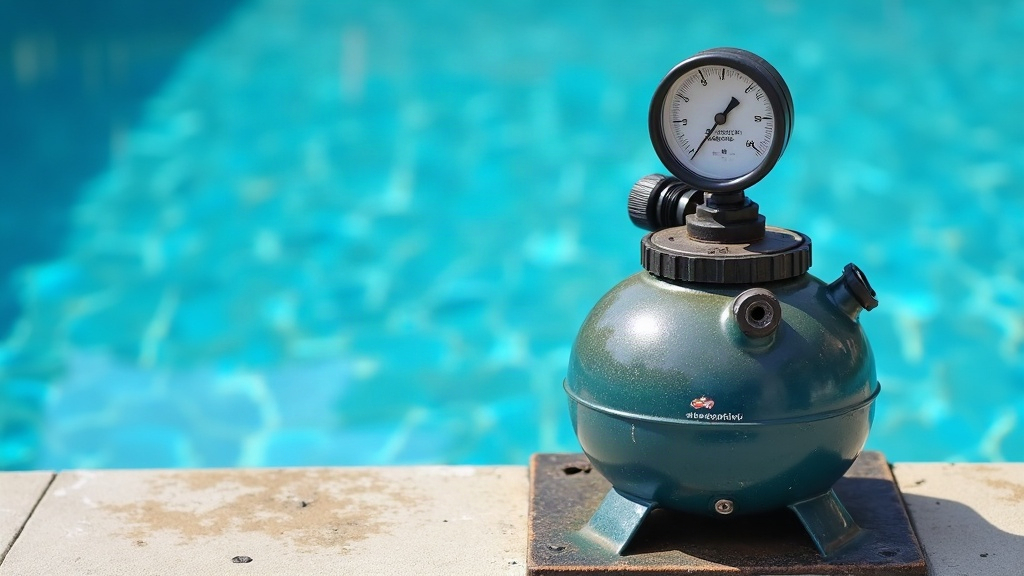
Filter type affects both maintenance routine and cost — a sand, cartridge or DE filter each need different upkeep. If there’s a pressure gauge on the filter, a reading well outside normal for that system can flag a filter overdue for cleaning; see what a filter pressure gauge actually tells you. Ask, too, whether cleaning has relied on a robotic or suction cleaner and whether it comes with the sale, since cleaner types differ meaningfully in cost and effort.
Does a spa or hot tub come with the house?
If the property includes a hot tub or spa, ask its age, whether the cover is intact, and when the water was last fully changed. Hot tubs have their own maintenance rhythm, separate from the pool.
A worn or waterlogged cover is a near-term cost — see how long a hot tub cover typically lasts. If the hot tub is used but not new, the same due-diligence questions apply as buying one secondhand; the guide on what to check before buying a used hot tub covers this well, and the broader hot tubs and spas hub is worth a browse for anyone unfamiliar with them.
What will the pool actually cost to keep running?
Ask for a rough sense of what the current owner spends on chemicals, energy and any pool service, and treat it as a floor rather than a ceiling. Running costs vary with pump type, heater use, local climate and how well the pool has been maintained.
The guide on what a pool costs to run each year breaks down the main cost drivers, and it’s worth reading before finalizing an offer. If the house doesn’t yet have a pool but one is being considered as an addition instead, what actually drives the cost of installing a pool covers that separately. The broader buying and costs hub and pumps, filters and heaters hub are both useful starting points for further reading.
What should a buyer ask a home inspector to look at specifically?
General home inspectors don’t always specialize in pools. It’s reasonable to ask whether the inspector has pool experience, or to bring in a pool-specific professional for the equipment, structure, and electrical bonding separately.
A pool-focused check should cover the shell for cracks, the equipment pad for age and wear, the electrical bonding and grounding, and the barrier’s code compliance. None of that is a DIY assessment — electrical and structural checks specifically call for licensed trades, not a buyer’s own inspection. It’s also worth reviewing the site’s safety hub and the piece on what a pool alarm is and what it can’t do, since alarms and barriers are often oversold as more protective than they are. If children will use the pool, the article on making a pool safer for young children is a useful starting point for what a layered safety plan actually looks like once the house is bought — with a designated, watching adult as the layer that never gets replaced by equipment.
Final check before making an offer
A pool adds real value to a home, but it also adds a running-cost line, a set of legal obligations, and a maintenance schedule that doesn’t pause because a sale closed. Getting clear answers on equipment age, code compliance, water and surface condition, and leak history before signing avoids most of the unpleasant surprises that come with buying a house with a pool.
For ongoing reading once the purchase is done, the pool basics hub, water chemistry hub, and cleaning and maintenance hub are good places to start learning the pool’s actual rhythm.
Pools Shop publishes general information, not professional advice. Pool chemicals, electrical work and structural work are genuinely hazardous and are governed by local codes that vary — use a qualified professional for anything you are not certain about, and follow the instructions on the product in front of you rather than a general guide. Nothing here is a substitute for active adult supervision around water: no cover, alarm, fence or device makes a pool safe on its own.